
Description
Malibu Pure Kush Strain Guide: Genetics, Effects, Growing Tips & Premium Clones
Malibu Pure Kush occupies an interesting position in the OG and Pure Kush family. Unlike modern cultivars with carefully documented breeder histories and published parent crosses, Malibu Pure Kush has a more complicated provenance. Current references variously associate it with Hindu Kush, OG Kush, or a selected OG-type phenotype, while some sources explicitly describe its exact heritage as unknown.
That uncertainty is part of what makes the cultivar interesting.
For experienced cultivators, Malibu Pure Kush represents an older style of California Kush genetics where the specific selection and provenance of the plant can matter as much as the strain name itself.
Current Leafly information describes Malibu Pure Kush as an indica-dominant hybrid, listing approximately 21% THC and identifying myrcene, limonene, and caryophyllene among its reported terpenes. Its leading listed flavors are mint, pine, and earthy, while reported effects include energetic, euphoric, and happy alongside an overall calming profile.
For growers researching Malibu Pure Kush genetics, however, the most important lesson is simple: don’t treat every online lineage claim as established fact.
What Is Malibu Pure Kush?
Malibu Pure Kush, sometimes abbreviated MPK, is generally presented as an indica-dominant or indica-leaning Kush cultivar associated with Malibu, California.
Leafly currently categorizes it as a hybrid and describes it as approximately 20% sativa and 80% indica, while also stating that its reported genetic cross involves Hindu Kush and an unknown parent.
Weedmaps takes a different approach. Its current Malibu Kush profile calls it a mystery cross developed in Malibu, California, commonly reported as an interpretation of OG Kush, while also acknowledging rumors connecting it to Hindu Kush.
A current VOLCANNX product profile provides another version, describing Malibu Kush as a 70/30 indica-dominant hybrid and a phenotype of OG Kush with exact heritage unknown.
These sources don’t establish a single universally accepted pedigree.
Instead, they establish something more useful:
Malibu Pure Kush is an established Kush-associated cultivar whose exact genetic provenance is not consistently documented across modern databases and commercial sources.
That distinction should remain clear in any authoritative Malibu Kush strain guide.
Malibu Pure Kush Genetics and Lineage
The lineage question is where Malibu Pure Kush becomes particularly interesting.
What Is Verified?
Current sources provide three recurring descriptions:
- Hindu Kush + unknown parent
- OG Kush-related mystery cross
- OG Kush phenotype with undisclosed heritage
Leafly currently uses the first description, identifying Hindu Kush and an unknown parent.
Weedmaps emphasizes the second, describing Malibu Pure Kush as a mystery Malibu cross generally associated with OG Kush and noting competing Hindu Kush rumors.
VOLCANNX uses the third description, calling it an OG Kush phenotype while stating that its exact heritage is unknown.
What Should Not Be Claimed
There is not enough reliable evidence to confidently state a precise breeder, exact generation, or complete parentage for Malibu Pure Kush.
That means claims such as a definitive:
Hindu Kush × specific OG Kush phenotype
should be treated cautiously unless accompanied by primary provenance documentation for the particular selection.
This is an important distinction for growers.
A strain database can provide a useful starting point, but a nursery or breeder with documented mother-plant history can potentially provide much more meaningful information about a particular genetic line.
The Hindu Kush Connection
The Hindu Kush explanation is not random.
Hindu Kush is an old cannabis genetic reference associated with the mountainous region around Afghanistan and Pakistan and is widely represented in traditional indica breeding.
Leafly’s current Malibu Pure Kush profile specifically identifies Hindu Kush as one parent while leaving the other parent unidentified.
SeedFinder’s genealogy also connects Pure Kush with Hindu Kush, but importantly labels the relationship as “probably”, rather than treating it as conclusively documented.
That wording matters.
Good genetics research distinguishes:
documented → reported → probable → speculative.
Malibu Pure Kush belongs in the category where those distinctions should remain visible.
The OG Kush Connection
The OG Kush association is equally important.
Weedmaps currently says Malibu Pure Kush is usually reported as a take on OG Kush, while VOLCANNX explicitly describes its version as an OG Kush phenotype.
The cultivar’s broader identity certainly fits the OG-family tradition:
- Pine
- Earth
- Citrus
- Spice
- Herbal character
- Kush-style density
- Strong aromatic expression
But similarity does not prove pedigree.
A cultivar can display classic OG characteristics without having a fully documented OG Kush lineage.
For a professional Malibu Pure Kush review, that is an important point to emphasize.
Why Malibu Pure Kush Has Maintained Cult Status
Legacy Kush cultivars have an advantage that many new releases don’t.
They have history.
Modern cannabis markets produce hundreds of new names every year. Many receive intense attention for a short period before disappearing.
Older cultivars survive because growers remember them.
Malibu Kush fits into this broader legacy-cultivar category.
Its appeal isn’t necessarily based on having the highest published THC number.
Instead, it comes from a recognizable combination of:
- Kush-style aroma
- Dense flower character
- Resin production
- Distinctive flavor
- Indica-dominant reputation
- California genetic identity
- Limited and sometimes obscure provenance
The scarcity of clear documentation can actually increase interest among experienced genetic collectors.
When a particular selection develops a strong reputation, the question changes from:
“What strain is this?”
to:
“Which exact cut is this?”
That is the more sophisticated way to think about legacy cannabis genetics.
Malibu Pure Kush Aroma and Flavor
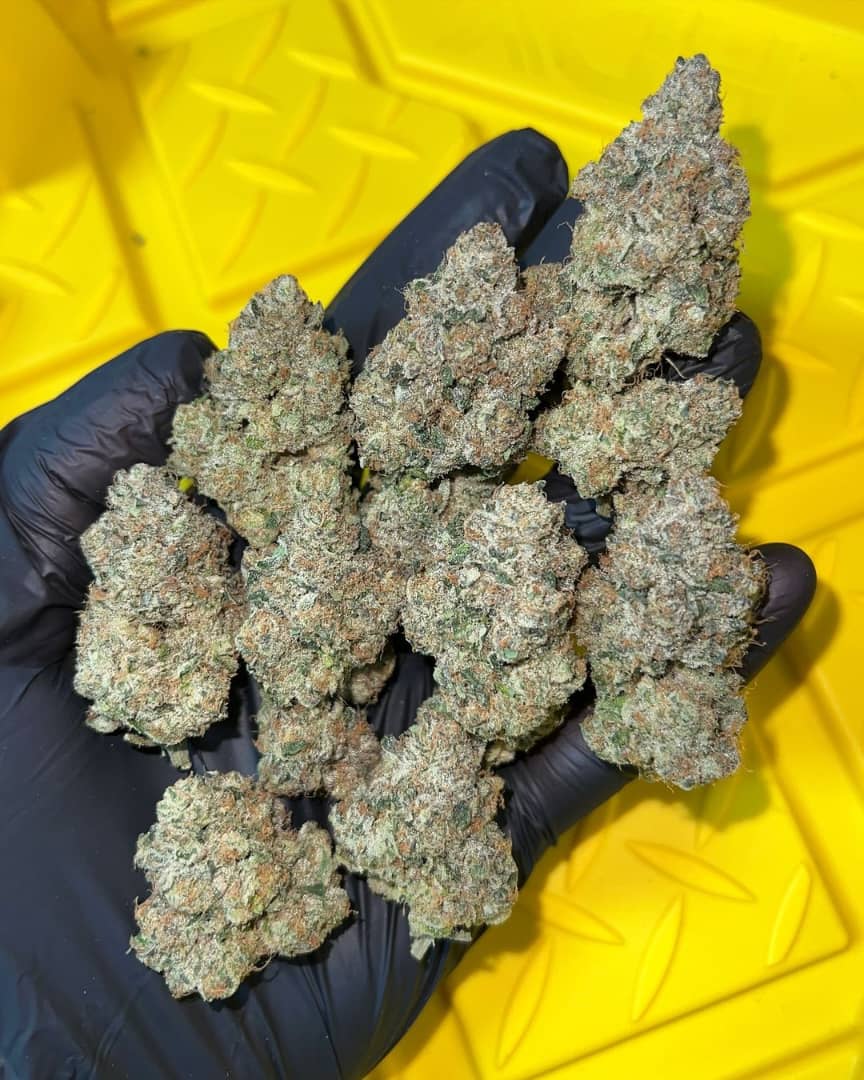
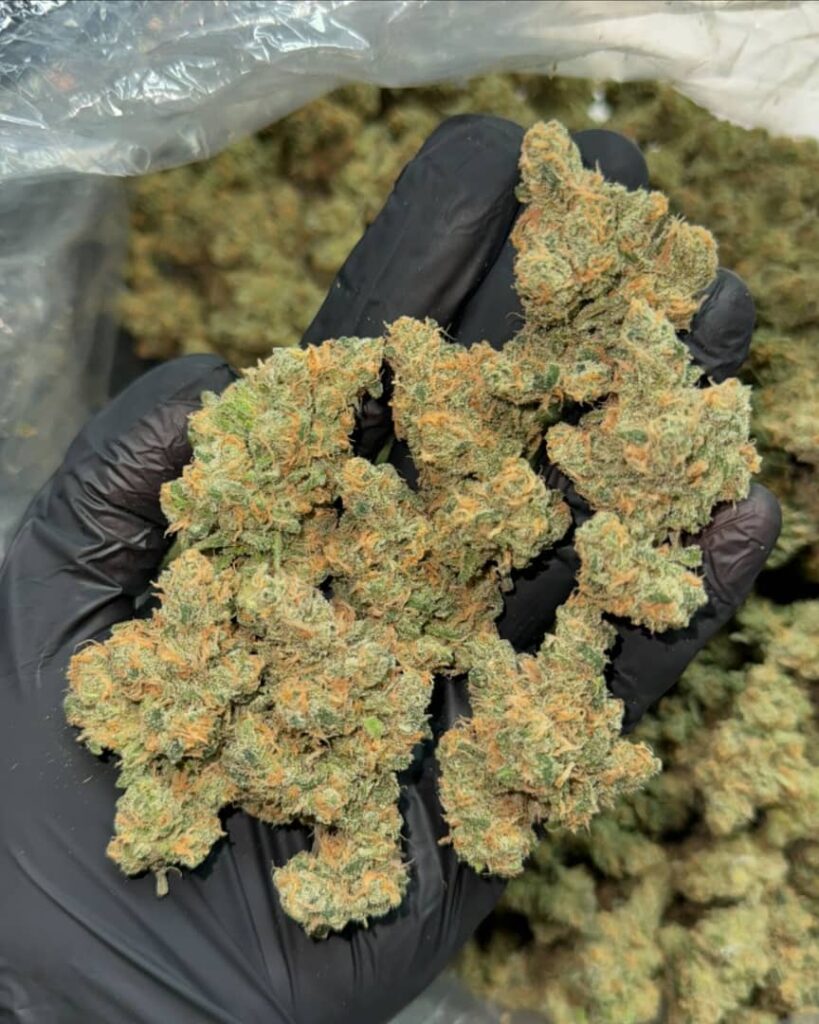
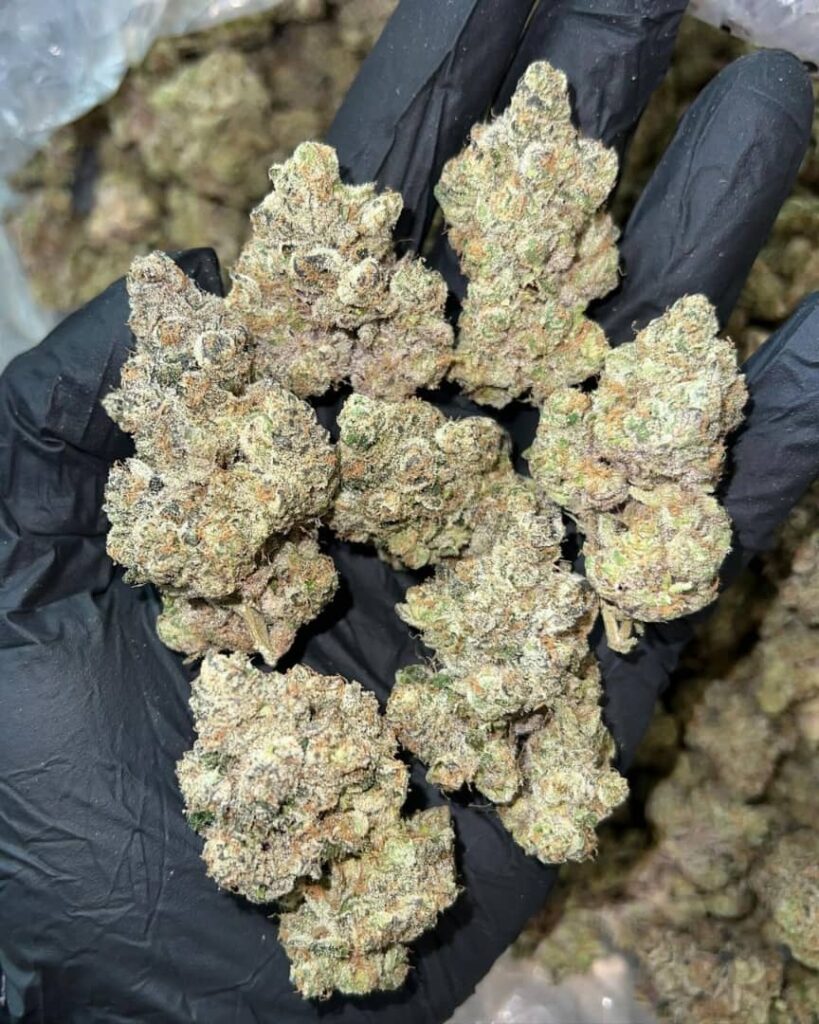
The Malibu Pure Kush flavor profile is generally described as earthy, pine-forward, herbal, and sometimes minty or citrus-like.
Leafly currently lists:
- Mint
- Pine
- Earthy
as its leading flavors.
Weedmaps adds a more specific description involving orange syrup, cinnamon, and herbal earthiness.
A separate commercial profile describes the aroma and flavor direction as citrus, earthy, and herbal.
Taken together, these descriptions suggest a profile built around classic Kush earthiness with brighter citrus, pine, mint, and spice accents.
Aroma
Commonly reported aromatic characteristics include:
- Pine
- Earth
- Herbal spice
- Citrus
- Mint
- Pepper
- Kush
- Mild fuel
Individual phenotypes may emphasize different parts of this spectrum.
One plant may express sharper pine and citrus, while another may lean more heavily toward earth, spice, or mint.
That is normal genetic variation.
Malibu Pure Kush Terpene Profile
Leafly currently identifies:
- Myrcene
- Limonene
- Caryophyllene
as the principal reported terpenes for Malibu Pure Kush.
A separate commercial profile identifies myrcene as its dominant terpene.
These should be treated as reported strain-profile information, not a universal laboratory specification for every Malibu Pure Kush plant.
Myrcene
Myrcene is commonly associated with earthy, herbal, musky, and sometimes fruity aromatic qualities.
In a Kush-oriented cultivar, it can contribute to the deeper aromatic foundation.
Limonene
Limonene is associated with citrus-like aroma.
Its presence fits the brighter citrus characteristics reported for Malibu Kush.
Caryophyllene
Caryophyllene contributes peppery, spicy, and woody aromatic qualities.
That makes it relevant to the herbal and spice components frequently associated with the cultivar.
Important Caveat
Terpene percentages should not be invented.
The concentration of these compounds can vary substantially according to phenotype, cultivation environment, harvest timing, drying, curing, storage, and laboratory methodology.
A batch-specific COA is therefore more authoritative than a generic strain database when discussing actual terpene concentrations.
Malibu Pure Kush THC and Effects
Malibu Pure Kush THC
Current sources disagree on the exact potency associated with Malibu Pure Kush.
Leafly currently lists 21% THC for its strain profile.
Commercial products carrying the Malibu Pure Kush name can test substantially higher. For example, a current Weedmaps listing from HYDROTIC reports 30.42% THC for a specific product, while another commercial listing reports 31%. Those are product- and batch-specific laboratory values, not universal genetic characteristics.
This distinction is essential.
A responsible Malibu Pure Kush THC discussion should never say:
“Malibu Pure Kush always contains X% THC.”
Instead:
“Published values vary by product and source, so laboratory testing from the specific batch is the appropriate reference for actual potency.”
Malibu Pure Kush Effects
Leafly currently lists energetic, euphoric, and happy among the top reported effects while describing the overall effect profile as mostly calming.
Other consumer and commercial descriptions emphasize:
- Relaxation
- Euphoria
- Contentment
- Calmness
- Body-focused effects
These observations are based on consumer or product descriptions rather than controlled clinical research.
Mental Effects
Reported experiences can include a sense of euphoria, happiness, calmness, or mental ease.
Some users describe the experience as relatively clear-headed despite the cultivar’s indica-dominant reputation.
Physical Experience
Other reports emphasize physical relaxation and a more grounded body sensation.
Individual responses vary considerably.
Overall Character
The most accurate description is that Malibu Pure Kush is generally reported as a calming Kush cultivar with euphoric and occasionally energetic characteristics.
It should not be promoted as treating insomnia, anxiety, pain, or another medical condition without appropriate evidence and regulatory support.
Why Growers Continue Choosing Malibu Pure Kush
There are several reasons legacy growers continue to pay attention to cultivars like Malibu Pure Kush.
Strong Kush Recognition
The name immediately communicates a particular genetic and aromatic category to experienced consumers.
Distinctive Flower Character
Kush-associated flowers are often valued for their dense structure, strong aroma, and visual resin coverage.
Legacy Appeal
Older cultivars can provide a genetic connection to earlier California cannabis culture that newer commercial crosses don’t necessarily reproduce.
Resin Potential
Resin-rich flowers can be relevant to both premium flower production and extraction-focused cultivation.
However, visual frost should never be treated as a guaranteed indicator of extraction yield.
Actual performance must be measured from the particular genetic selection.
Consumer Recognition
Established cultivar names can retain recognition even as the market becomes increasingly crowded with new releases.
Growing Malibu Pure Kush: What Cultivators Should Know
Reliable, source-specific cultivation information for Malibu Kush Strain is considerably less standardized than its general strain description.
That means growers should be cautious with precise online claims about:
- Flowering duration
- Yield
- Plant height
- Nutrient requirements
- Outdoor harvest dates
- Exact indica/sativa ratios
Where a breeder or documented genetic source provides information for a particular selection, that source should take priority.
For general cultivation planning, Malibu kush strain should be approached as an indica-dominant Kush-type cultivar, with the understanding that individual selections may behave differently.
Indoor Growing
Indoor cultivation gives growers greater control over:
- Temperature
- Humidity
- Light intensity
- Photoperiod
- Irrigation
- Airflow
- Canopy structure
That control is particularly useful for dense Kush-style plants.
The goal should be an even canopy with sufficient airflow around developing flowers.
Canopy Management
Potential techniques include:
- Topping
- Low-stress training
- Trellising
- Selective pruning
- Strategic branch spacing
The best technique depends on the plant’s actual structure.
A compact phenotype may require a different approach from a more vigorous selection.
Outdoor Growing
Outdoor cultivation depends heavily on local climate.
Growers should consider:
- Humidity
- Rainfall
- Nighttime temperature
- Air movement
- Seasonal weather patterns
- Flower density
Dense flowers and persistent humidity can create challenging conditions during late flowering.
Outdoor growers should therefore select planting locations with strong natural airflow and appropriate sunlight while monitoring weather throughout the flowering period.
Flowering Time
There is not enough reliable breeder-specific information to assign one universal flowering duration to Malibu Kush.
Online claims can differ because different growers may be working with different selections.
Rather than treating a generic “eight-week” or “nine-week” statement as absolute, growers should monitor:
- Flower maturation
- Resin development
- Pistil development
- Overall plant senescence
- Cultivar-specific behavior
The actual plant is a better indicator than an unsupported calendar claim.
Yield Potential
The same caution applies to yield.
Yield depends on:
- Genetic selection
- Plant density
- Vegetative duration
- Lighting
- Root-zone conditions
- Environmental stability
- Training
- Irrigation
- Harvest timing
No scientifically defensible universal yield figure can be assigned to every Malibu plant.
For commercial growers, documented performance trials are far more useful than generic internet yield claims.
Common Cultivation Challenges
Humidity
Dense flowering structures require appropriate environmental management.
Airflow
Crowded canopies can create stagnant microclimates.
Phenotype Variation
Seed-grown plants can express different structures, flowering patterns, and aromas.
Genetic Provenance
With a cultivar whose published lineage is inconsistent, knowing the exact source of the plant becomes especially valuable.
Overreliance on the Strain Name
“Malibu Pure Kush” does not automatically mean every plant represents the same genetic selection.
This is one of the most important lessons for commercial growers.
Seeds vs Clones: Which Is Better for Malibu Pure Kush?
The answer depends on the cultivation objective.
Benefits of Seeds
Seeds can provide:
Phenotype Hunting
A population can reveal different expressions of the genetics.
Breeding Opportunities
Seed-grown plants allow selection for desired traits.
Genetic Diversity
Variation can be useful for breeders looking for new combinations.
For a cultivar with uncertain or varied provenance, phenotype hunting can be particularly interesting.
Benefits of Malibu Pure Kush Rooted Clones
A rooted clone represents a specific genetic selection rather than a new genetic combination.
Potential advantages include:
- Known plant structure
- Greater genetic consistency
- Faster establishment after rooting
- More predictable crop planning
- Greater canopy uniformity
- Reduced phenotype uncertainty
For commercial cultivation, these advantages can have significant operational value.
If a particular selection has already demonstrated desirable:
- Aroma
- Structure
- Vigor
- Flower quality
- Resin production
- Flowering behavior
then propagating that selection can provide greater consistency than starting an entire crop from seed.
The important qualification is that clone quality depends on the health and provenance of the mother plant.
Why Genetics Matter More Than Most Growers Realize
Cultivation begins before the plant enters the production room.
Genetics establish the baseline.
Crop Uniformity
Uniform plant material makes irrigation, lighting, trellising, pruning, and harvesting easier to organize.
Yield Predictability
Known plant behavior can make production forecasting more realistic.
Quality Control
A consistent genetic starting point allows cultivators to isolate environmental variables more effectively.
Production Planning
Commercial cultivation requires planning around:
- Plant numbers
- Canopy area
- Lighting
- Labor
- Irrigation
- Harvest windows
- Processing capacity
Genetic consistency can simplify each of these decisions.
Reduced Cultivation Risk
Starting with healthy, accurately identified plant material doesn’t eliminate cultivation risk.
It reduces one major source of uncertainty.
That distinction matters.
What to Look for in Premium Cannabis Clones
For growers evaluating Malibu Pure Kush clones, the cultivar name should be only the beginning of the evaluation.
1. Genetic Provenance
Ask where the mother plant originated.
2. Root Development
Healthy rooted clones should have an established root system appropriate for their stage of development.
3. Plant Vigor
Look for healthy, actively growing plant material rather than simply large plants.
4. Accurate Labeling
The cultivar identity should correspond with the nursery’s documented records.
5. Propagation Practices
Clean, consistent propagation procedures are essential for professional nursery management.
6. Mother-Stock Quality
The quality of the mother plant ultimately determines the genetic foundation of the clone.
For Malibu Kush specifically, provenance becomes particularly important because published lineage information is inconsistent.
Wild Leaf Gardens: Quality Genetics and Nursery Standards
Wild Leaf Gardens’ strongest positioning should be built around a simple principle:
Success starts with strong genetics and healthy plant material.
For a legacy cultivar such as Malibu Pure Kush, that philosophy is particularly relevant.
A professional cannabis nursery should focus on fundamentals:
- Healthy plant material
- Strong root development
- Careful propagation
- Accurate cultivar identification
- Mother-stock management
- Consistent nursery practices
- Clear communication
- Cultivation-focused support
Rather than relying on exaggerated THC numbers or unsupported lineage stories, growers should be given enough information to make an informed decision about whether a particular genetic selection fits their cultivation program.
This is especially important with Malibu Pure Kush.
Because its lineage is described differently by different sources, the specific provenance of the selection can be more informative than repeating an unverified pedigree.
Wild Leaf Gardens can differentiate its nursery experience by making those details part of the conversation with serious growers.
Seasonal planning can also be useful when working with limited genetic availability. Cultivators can evaluate genetics ahead of a production cycle, coordinate facility capacity, and determine whether a cultivar’s expected structure and flowering behavior fit their production environment.
For current Wild Leaf Gardens genetics and nursery information, growers should review the site’s current information and applicable local requirements directly.
Who Should Grow Malibu Pure Kush?
Commercial Cultivators
Experienced commercial growers may appreciate Malibu Kush for its established Kush identity and recognizable flower characteristics.
Commercial suitability should ultimately be determined through documented production data rather than reputation alone.
Experienced Home Growers
Cultivators who understand environmental management and canopy control may find the cultivar particularly interesting.
Kush Enthusiasts
Growers interested in classic Kush aromas and legacy California-style genetics are natural candidates for exploring Malibu Pure Kush.
Premium Flower Producers
Its reported pine, earth, citrus, herbal, and mint characteristics give it a distinctive aromatic identity.
Extraction-Focused Growers
The reported resin-rich character can make the cultivar interesting for extraction-oriented cultivation, although actual extraction performance must be determined through testing.
Genetic Collectors and Breeders
Because its lineage is not completely standardized, Malibu Pure Kush may be particularly interesting to cultivators focused on provenance, phenotype selection, and legacy genetics.
Frequently Asked Questions About Malibu Pure Kush
What strain is Malibu Pure Kush?
Malibu Pure Kush is an indica-dominant or indica-leaning Kush cultivar associated with Malibu, California. Current sources disagree on its exact pedigree, with descriptions connecting it to Hindu Kush, OG Kush, or an OG Kush phenotype.
Is Malibu Pure Kush indica or hybrid?
Leafly currently classifies Malibu Pure Kush as a hybrid and describes it as approximately 80% indica and 20% sativa. Other commercial sources describe a 70/30 indica-dominant hybrid. These ratios should be treated as descriptive classifications rather than precise genetic measurements.
What are Malibu Pure Kush genetics?
The genetics are not completely established. Leafly currently lists Hindu Kush and an unknown parent, while Weedmaps describes it as a mystery Malibu cross commonly associated with OG Kush. A separate commercial source describes it as an OG Kush phenotype with unknown exact heritage.
How strong is Malibu Pure Kush?
Leafly currently lists approximately 21% THC. Individual commercial products can test substantially higher; current examples include products reporting around 30–31% THC. These numbers are product- or batch-specific and should not be interpreted as a universal genetic THC level.
What does Malibu Pure Kush taste like?
Reported characteristics include pine, earth, mint, citrus, herbal spice, and Kush-like notes. Weedmaps additionally describes orange and cinnamon-like characteristics.
What terpenes are found in Malibu Pure Kush?
Leafly currently identifies myrcene, limonene, and caryophyllene as the principal reported terpenes. Exact concentrations vary between plants and products.
How long does Malibu Pure Kush flower?
There is no sufficiently reliable source to establish one universal flowering period for every Malibu Pure Kush selection. Growers should prioritize information from the specific genetic source and observe actual plant maturity.
Is Malibu Pure Kush easy to grow?
There is insufficient standardized breeder data to assign a definitive difficulty rating. Its Kush-type characteristics make environmental management, canopy structure, airflow, and flowering conditions important considerations.
Are Malibu Pure Kush clones better than seeds?
Neither is universally superior. Seeds provide genetic variation and opportunities for phenotype selection, while rooted clones can provide greater consistency when the underlying mother plant is well documented and healthy.
Why do growers prefer rooted clones?
Rooted clones can provide a known genetic selection and reduce some of the uncertainty associated with seed-grown variation. This can be particularly useful when crop uniformity and production planning are priorities.
What makes Malibu Pure Kush different from other OG strains?
Its identity is tied to Malibu/Pure Kush culture and an incompletely documented genetic background. Its reported combination of pine, earth, citrus, mint, and herbal Kush characteristics gives it a recognizable profile, but it should not simply be treated as identical to every OG Kush selection.
Is Malibu Pure Kush good for commercial cultivation?
It can be an interesting cultivar for experienced commercial growers, but actual suitability should be established through documented trials covering yield, uniformity, flowering behavior, environmental compatibility, labor requirements, and market demand.
Is Malibu Pure Kush good for extraction?
Its reported resin-rich character makes it potentially interesting to extraction-focused cultivators. However, visible trichome coverage does not guarantee a particular extraction yield. Actual performance should be measured from the specific genetic selection and cultivation system.
Why is Malibu Pure Kush’s lineage disputed?
The cultivar appears in different databases and commercial references with different descriptions. Leafly lists Hindu Kush plus an unknown parent, Weedmaps calls it a mystery Malibu cross associated with OG Kush, and VOLCANNX describes its version as an OG Kush phenotype with unknown exact heritage.
Final Thoughts on Malibu Pure Kush
Malibu Pure Kush is interesting precisely because it doesn’t fit neatly into a modern, fully documented pedigree.
Its identity sits at the intersection of Pure Kush, Hindu Kush, OG Kush, and legacy California cannabis culture, with current sources offering different interpretations of its exact background.
What is more consistent is its general character.
Malibu Pure Kush is associated with:
- Indica-dominant characteristics
- Pine and earthy aromas
- Citrus and herbal accents
- Mint and spice
- Kush-style flower character
- Myrcene, limonene, and caryophyllene
- Relaxing and euphoric consumer reports
- Strong legacy-cultivar appeal
For growers, however, the most important takeaway isn’t any individual THC number or online lineage claim.
It’s provenance.
When dealing with legacy genetics, knowing exactly which selection you’re working with can be more valuable than simply knowing the name on the label.
That makes healthy propagation, accurate identification, mother-stock management, and careful nursery practices essential.
For Wild Leaf Gardens, Malibu Kush provides an excellent opportunity to demonstrate that philosophy:
Strong genetics. Healthy plant material. Careful cultivation. Better-informed growers.
Those fundamentals matter whether the objective is premium flower production, genetic preservation, commercial cultivation, or simply understanding one of California’s more intriguing Kush-associated cultivars.
alanhambridge14 –
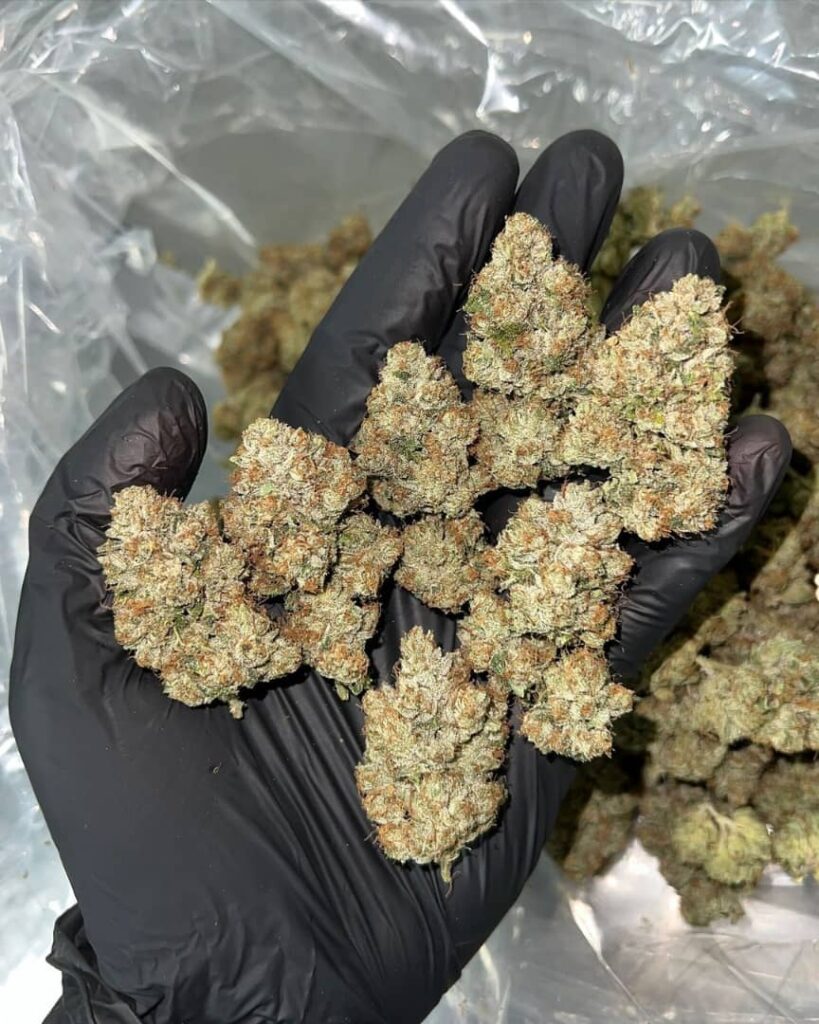
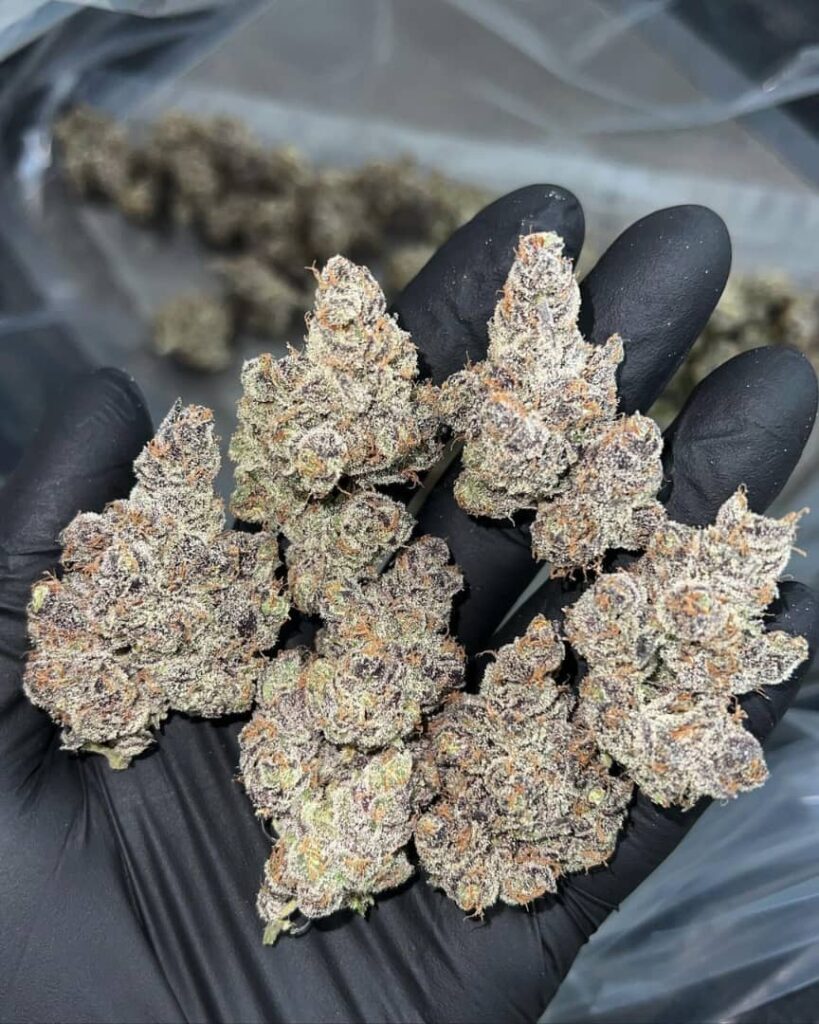
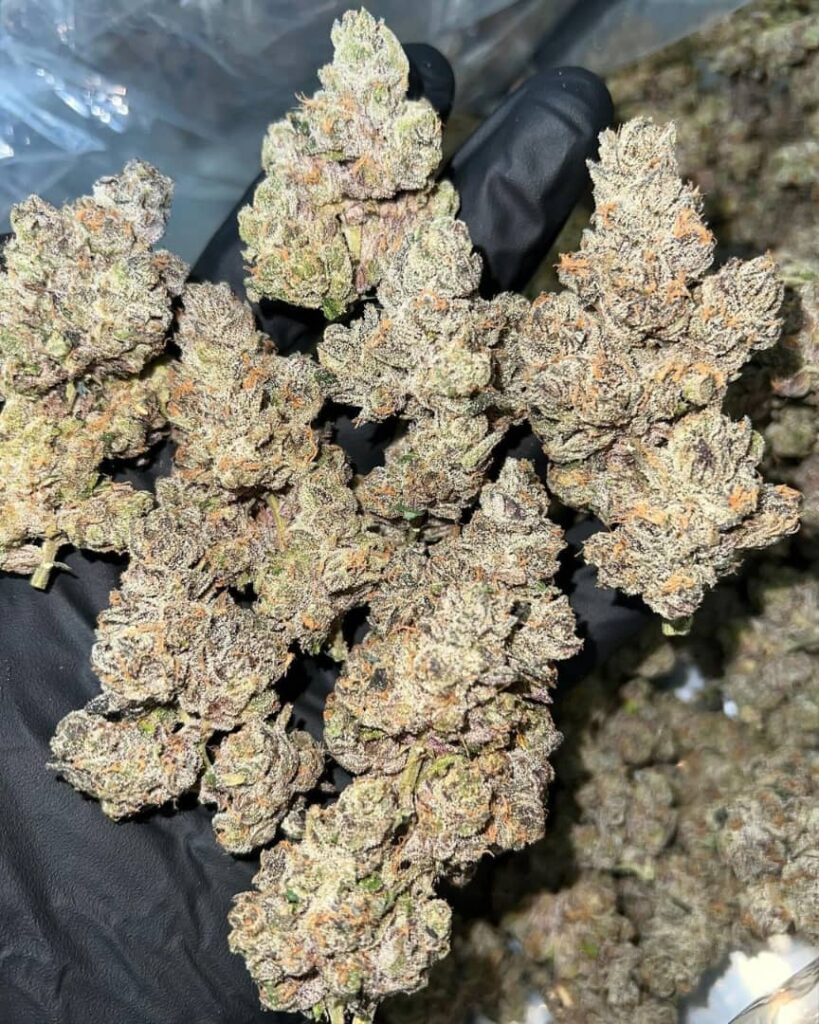
I was honestly impressed with the whole process and the quality of your flower. The Malibu Pure Kush has that old-school character I’ve been missing, and the overall experience was much better than what I’ve been finding locally. Definitely glad I gave it a try.