Description
Valley OG Strain: Complete Guide to Genetics, Effects, Flavor, THC & Growing Information
Introduction
Valley OG Strain is one of the more intriguing names in the old-school OG cannabis family. Unlike highly commercialized cultivars with a standardized breeder history and a large collection of laboratory records, Valley OG has a more complicated documentation trail. The name has historically been associated with a particular California OG selection, while modern strain databases also use Valley OG for a commercially catalogued hybrid with its own reported characteristics.
That distinction matters.
Leafly currently lists Valley OG, also called VOG, as a hybrid with approximately 24% THC, reported effects including energetic, creative, and happy, and a flavor profile led by blue cheese, diesel, and lemon. It lists caryophyllene, limonene, and humulene among the strain’s reported terpenes.
At the same time, older cannabis-community records describe a Valley OG cut circulating in California’s OG scene, with growers describing lemon, pine, skunk, earth, and classic OG characteristics. A 2009 International Cannagraphic Magazine discussion, for example, described Valley OG as a favored OG cut and specifically distinguished the “Valley” from other OG selections.
The result is a strain profile where name, clone history, and modern commercial data should not automatically be treated as interchangeable.
This guide separates what can be documented from what remains uncertain while examining Valley OG genetics, lineage, aroma, flavor, THC, reported effects, cultivation characteristics, and its relationship to other famous OG cultivars.
What Is Valley OG Strain?
Valley OG is best understood as an OG-family cannabis cultivar name with a documented California clone history and a modern commercial strain profile.
The current Leafly profile classifies Valley OG as a hybrid and reports approximately 24% THC. Its listed top effects are energetic, creative, and happy, while its leading flavors are blue cheese, diesel, and lemon.
However, Valley OG should not automatically be treated as synonymous with SFV OG or SFV OG Kush.
That is one of the most important points when researching this cultivar.
SeedFinder’s genealogy records Valley OG as a clone-only line and shows Valley OG appearing in crosses such as Valley OG × Pre Soviet Afghani and Valley OG × Fire Pie. Its genealogy places the Valley OG line under an OG Kush phenotype associated with the San Fernando Valley cut.
Meanwhile, SFV OG is separately documented as an OG Kush phenotype associated with the San Fernando Valley. SeedFinder records SFV OG’s direct lineage as OG Kush [SFV phenotype].
So although the names are closely related historically and geographically, Valley OG and SFV OG should not be casually collapsed into one cultivar.
Valley OG at a glance
| Characteristic | Best-supported information |
|---|---|
| Name | Valley OG / VOG |
| Classification | Hybrid in current Leafly profile |
| THC | About 24% on Leafly’s profile; individual batches vary |
| Reported flavors | Blue cheese, diesel, lemon |
| Reported terpenes | Caryophyllene, limonene, humulene |
| Reported effects | Energetic, creative, happy |
| Genetic identity | OG-family line; exact historical pedigree is not fully standardized |
| Clone history | Valley OG appears in clone-only OG genealogy records |
| Geographic association | Southern California / San Fernando Valley OG culture |
| Cultivation data | Limited strain-specific primary documentation |
Valley OG Genetics and Lineage
The most important distinction: Valley OG is not automatically SFV OG
Cannabis strain names can become complicated when elite clone-only genetics circulate between growers.
The historical OG family contains numerous named selections, including OG Kush, SFV OG, Tahoe OG, Larry OG, Ghost OG, and other regional or breeder selections.
Valley OG sits within that broader family, but the available evidence does not justify publishing a simple, definitive formula such as “Valley OG = X × Y” without qualification.
SeedFinder’s documentation is particularly useful because it identifies Valley OG as a clone-only line and traces Valley OG in later breeding projects. One documented cross is Valley OG × Pre Soviet Afghani, produced by Source Genetics. Its genealogy connects Valley OG to an OG Kush phenotype identified as the SFV cut.
That is evidence of a close relationship to the SFV/OG family, but it is not the same as proving that every plant sold today as Valley OG is genetically identical to SFV OG.
What is actually documented?
The strongest evidence supports these points:
- Valley OG has been documented as a clone-only OG-family line.
- It has been used as breeding material.
- Its genealogy is connected to OG Kush and the San Fernando Valley OG lineage.
- Historical growers have described Valley OG as a distinctive OG selection.
- Modern commercial databases may use the Valley OG name for flower with its own reported laboratory and sensory characteristics.
What remains uncertain?
There is no sufficiently authoritative public breeder record establishing a single universally accepted parentage formula for the original Valley OG clone.
Therefore, claims assigning Valley OG a precise percentage of indica and sativa genetics, a definitive two-parent cross, or a specific original breeder should be treated cautiously unless tied to documentation for the particular cut being discussed.
That is especially important for an SEO article: repeating an unsupported lineage claim across multiple strain websites does not make the claim more accurate.
The History and Origins of Valley OG
Valley OG’s history is closely connected with California’s broader OG culture.
The San Fernando Valley became an important center of cannabis cultivation and distribution, and OG Kush selections associated with Southern California developed a reputation for distinctive lemon, pine, fuel, earth, and skunk aromas.
A 2009 International Cannagraphic Magazine discussion shows Valley OG already being treated as a recognizable OG cut among experienced growers. One participant described it as a favorite OG and emphasized its resemblance to the classic pre-internet-board OG profile.
Another archived cannabis-community discussion provides an especially useful historical perspective. A grower described “the Valley” as a lemon-pine-skunk OG selection and differentiated it from other Valley, SFV, 818, and OG cuts circulating at the time. The discussion also described a predominantly immediate cerebral effect alongside the broader OG experience.
These accounts are historical community reports rather than laboratory or breeder documentation, but they are valuable evidence of how the name was used among growers.
This is also why Valley OG remains relevant to cannabis history.
It represents an era when elite cannabis genetics were frequently preserved as living clone lines, passed between cultivators rather than released through modern commercial seed catalogs.
Valley OG Appearance and Bud Structure
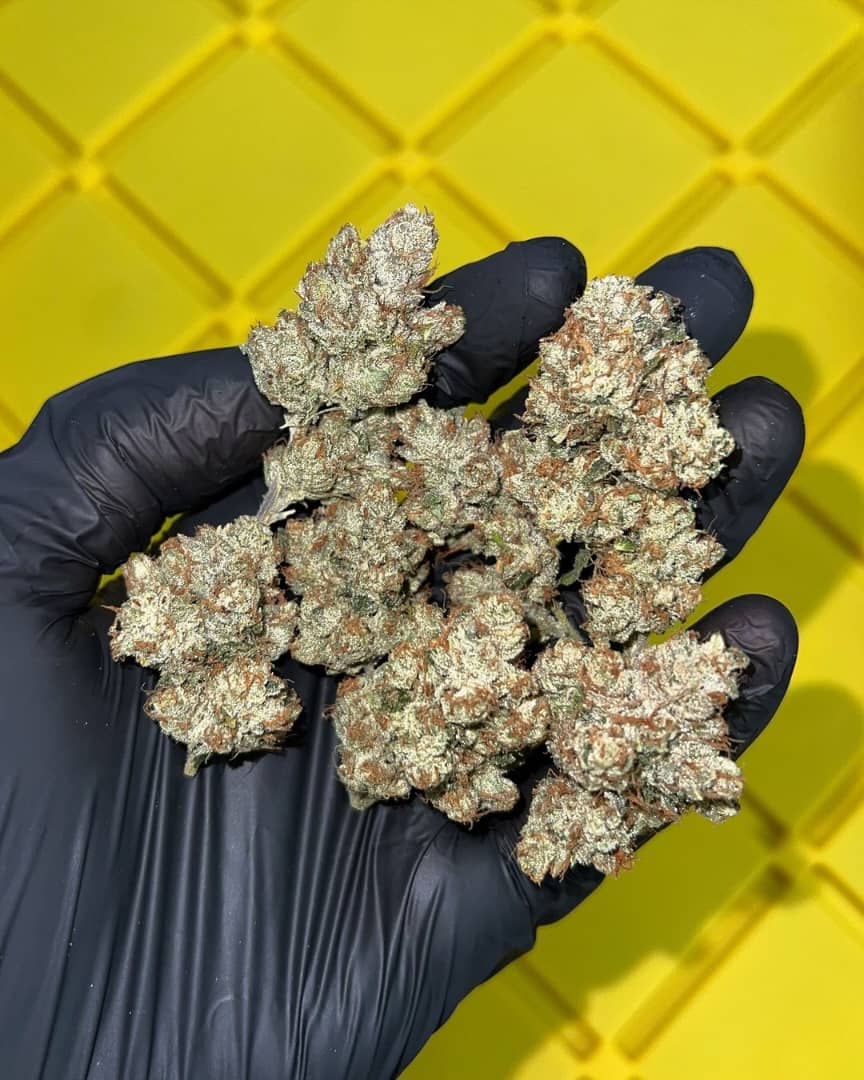
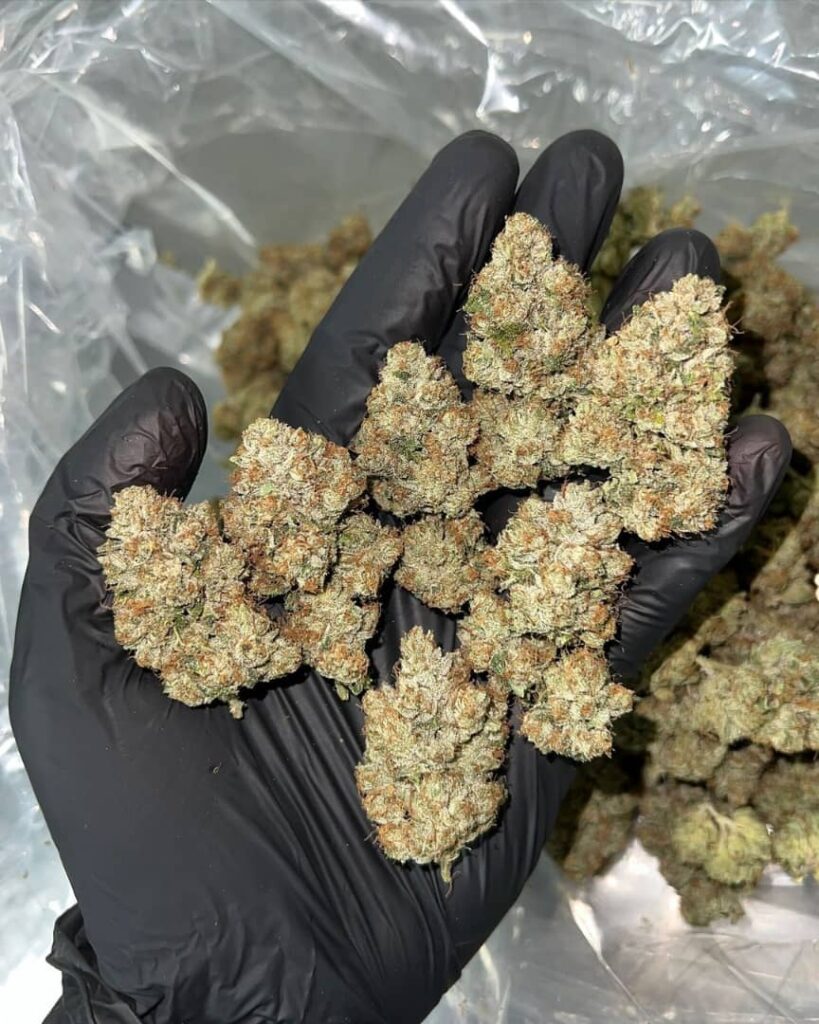
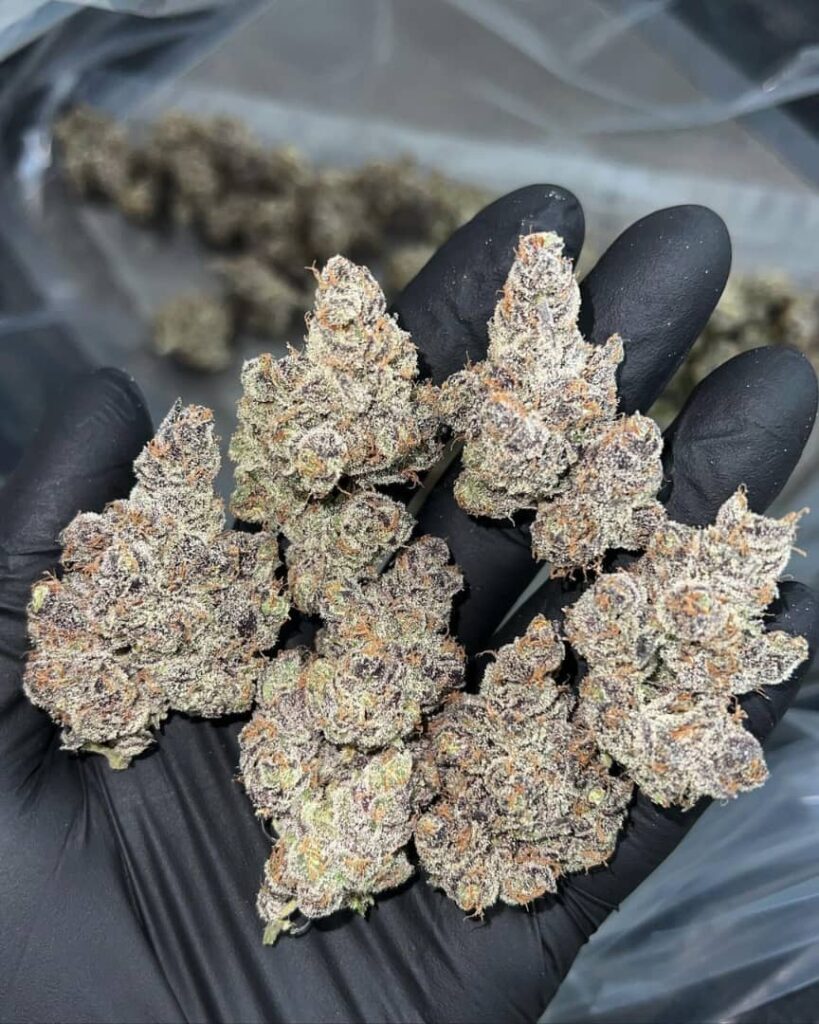
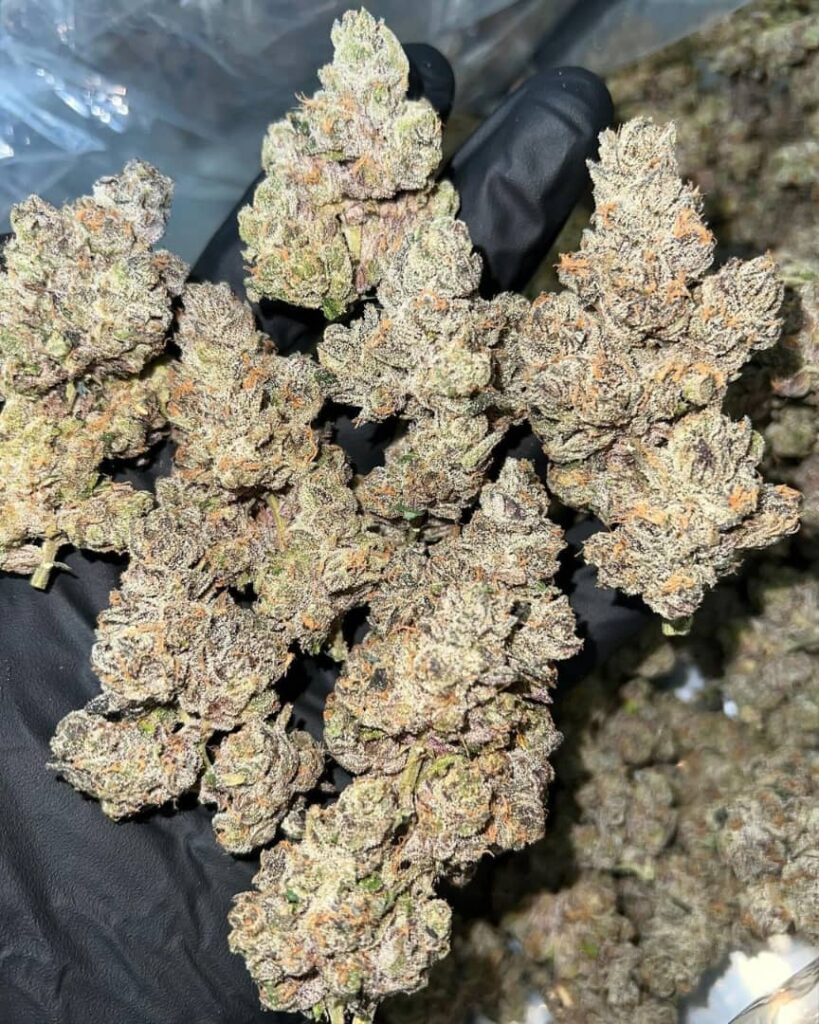
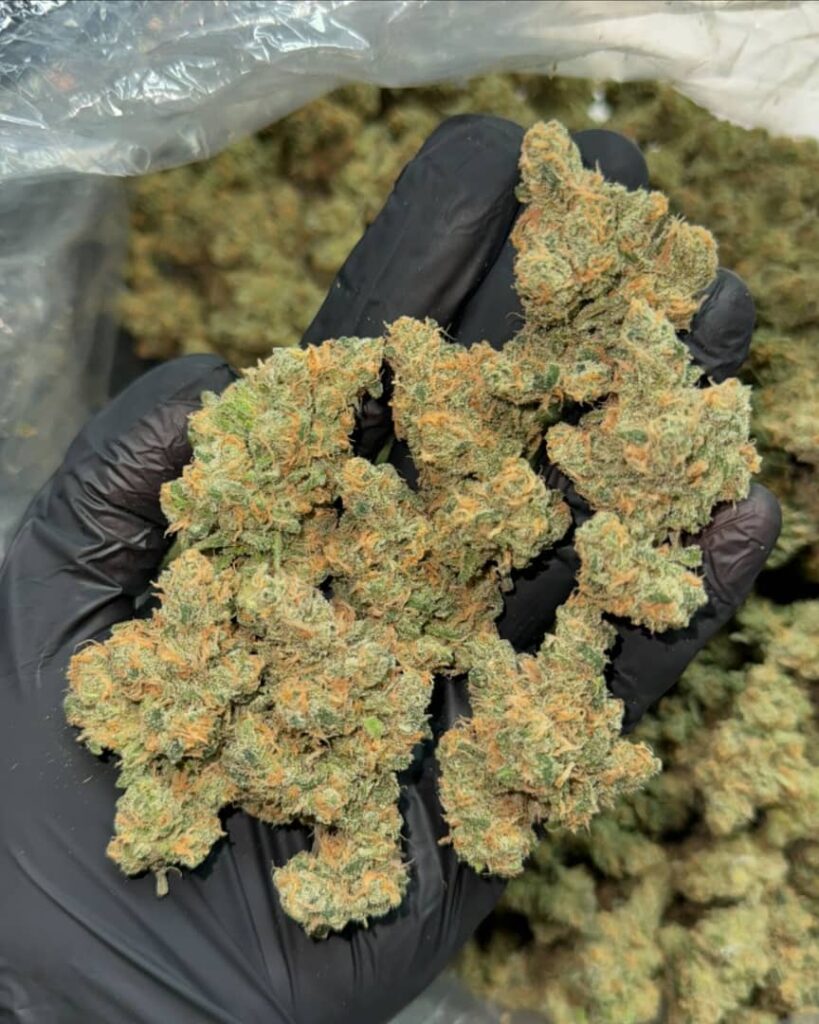
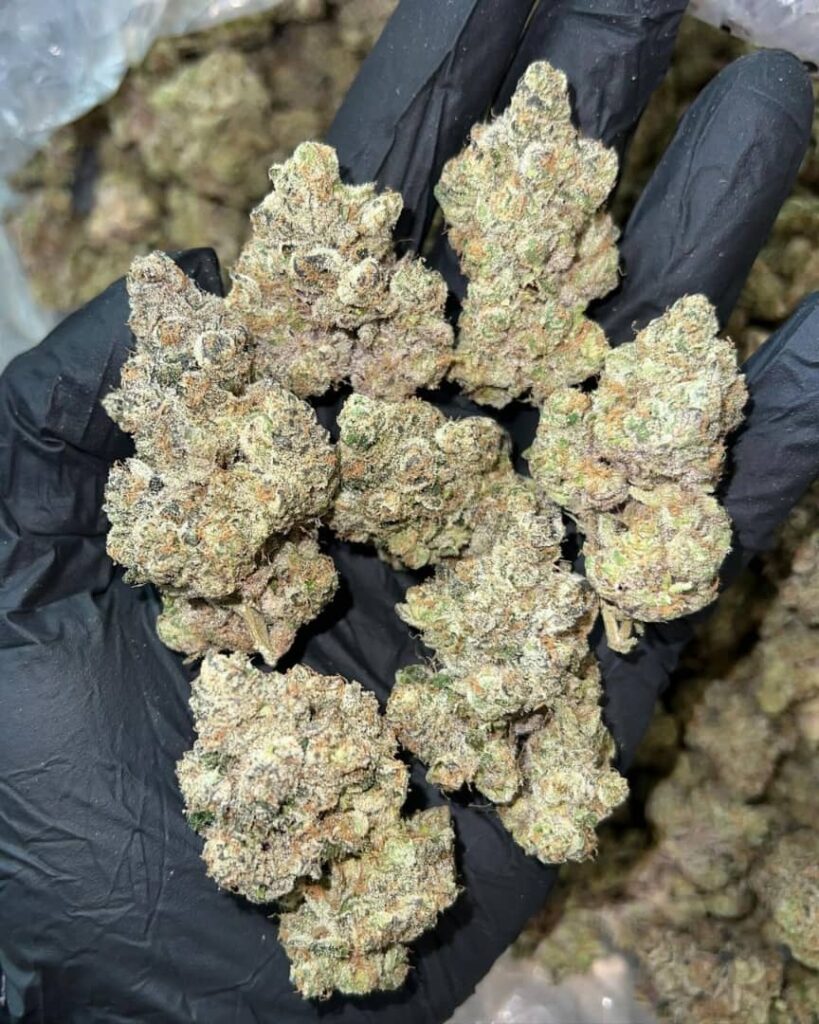
Descriptions of Valley OG flower vary by producer, but the available consumer reports suggest that quality examples can exhibit the familiar visual characteristics associated with established OG cultivars.
A well-finished OG-type flower may show:
- Compact to moderately dense flowers
- Strong trichome coverage
- Green coloration
- Orange or rust-colored pistils
- Resinous surfaces
- Irregular, slightly elongated OG-style buds
However, this should not be treated as a universal Valley OG morphology.
One Leafly reviewer specifically described a high-quality Mohave-grown Valley OG as having attractive light-green buds, good structure, stickiness, and freshness. Another reviewer reported a darker, less resinous example, illustrating how dramatically cultivation and batch quality can affect appearance.
That is an important cultivation lesson: the strain name does not guarantee flower quality.
Genetics establish potential. Cultivation, harvest timing, drying, curing, storage, and handling determine how much of that potential actually reaches the consumer.
Valley OG Aroma
The aroma profile of Valley OG is particularly interesting because historical and modern descriptions overlap in several areas.
Current Leafly data identifies:
- Blue cheese
- Diesel
- Lemon
as its leading flavor categories.
Historical growers, meanwhile, have described Valley OG using terms including:
- Lemon
- Pine
- Skunk
- Earth
- Fuel
- Kush
- Diesel
Taken together, these descriptions suggest a classic gas-and-citrus OG profile, with savory or skunky depth.
Lemon and citrus
The citrus side is one of the most recognizable characteristics associated with the Valley/SFV branch of OG genetics.
SFV OG, for example, is currently described by Leafly with pine, earthy, and woody flavors, while limonene and myrcene are among its listed terpenes.
Valley OG’s lemon component therefore fits comfortably within the broader aromatic vocabulary of California OG cultivars.
Diesel and fuel
Diesel is another recurring descriptor.
This gives Valley OG a sharper aromatic edge than a purely earthy Kush cultivar. The fuel note can range from clean gasoline to heavier chemical or skunky tones depending on phenotype and cure.
Earth and skunk
The earthy component adds depth beneath the brighter citrus and fuel notes.
That combination is one reason classic OG cultivars remain recognizable even after decades of hybridization.
Valley OG Flavor
The Valley OG flavor profile is generally more complex than a simple “lemon strain” label suggests.
The first impression can be citrus-forward, followed by:
- Lemon peel
- Diesel
- Earth
- Pine
- Pepper or spice
- Skunk
- Herbal Kush notes
Leafly’s current profile adds blue cheese to the flavor description, while individual consumer reviews describe lemon, diesel, earth, pepper, and skunk characteristics.
On the inhale
Expect the brighter characteristics to appear first:
lemon + citrus + fuel
Through the middle
The profile can become more earthy and savory:
earth + pine + skunk
On the exhale
The heavier OG characteristics may linger:
diesel + pepper + herbal funk
The exact balance will depend on phenotype, terpene concentration, harvest maturity, and curing.
Valley OG Terpene Profile
Leafly currently lists caryophyllene, limonene, and humulene among Valley OG’s reported terpenes, with caryophyllene identified as the dominant terpene in its profile.
These compounds help explain why the strain’s sensory description combines citrus, spice, earth, and fuel-like characteristics.
Caryophyllene
Caryophyllene is associated with peppery, spicy, woody, and earthy aromatic characteristics.
Its presence fits naturally with Valley OG’s reported pungent and peppery side.
Limonene
Limonene is strongly associated with citrus aromas, making it a logical contributor to Valley OG’s lemon profile.
Humulene
Humulene can contribute earthy, woody, and herbal aromatic characteristics.
Important laboratory caveat
A database terpene profile should not be interpreted as a permanent chemical fingerprint.
Cannabis terpene concentrations can vary substantially between:
- Phenotypes
- Cultivators
- Harvests
- Growing environments
- Drying methods
- Curing conditions
- Storage periods
For a specific Valley OG flower product, the batch COA is the appropriate source for quantitative terpene information.
Valley OG THC and Potency
However, the 24% figure should be treated as a database reference value, not a guaranteed THC range for every Valley OG flower.
Consumer reviews demonstrate why.
One Leafly reviewer reported a Valley OG product at approximately 25% THC, while another reported a product advertised at 29% THC. A separate review referenced a product testing at 29% THC with 33% THCA. These are individual product reports, not standardized strain-wide measurements.
What does that mean for Valley OG potency?
The safest conclusion is that Valley OG can be a high-potency cannabis cultivar, with commercially reported flower commonly reaching the low-to-upper 20% THC range.
But actual potency should always be determined by the laboratory result for the specific batch.
Valley OG for newer consumers
A 24% THC flower can produce a substantially stronger experience than lower-THC cannabis.
The CDC notes that cannabis effects vary with THC concentration, method of use, frequency of use, individual biology, and other factors. Cannabis can impair coordination, judgment, reaction time, attention, and memory.
For that reason, people with little cannabis experience should not assume that an OG strain is automatically mild simply because its effects may initially feel energetic.
Valley OG Effects
One of the most interesting features of Valley OG is that reported effects are not completely uniform.
Leafly’s current user data identifies:
- Energetic
- Creative
- Happy
as its leading reported effects.
But individual reviews also describe:
- Euphoric
- Relaxed
- Sleepy
- Giggly
This variation is normal for cannabis.
Mental effects
At the beginning of the experience, some users describe Valley OG as relatively bright and mentally stimulating.
The reported energetic and creative characteristics can make the initial phase feel more active than the “OG” name might suggest.
Historical grower reports similarly described an immediate cerebral rush followed by more conventional OG effects.
Physical effects
As the experience develops, some users report more physical relaxation.
One Leafly reviewer described a Valley OG batch as producing a strong couch-lock-like experience, while another described a more productive, shorter-lasting buzz.
That difference reinforces the importance of phenotype, batch potency, tolerance, and individual response.
Overall Valley OG experience
A useful description is:
bright OG-style cerebral onset followed by potentially deeper relaxation.
But it would be inaccurate to promise that every Valley OG flower will produce that exact progression.
How long do Valley OG effects last?
There is no reliable Valley OG-specific clinical study establishing a fixed duration.
Duration depends on:
- THC concentration
- Dose
- Consumption method
- Individual tolerance
- Metabolism
- Frequency of cannabis use
- Product formulation
Therefore, claims such as “Valley OG lasts exactly two hours” should be avoided.
Potential Wellness Considerations
Valley OG is sometimes discussed by consumers in the context of relaxation, mood, stress, or other personal wellness goals.
Those reports should be treated as consumer experiences rather than medical evidence.
Leafly’s user-reported data includes people saying they use Valley OG for conditions such as depression and anxiety, but the site explicitly notes that these reports are user-submitted and are not a substitute for professional medical advice.
There is not sufficient clinical evidence to say that Valley OG treats depression, anxiety, pain, headaches, or any other medical condition.
THC-containing cannabis can also produce unwanted effects including dizziness, anxiety, impaired coordination, and cognitive impairment in some users.
Anyone using cannabis should avoid driving or operating machinery while impaired.
Growing Valley OG
The biggest limitation in researching a Valley OG growing guide is the lack of authoritative, standardized breeder documentation for the original clone.
That means it would be irresponsible to present an exact flowering period, guaranteed yield, or precise plant height as established facts.
Historical grower discussions nevertheless provide useful clues.
Valley OG has been described as a vigorous OG-type plant with good yield potential, while historical accounts describe it as a particularly desirable OG cut.
Indoor Growing
Indoor growers should approach Valley OG as an OG-family plant rather than relying on generic indica or sativa assumptions.
Useful priorities include:
- Strong air movement
- Consistent environmental control
- Adequate canopy spacing
- Early structural training
- Support during late flower
- Careful humidity management
- Monitoring dense flower sites for moisture problems
OG cultivars can develop branches that appear relatively manageable early in flowering but require additional support as flowers gain weight.
Training
Useful techniques can include:
- Topping
- Low-stress training
- Branch spreading
- Trellising
- Selective pruning
The exact strategy should depend on the individual phenotype.
A more vigorous Valley OG plant may respond well to early canopy shaping, while a compact clone may require much less intervention.
Outdoor Growing
Valley OG’s California background makes it particularly interesting for outdoor growers in suitable climates, but historical association with Southern California should not be confused with a universal climate guarantee.
Outdoor success depends heavily on:
- Latitude
- Temperature
- Rainfall
- Humidity
- Planting date
- Sun exposure
- Soil/root-zone conditions
- Local disease pressure
Dry climates with long, warm growing seasons are generally more forgiving for dense OG-type flowers than humid environments with prolonged late-season rain.
Because no authoritative Valley OG breeder source establishes a universal outdoor harvest date, growers should monitor the individual plant rather than follow an arbitrary calendar.
Valley OG Flowering Time
There is no sufficiently authoritative source establishing a universal flowering time for the original Valley OG clone.
Some modern commercial pages attach specific flowering periods to products sold under the Valley OG name, but those may represent a particular seed line or interpretation rather than the historical clone.
That distinction is critical.
A grower working with a documented clone should record:
- Flip date
- First visible pistils
- Flower-set date
- Trichome development
- Final harvest date
- Environmental conditions
Over multiple runs, those observations become much more useful than an unverified database estimate.
Valley OG Yield Expectations
Historical grower discussion suggests that Valley OG can be a respectable-yielding OG selection. One archived community discussion specifically described the “Valley” as one of the better-yielding OG cuts.
However, there is insufficient standardized data to publish a universal grams-per-square-meter or grams-per-plant figure for Valley OG.
Yield is influenced by:
- Plant size
- Vegetative time
- Light intensity
- Canopy management
- Root development
- Nutrition
- Environment
- Phenotype
- Harvest timing
Valley OG Strain Growing Difficulty
Intermediate is a reasonable practical classification for a grower who has access to a genuine Valley OG clone.
The difficulty is not necessarily because OG genetics are inherently difficult.
Rather, experienced growers are more likely to recognize and manage:
- Stretch
- Branch support
- Environmental swings
- Dense flower development
- Nutritional sensitivity
- Late-flower humidity
- Phenotypic variation
A first-time cultivator could grow Valley OG successfully, but a beginner should focus on environmental stability rather than chasing maximum yield.
Valley OG vs Other Popular OG Strains
Valley OG belongs to a large family of OG cultivars that share overlapping aromas and genetic history.
Valley OG vs OG Kush
OG Kush is the broader foundational reference point.
OG Kush is commonly associated with fuel, earth, skunk, pine, and spice, while Valley OG has a particularly strong association with lemon, diesel, pine, and skunky characteristics.
Because the exact historical relationship between individual OG cuts can be difficult to document, it is more accurate to describe Valley OG as part of the OG family rather than claiming a universally accepted direct parentage relationship.
Valley OG vs Tahoe OG
Tahoe OG is another famous OG selection associated with California cannabis culture.
Compared with Valley OG, Tahoe OG is often characterized by heavier relaxation and a strong lemon-Kush aromatic profile.
Valley OG can present a somewhat brighter or more energetic opening according to current consumer reports.
However, individual cuts can overlap considerably.
Valley OG vs SFV OG
This is the most important comparison.
Valley OG and SFV OG are related but should not automatically be treated as identical.
SFV OG is documented as an OG Kush phenotype associated with the San Fernando Valley. Leafly currently lists SFV OG as a hybrid with pine, earthy, and woody flavors and myrcene, limonene, and caryophyllene among its listed terpenes.
SeedFinder traces SFV OG directly to the SFV phenotype of OG Kush.
Valley OG appears separately in clone-only genealogy records.
The two names therefore belong in the same historical conversation, but they should not be used interchangeably without identifying the specific cut.
Valley OG Strain vs Larry OG
Larry OG is another OG-family cultivar known for citrus, earth, and fuel characteristics.
Valley OG’s reported lemon-diesel profile places it in similar sensory territory, but the two cultivars represent different selections and should be evaluated by their actual genetics and batch characteristics rather than the shared “OG” label.
Valley OG vs True OG
True OG is another classic OG selection often associated with strong Kush, citrus, fuel, and earthy characteristics.
The primary distinction for consumers is less about a single flavor note and more about which particular cut and producer are being compared.
Why Valley OG Remains Popular
Valley OG has several characteristics that explain its continuing relevance.
Classic OG character
The strain sits firmly inside the sensory world that made OG cannabis famous:
lemon + pine + fuel + earth + skunk.
Historical credibility
The Valley OG name appears in older grower discussions rather than existing solely as a recent commercial invention.
Strong consumer identity
Modern Leafly users continue to describe Valley OG in terms of energy, creativity, happiness, diesel, lemon, and pungency.
Breeding value
Valley OG has also appeared in documented breeding projects, including Valley OG × Pre Soviet Afghani and Valley OG × Fire Pie.
That suggests its importance extends beyond flower consumption.
Who Should Try Valley OG Strain?
Beginners
Potentially, but with caution.
A reported THC level around 24% makes Valley OG considerably stronger than many lower-potency products.
New consumers should prioritize the actual product COA rather than assuming every Valley OG batch is the same.
Experienced consumers
Valley OG is more likely to appeal to experienced users who appreciate classic OG genetics and stronger THC flower.
OG enthusiasts
This is arguably the cultivar’s most natural audience.
If lemon, pine, diesel, earth, skunk, and Kush aromatics are your preferred cannabis profiles, Valley OG is particularly relevant.
Flavor-focused consumers
The combination of citrus, fuel, earth, and reported blue-cheese notes provides considerably more complexity than a one-dimensional citrus profile.
Evening users
Some users report relaxation and sleepiness, while others experience a more energetic or creative effect.
It therefore should not be labeled strictly as an evening strain.
Frequently Asked Questions About Valley OG
What strain is Valley OG?
Valley OG is an OG-family cannabis cultivar. Current Leafly data classifies Valley OG as a hybrid, while historical records describe a distinct Valley OG clone associated with California’s OG culture.
Is Valley OG indica or hybrid?
The current Leafly profile classifies Valley OG as a hybrid. Other commercial sources may describe different Valley OG products as indica-dominant, but those classifications should not automatically be applied to every Valley OG cut.
How strong is Valley OG?
Leafly currently lists approximately 24% THC. Individual products can test differently, so the batch-specific COA remains the best indicator of potency.
What does Valley OG taste like?
The most consistently reported flavors include lemon, diesel, earth, pine, skunk, and blue cheese.
What are Valley OG genetics?
The historical genetics are not completely standardized in public sources. SeedFinder documents Valley OG as a clone-only OG-family line and connects its genealogy to the OG Kush/SFV lineage.
What terpenes are found in Valley OG?
Leafly currently lists caryophyllene, limonene, and humulene, with caryophyllene identified as the dominant terpene in its database profile. Actual concentrations vary by batch.
Is Valley OG easy to grow?
There is not enough standardized breeder data to give Valley OG a definitive difficulty rating. Historical grower reports suggest good vigor and yield potential, but a genuine clone requires the same environmental discipline expected from other elite OG selections.
How long do Valley OG effects last?
There is no scientifically established Valley OG-specific duration. Effects vary according to THC concentration, dose, tolerance, consumption method, and individual physiology.
How does Valley OG compare with OG Kush?
Valley OG shares the classic OG vocabulary of lemon, pine, earth, fuel, and skunk, but it represents a specific Valley-associated selection rather than simply being another name for all OG Kush.
How does Valley OG compare with SFV OG?
They are closely related in the broader OG/San Fernando Valley lineage, but available genealogy sources treat Valley OG and SFV OG as distinct named lines.
Why is Valley OG popular?
Its combination of classic OG aroma, historical California clone culture, reported potency, and strong consumer recognition makes it appealing to both OG enthusiasts and experienced growers.
Is Valley OG suitable for beginners?
It can be grown by beginners with appropriate environmental control, but high-THC flower may be less forgiving for inexperienced consumers. Actual potency should be checked on the product’s laboratory label.
What makes Valley OG different from other OG strains?
Its historical identity as a distinct Valley OG selection, rather than simply another generic OG label, is a major part of its appeal. Historical growers specifically distinguished the Valley cut from other OG selections.
Does Valley OG have a high THC level?
A current Leafly profile lists approximately 24% THC, placing it in the higher-potency range. Actual flower can vary significantly between producers and batches.
Is Valley OG the same as San Fernando Valley OG Strain?
Not necessarily. The names are historically connected, but available genealogy sources distinguish Valley OG from SFV OG. Treat the exact cultivar or clone identity as important when comparing products.
Conclusion
Valley OG is best understood as a classic California OG-family cultivar whose history is more nuanced than modern strain databases often suggest.
Current Leafly data identifies Valley OG as a hybrid with approximately 24% THC, caryophyllene as its reported dominant terpene, and a sensory profile combining blue cheese, diesel, and lemon. Users most commonly report energetic, creative, and happy effects, although individual experiences range from productive and cerebral to deeply relaxed.
Historically, Valley OG Strain appears in older grower discussions as a distinct and respected OG selection associated with the San Fernando Valley/California OG scene. Those accounts describe lemon, pine, skunk, earth, fuel, and a classic OG-style experience.
Its genetics require more caution. Public genealogy sources place Valley OG within the OG Kush/SFV family and document it as a clone-only line, but they do not provide enough evidence to justify one universally accepted parentage formula for every plant sold under the Valley OG name.
That uncertainty does not diminish the cultivar’s significance. In fact, it illustrates why serious cannabis research must distinguish clone identity, breeder documentation, database information, consumer reports, and batch-specific laboratory results.
For consumers, the strongest Valley OG examples should be evaluated by their actual COA, aroma, cure, resin quality, and flower structure—not simply by the strain name.
For growers, the cultivar is particularly interesting because it represents the kind of OG genetics that helped establish California’s reputation for distinctive lemon-fuel cannabis. Its documented history, breeding use, and continuing consumer recognition make Valley OG a worthwhile subject for anyone interested in the development of the modern OG family.
In short, Valley OG combines classic California OG character with a complicated but fascinating genetic history. Its lemon-diesel aroma, earthy Kush depth, reported potency, and long-standing reputation explain why the name continues to attract attention decades after OG genetics first became a defining force in West Coast cannabis culture.
Reviews
There are no reviews yet.