
Description
Cognac Black Clones: Genetics, Lineage, Terpenes, Phenotype & Cultivation Guide
Cognac Black clones is modern hybrid that brings together two very different genetic influences: the unmistakable fuel, citrus, and chemical character associated with Sour D and the sweet, creamy, fruit-forward complexity of Sherbanger.
Associated with Bloom Seed Co., Cognac Black has attracted attention for its combination of classic diesel character, modern dessert-gas expression, resin production, and vigorous hybrid structure. SeedFinder records the cultivar’s lineage as Sour D × Sherbanger, while other contemporary databases similarly identify Sour D and Sherbanger as its principal parents.
The cultivar is particularly interesting from a genetics perspective because the parental combination bridges two generations of cannabis breeding. Sour D carries the legacy of the Diesel family, while Sherbanger brings the modern influence of Sunset Sherbet and Headbanger-derived genetics.
That combination creates a genetic profile capable of expressing sharp diesel and citrus aromas alongside sweeter fruit, cream, earth, spice, and gas.
For growers evaluating Cognac Black genetics, however, the name should be treated as a starting point rather than the entire story. Public information about this cultivar remains relatively limited, and different databases have published conflicting classifications and cultivation estimates. Provenance, plant health, phenotype, and the identity of the specific clone therefore remain important considerations.
What Is Cognac Black?
Cognac Black is a hybrid cannabis cultivar associated with Bloom Seed Co. and most consistently documented as:
Sour D × Sherbanger
SeedFinder’s Bloom Seed Co. record identifies Cognac Black specifically as Sour D × Sherbanger and describes it as a blend of pungent Sour Diesel characteristics with the creamy, fruity profile of Sherbanger.
GrowDiaries likewise identifies Bloom Seed Co. as the breeder associated with Cognac Black and describes the cultivar as a hybrid with Sour D and Sherbanger parentage.
This lineage is significant because both parents contribute recognizable but very different traits.
Sour D is associated with:
- Sharp diesel
- Citrus
- Pungent fuel
- Skunk
- Energetic plant structure
- Strong aromatic intensity
Sherbanger contributes another direction:
- Sweet fruit
- Cream
- Dessert-like aromas
- Gas
- Resin production
- Modern hybrid structure
Cognac Black sits at the intersection of those characteristics.
Cognac Black Genetics & Lineage
Sour D
The Sour D side provides much of the cultivar’s old-school aromatic character.
The Diesel family is known for strong fuel and chemical notes, often accompanied by citrus, earth, and skunk. SeedFinder’s Cognac Black genealogy traces Sour D through the Original Diesel family and further into Chemdawg and Skunk-related ancestry.
This helps explain why Cognac Black descriptions frequently mention diesel, citrus, earthy notes, and a pungent aromatic character.
Sour D also brings a genetic reputation for vigorous growth and substantial vertical development, although the final expression depends on the individual phenotype.
Sherbanger
The second parent, Sherbanger, introduces a very different modern profile.
Sherbanger is associated with Sunset Sherbet × Headbanger, combining dessert-style fruit and cream with the fuel-heavy character of Headbanger.
GrowDiaries specifically describes Sherbanger in the Cognac Black profile as a Boston Roots Seed Co creation derived from Sunset Sherbet and Headbanger.
That makes Cognac Black an interesting genetic bridge:
Sour D → Diesel / citrus / fuel
Sherbanger → Sherbet / fruit / cream / gas
The resulting cultivar has the potential to express both traditional and contemporary cannabis characteristics without relying entirely on either side.
Why the Lineage Is Important
Cognac Black is an example of how modern breeding can combine an established cultivar family with newer dessert-gas genetics.
Sour D contributes a recognizable aromatic foundation that many experienced growers associate with classic Diesel lines.
Sherbanger adds additional complexity rather than simply repeating the same fuel profile.
The result is a cultivar where citrus, diesel, cream, fruit, earth, spice, and gas can coexist within the same genetic family.
This type of pairing is particularly interesting for growers who value terpene complexity rather than a single dominant aroma.
Cognac Black Phenotype
Public documentation on individual Cognac Black phenotypes remains relatively limited.
GrowDiaries describes the cultivar as producing conical, medium-tall plants, with sturdy branching and internodal spacing that can provide useful light penetration and airflow. It also describes the flowers as firm and sugar-coated.
These observations should be treated as reported cultivation characteristics rather than universal rules.
A seed-derived population can express considerable variation, while a clone represents one particular genetic individual.
That distinction is important when discussing Cognac Black clones.
Seed Line vs. Clone
Seed-grown Cognac Black plants may express different combinations of Sour D and Sherbanger characteristics.
One plant might emphasize:
- Diesel
- Citrus
- Stretch
- Longer internodes
while another could lean toward:
- Cream
- Fruit
- Dense flowers
- Stronger resin
A selected clone can preserve the characteristics of one established phenotype.
For growers interested in consistency, that makes provenance particularly important.
Cognac Black Aroma
The aromatic profile of Cognac Black is one of its most compelling characteristics.
Current descriptions repeatedly point toward a combination of:
- Diesel
- Citrus
- Cream
- Fruit
- Earth
- Spice
- Gas
- Skunk
SeedFinder describes the cultivar as combining the pungent character of Sour D with the creamy and fruity qualities of Sherbanger.
GrowDiaries describes citrus, cream, and diesel among the principal taste characteristics.
A commercial laboratory-tested Cognac Black flower product has also been described with darker fruit, vanilla, spice, oak-like, and subtle gas characteristics, illustrating how different phenotypes and finished products can emphasize different portions of the genetic profile.
The important point is that Cognac Black does not appear to fit neatly into a single aromatic category.
It can combine an aggressive fuel foundation with softer fruit and cream characteristics.
Cognac Black Flavor
The flavor profile follows the same general pattern as the aroma.
The initial impression can lean toward bright citrus and fuel before developing into sweeter fruit and cream.
Commonly reported characteristics include:
Citrus:
Bright lemon or citrus notes derived from the Sour D side of the genetic family.
Diesel:
A pungent fuel character that gives the cultivar its sharper edge.
Cream:
A softer, smoother element associated with the Sherbanger side.
Fruit:
Sweet fruit characteristics that help balance the stronger fuel notes.
Earth and Spice:
Secondary notes that can add depth toward the finish.
The combination gives Cognac Black a broad sensory range rather than a simple fruit or fuel profile.
Cognac Black Terpene Profile
Public terpene information for Cognac Black is not yet as extensive as it is for long-established cultivars.
Available descriptions frequently associate the cultivar with terpene families commonly responsible for citrus, spice, earth, and fuel characteristics.
GrowDiaries specifically references caryophyllene, limonene, and myrcene in its description of the cultivar.
Caryophyllene
Beta-caryophyllene is commonly associated with pepper, spice, wood, and earthy aromas.
Within Cognac Black, it can help reinforce the cultivar’s spicy and pungent character.
Limonene
Limonene is strongly associated with citrus aromas.
Its presence fits the recurring descriptions of lemon and bright citrus characteristics found in Cognac Black references.
Myrcene
Myrcene commonly contributes earthy, herbal, and musky aromatic qualities.
In a cultivar combining citrus, diesel, fruit, and cream, myrcene can help provide additional depth beneath the brighter notes.
Why Terpene Data Should Be Treated Carefully
Terpene percentages can change substantially between batches.
Factors include:
- Phenotype
- Growing environment
- Harvest timing
- Drying
- Curing
- Storage
- Testing methodology
A general strain profile therefore should not be interpreted as a laboratory analysis of every Cognac Black plant.
For precise cannabinoid and terpene information, a batch-specific certificate of analysis is the appropriate reference.
Cognac Black Appearance
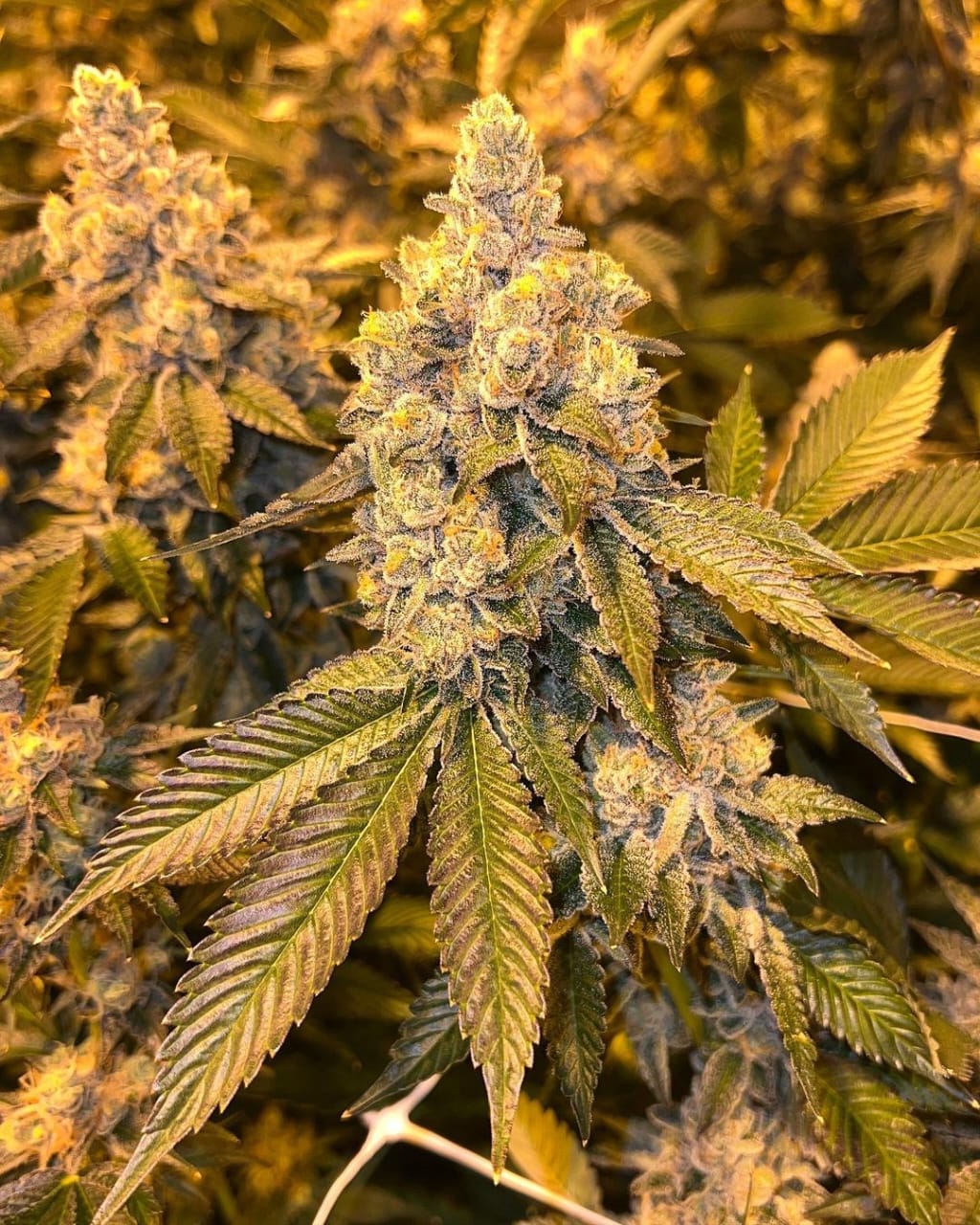
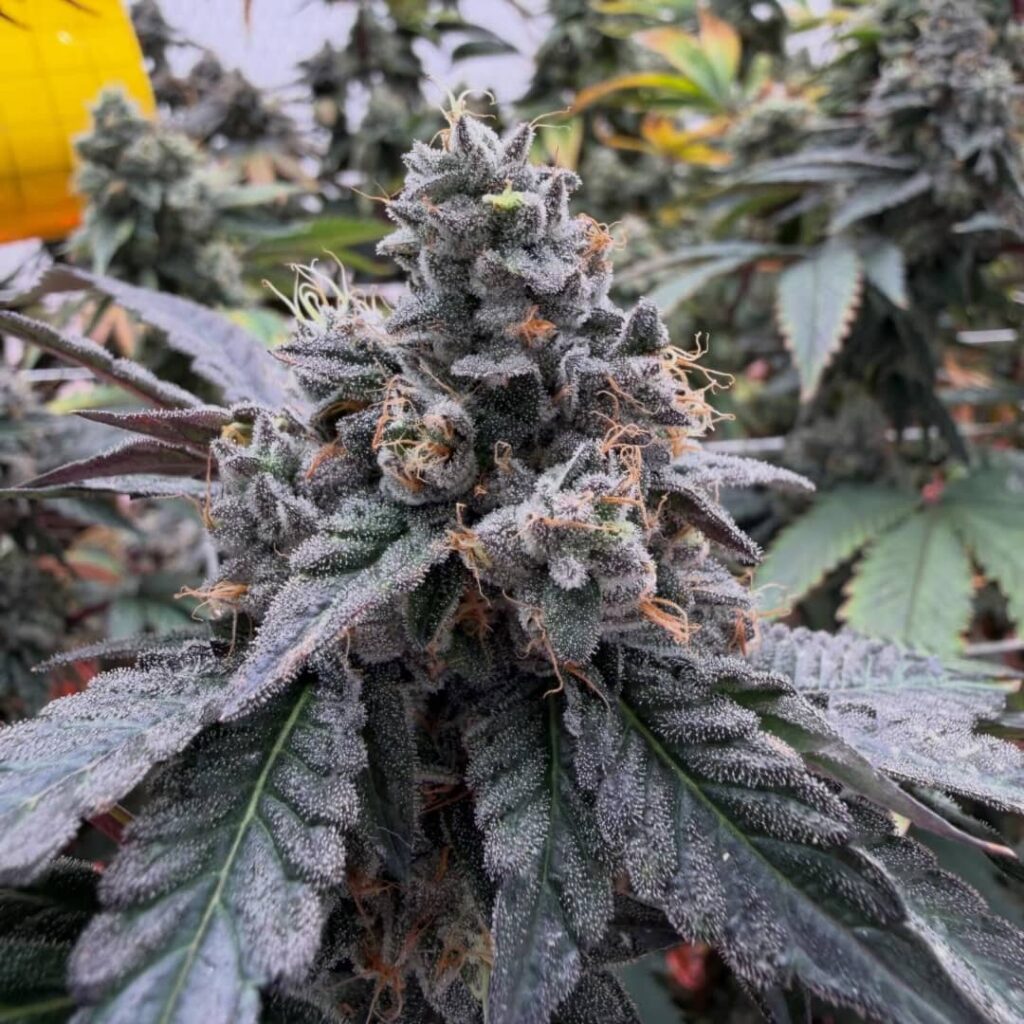
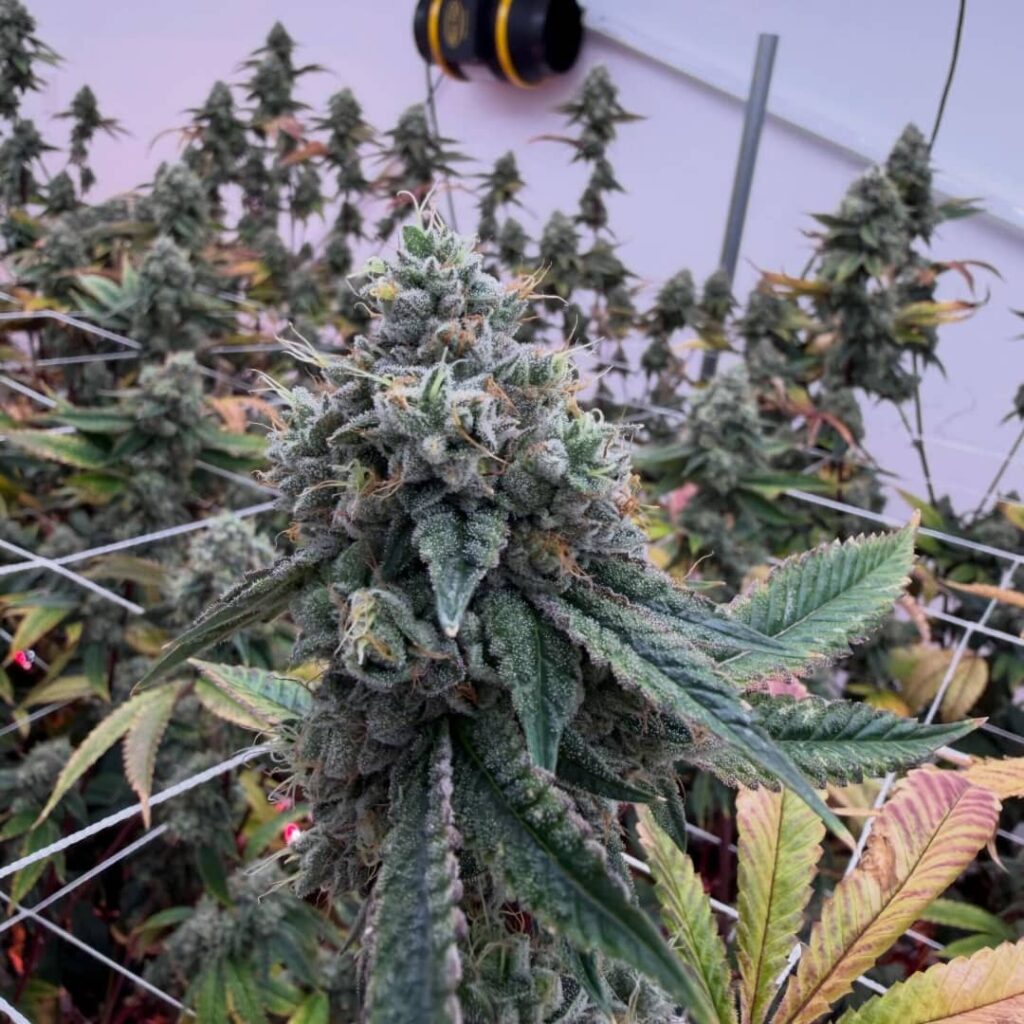
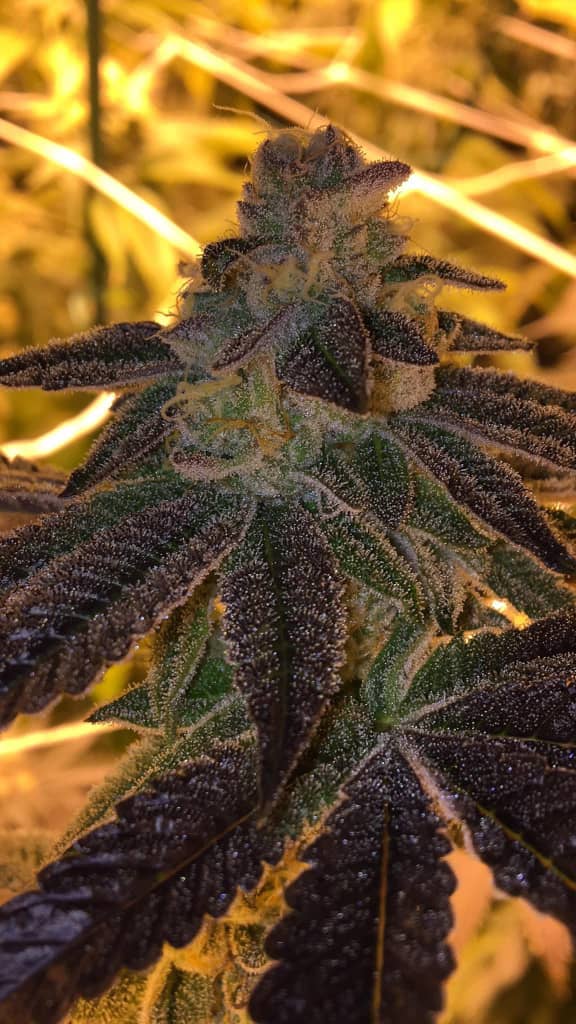
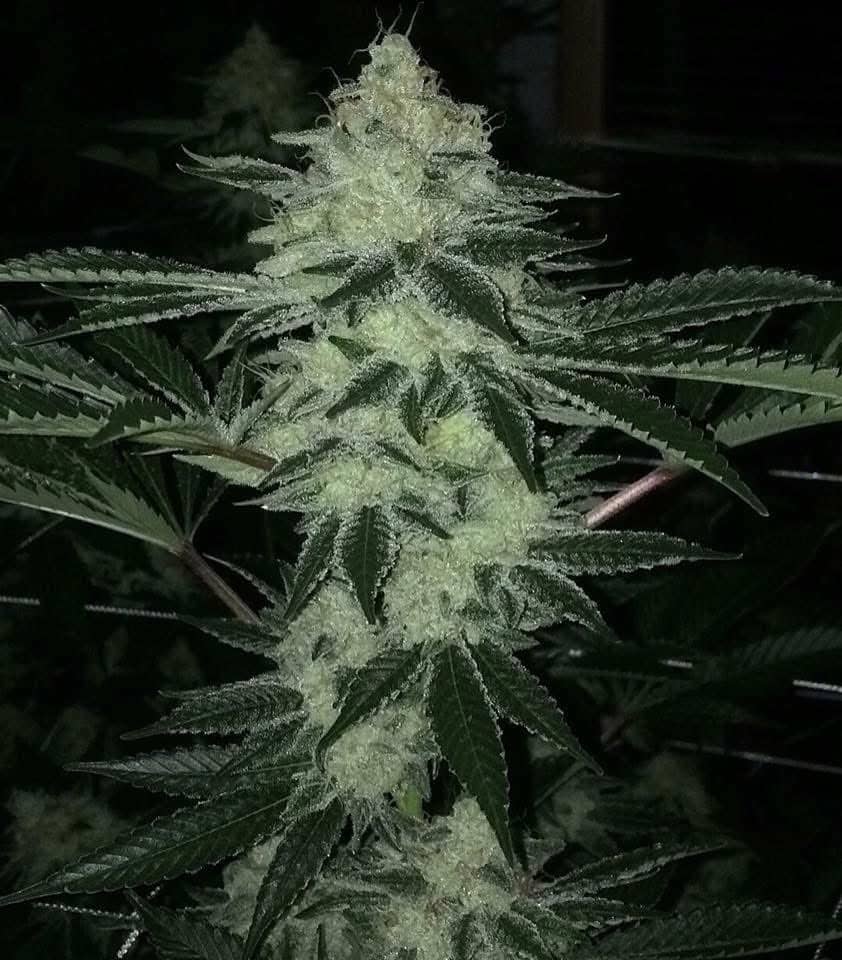
Cognac Black is generally described as producing visually attractive, resinous flowers.
GrowDiaries reports conical flowers, firm structure, and strong sugar coverage, while another published description emphasizes dense flowers and substantial trichome coverage.
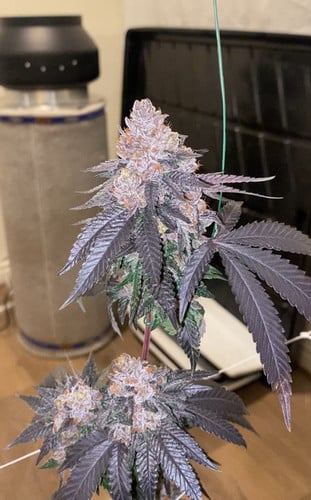
Color can vary according to phenotype and environmental conditions.
Potential visual characteristics include:
- Deep green foliage
- Dense flower formation
- Orange pistils
- Heavy trichome coverage
- Compact or conical flowers
- Darker coloration under appropriate conditions
It is important not to use flower coloration as a direct indicator of potency or quality.
Plant color is influenced by genetics and environmental factors, and trichome appearance alone cannot substitute for laboratory cannabinoid analysis.
Cognac Black Potency
Published potency information for Cognac Black varies.
GrowDiaries currently lists a 25% THC figure for its cultivar profile, while a separate strain database gives a broader 18–24% THC range.
A specific commercial Cognac Black flower batch tested by Bia Diagnostics reported:
- 31.03% total THC
- 0.09% total CBD
- 38.00% total cannabinoids
The laboratory report identifies the sample as HL 043 Cognac Black, received September 25, 2025, and completed October 1, 2025.
That result should be treated as batch-specific, not as a guaranteed potency level for Cognac Black genetics generally.
The wide variation between published numbers demonstrates why responsible strain descriptions should avoid presenting a single THC percentage as universal.
Reported Effects
Available descriptions generally associate Cognac Black with an experience that can begin with cerebral stimulation before moving toward relaxation.
GrowDiaries lists:
- Uplifted
- Euphoric
- Relaxed
and also records dry mouth, dry eyes, and anxiety among reported negative effects.
Another strain database lists:
- Relaxed
- Happy
- Euphoric
- Creative
- Sleepy
as reported effects.
These descriptions represent reported experiences rather than predictable medical outcomes.
Individual responses to cannabis vary according to factors including cannabinoid concentration, tolerance, personal physiology, consumption method, and product composition.
Growing Cognac Black Clones
Available cultivation information suggests Cognac Black can develop into a moderately vigorous, medium-to-tall hybrid.
GrowDiaries describes the cultivar as suitable for indoor and outdoor cultivation, with flowering around 9–10 weeks indoors and an outdoor harvest window around early to mid-October under the conditions represented in its listing.
Another database gives a broader 65–75 day flowering estimate.
Because these sources are not identical, growers should use them as general reference ranges rather than fixed guarantees.
Vegetative Structure
The Sour D influence can contribute substantial vigor and stretch.
The Sherbanger side can contribute a more compact, resinous structure.
The resulting plant may therefore occupy a middle ground between vigorous vertical growth and denser hybrid architecture.
Good canopy management can help maintain:
- Even light distribution
- Adequate airflow
- Appropriate plant spacing
- Strong branch support
- Consistent environmental conditions
Flowering
Cognac Black’s reported flowering period generally falls around the nine-to-ten-week range.
However, actual maturity can vary according to:
- Phenotype
- Environment
- Lighting
- Temperature
- Nutrition
- Cultivation method
- Desired harvest characteristics
Calendar-based flowering estimates should therefore be supplemented by direct observation of plant maturity.
Environmental Management
Dense, resinous flowers require appropriate environmental management.
Good cultivation practices should prioritize:
- Consistent airflow
- Appropriate humidity
- Clean growing conditions
- Adequate canopy spacing
- Proper irrigation
- Balanced nutrition
The goal should be healthy plant development rather than simply maximizing flower density.
Cognac Black Clones for Indoor Cultivation
Indoor environments provide growers with greater control over the variables that influence phenotype expression.
Cognac Black’s reported medium-to-tall growth can make canopy planning particularly useful.
Training and structural support may help manage vertical growth and maintain more uniform light exposure.
GrowDiaries specifically notes that plants respond well to training and moderate feeding.
This should be interpreted as cultivation guidance rather than a fixed nutrient schedule.
There is no universal feeding program for every Cognac Black phenotype or growing environment.
Cognac Black Clones for Outdoor Cultivation
Outdoor performance depends heavily on climate.
The cultivar’s reported early-to-mid October harvest window comes from third-party cultivation information and should not be interpreted as universal across regions.
Outdoor growers should consider:
- Local seasonal temperatures
- Rainfall
- Humidity
- Frost risk
- Plant height
- Flower density
- Available sunlight
Climate can significantly alter both flowering duration and final plant structure.
Yield Expectations
Some third-party Cognac Black references publish relatively high yield estimates, including approximately 650 g/m² indoors and up to 1,200 g per outdoor plant under their described conditions.
These figures should not be presented as guaranteed yields.
Actual yield depends on:
- Plant size
- Genetics
- Lighting
- Container volume
- Vegetative duration
- Training
- Environmental conditions
- Grower experience
- Phenotype
For a premium clone page, plant health and genetic authenticity are more meaningful indicators than promising a predetermined harvest weight.
Why Cognac Black Clones Are Interesting
A clone represents an established genetic individual rather than an unknown combination of genes from a seed population.
This distinction is especially useful when working with a cultivar such as Cognac Black, where growers may be interested in preserving specific expressions of:
- Diesel
- Citrus
- Cream
- Fruit
- Resin
- Plant structure
A well-maintained clone can provide a more predictable starting point for reproducing the characteristics of a selected mother plant.
That does not mean every clone will perform identically in every environment.
It means the genetic starting point is more defined.
Evaluating Cognac Black Clone Quality
The quality of a clone should be evaluated independently of the cultivar’s reputation.
Root Development
A healthy rooted clone should have an established and functional root system appropriate to its propagation stage.
Vegetative Health
Look for:
- Healthy foliage
- Active new growth
- Strong stems
- Appropriate color
- No obvious signs of stress
Genetic Identification
The name “Cognac Black” should be supported by information about its genetic source.
This is especially important because public records are still relatively limited and some online sources disagree on breeder attribution and other details.
Mother-Plant Quality
The mother plant is the foundation of clone quality.
Consistent nursery practices, sanitation, environmental management, and careful propagation all contribute to healthier starting material.
Provenance & Genetic Accuracy
Cognac Black is a good example of why cultivar provenance matters.
SeedFinder’s current Bloom Seed Co record clearly identifies the cultivar as Sour D × Sherbanger.
THCFarmer also lists Cognac Black as a Bloom Seed Co hybrid, while noting that its database currently lacks breeder-supplied flowering and yield data. Importantly, it displays the breeder-stated lineage separately from community-observed information.
That distinction is useful.
Rather than combining every internet claim into one definitive description, responsible cultivar documentation should distinguish:
Breeder-associated information
Sour D × Sherbanger; Bloom Seed Co.
Third-party cultivation observations
Flowering, structure, yield, and aroma descriptions.
Batch-specific laboratory results
Only applicable to the tested sample.
This approach provides growers with more useful and trustworthy information.
Cognac Black Clones at Wild Leaf Gardens
At Wild Leaf Gardens, premium genetics are best evaluated through the fundamentals that matter long after the cultivar name has attracted attention.
Those fundamentals include:
Genetic identity
Understanding the source and lineage of the plant.
Plant health
Starting with vigorous, appropriately rooted nursery material.
Phenotype awareness
Recognizing that individual plants can express their genetics differently.
Responsible propagation
Maintaining consistent nursery practices and healthy mother stock.
Transparent information
Separating documented facts from third-party observations and cultivar folklore.
Cognac Black is particularly interesting in this context because its Sour D × Sherbanger background provides a clear genetic foundation while leaving room for phenotype variation.
For growers evaluating this cultivar, the goal should be more than acquiring a recognizable name. The objective is to understand the genetic material, its condition, and the characteristics of the specific plant being evaluated.
Who May Appreciate Cognac Black Clones?
Cognac Black may be particularly interesting to growers who appreciate cultivars combining classic Diesel characteristics with contemporary dessert and gas genetics.
Its reported profile brings together:
- Sour citrus
- Diesel
- Cream
- Sweet fruit
- Earth
- Spice
- Gas
That makes it an interesting cultivar for genetic collections focused on aromatic diversity.
Growers interested in the intersection between older Diesel-style genetics and newer Sherbet-derived hybrids may also find its lineage particularly informative.
Cognac Black vs. Traditional Diesel Profiles
The Sour D component gives Cognac Black a recognizable connection to classic Diesel genetics.
However, Cognac Black is not simply a Sour D reproduction.
Sherbanger introduces fruit, cream, dessert, and additional gas characteristics.
That creates a more layered profile.
Traditional Diesel expressions often emphasize:
Fuel → citrus → chemical → skunk
Cognac Black can broaden that progression toward:
Fuel → citrus → fruit → cream → earth → spice
The exact balance will depend on phenotype.
Frequently Asked Questions About Cognac Black
What is Cognac Black Strain?
Cognac Black is a modern hybrid associated with Bloom Seed Co. Its most consistently documented lineage is Sour D × Sherbanger.
Who bred Cognac Black?
Current cultivar databases associate Cognac Black with Bloom Seed Co.
What are the genetics of Cognac Black Clones?
The documented parentage is Sour D × Sherbanger.
Is Cognac Black indica or sativa?
It is generally classified as a hybrid, although some commercial descriptions characterize individual products as leaning toward either side. There is not enough consistent evidence to assign a universal indica/sativa ratio.
What does Cognac Black smell like?
Reported aromas include diesel, citrus, cream, fruit, earth, spice, and gas.
What are the main Cognac Black terpenes?
Caryophyllene, limonene, and myrcene are among the terpene compounds reported in third-party descriptions.
How long does Cognac Black take to flower?
Published estimates generally place flowering around approximately nine to ten weeks, although another database reports 65–75 days. Actual timing can vary by phenotype and environment.
How potent is Cognac Black?
Reported potency varies considerably. GrowDiaries lists 25% THC, while a separate laboratory report for a specific Cognac Black flower batch recorded 31.03% total THC. The laboratory result is specific to that tested batch and should not be treated as a universal strain value.
Does Cognac Black produce a lot of resin?
Available descriptions emphasize resin-rich, heavily frosted flowers, although actual resin expression depends on phenotype and cultivation conditions.
Is Cognac Black suitable for indoor cultivation?
Yes. Current cultivation databases describe it as suitable for indoor environments, with a medium-to-tall growth habit and a roughly nine-to-ten-week flowering range.
Can Cognac Black be grown outdoors?
SeedFinder lists the cultivar as suitable for indoor and outdoor cultivation. Outdoor performance will depend heavily on local climate and seasonal conditions.
Is every Cognac Black clone genetically identical?
No. Clones taken from the same mother plant reproduce that mother’s genetics, but plants carrying the same cultivar name can originate from different sources or selections.
Why is clone provenance important?
Provenance helps establish whether a plant actually represents the genetic material described by the cultivar name. This is especially useful for cultivars with limited or conflicting public documentation.
What makes Cognac Black different?
Its primary distinction is the combination of classic Sour D diesel and citrus characteristics with Sherbanger-derived fruit, cream, gas, and dessert influences.
Is the Cognac Black THC percentage guaranteed?
No. THC varies between phenotypes, plants, batches, environments, and laboratories. A batch-specific certificate of analysis is the appropriate source for exact cannabinoid content.
Final Perspective
Cognac Black is an intriguing modern hybrid because its genetic foundation connects two very different eras of cannabis breeding.
On one side is Sour D, representing the sharp, pungent, citrus-and-diesel character of classic Diesel genetics.
On the other is Sherbanger, bringing fruit, cream, dessert, and modern gas characteristics.
The result is a cultivar with a reported sensory profile that can move between bright citrus, aggressive diesel, sweet fruit, cream, earth, and spice.
Its documented Sour D × Sherbanger lineage gives growers a clear starting point for understanding the cultivar, while the limited public documentation surrounding specific phenotypes makes provenance particularly important.
For growers evaluating Cognac Black clones, the most useful approach is therefore genetics-first.
Look beyond the cultivar name.
Consider the source of the plant, the condition of the clone, the health of the mother stock, the characteristics of the phenotype, and the reliability of the information accompanying the genetics.
That is ultimately what distinguishes a premium genetic from a generic label.
kelvmock930 –
Got the Congac Black and Honey Banana clones and honestly, I’m pretty impressed. Wasn’t expecting the Congac Black to be this nice at such an early stage. Good green colour, healthy-looking veg and plenty of new growth already showing. They look like they’re off to a really good start.
It’s still early, so I’m not going to hype them up too much yet, but so far they look really promising. Happy with the order and I’d definitely buy from them again.