
Description
Yellow Lobster Clones: Genetics, Lineage, Terpenes, Phenotype & Cultivation Guide
Yellow Lobster clones is modern hybrid known for its colorful name, distinctive terpene profile, and combination of sweet fruit, floral citrus, and earthy depth. The cultivar has appeared in contemporary cannabis markets as a small-batch hybrid associated with Major, with current product documentation identifying the lineage as Zkittlez × Lavender Lemonade.
The genetics are particularly interesting because they bring together the candy-fruit character associated with Zkittlez and the floral, citrus-forward influence of Lavender Lemonade. Current testing from a Major Yellow Lobster flower product recorded approximately 19.9% THC and 2.29% total terpenes, with linalool, beta-myrcene, and humulene among the most prominent reported terpenes.
That combination creates a profile that can move between sweet fruit, floral aromatics, citrus, herbs, earth, spice, and subtle wood.
However, Yellow Lobster acalones requires an important provenance qualification.
The name is not currently standardized across every source. Premier has publicly used “Yellow Lobster” for a separate genetic selection and described one of its phenotypes as Starburst OG × Mackinaw OG × Roy G Biv. Community posts also describe multiple Yellow Lobster selections and phenotypes.
For that reason, this page specifically discusses the Zkittlez × Lavender Lemonade Yellow Lobster associated with Major, rather than treating every plant sold under the Yellow Lobster name as genetically identical.
For growers evaluating clones, that distinction is essential.
A cultivar name is useful.
A documented genetic source is better.
A healthy, accurately identified clone with known provenance is better still.
What Is Yellow Lobster Strain?
Yellow Lobster is a modern hybrid currently documented by Major as a cross involving Zkittlez and Lavender Lemonade. Current retail descriptions classify it as a hybrid and associate it with a colorful combination of floral sweetness, ripe fruit, citrus, earth, and spice.
The current Major-associated version is described as an indoor, small-batch cultivar. One current product listing reports approximately 19.93% THC and 2.29% total terpenes, although cannabinoid and terpene levels are inherently batch-specific.
The cultivar’s reported effects include:
- Happy
- Uplifted
- Relaxed
- Calm
- Energetic
Zkittlez contributes the recognizable sweet-fruit side of the profile, while Lavender Lemonade introduces floral, citrus, herbal, and more refined aromatic characteristics.
The result is a hybrid that can appeal to growers interested in colorful modern dessert genetics without relying exclusively on heavy gas or traditional Kush profiles.
Yellow Lobster Genetics & Lineage
The current Major-associated lineage is:
Zkittlez × Lavender Lemonade
This is the genetic foundation used by current Yellow Lobster product documentation from Major.
Zkittlez
Zkittlez is one of the most recognizable modern dessert-fruit genetic families.
Its influence is generally associated with:
- Sweet fruit
- Candy
- Tropical notes
- Berry-like aromas
- Citrus
- Complex terpene expression
That fruit-forward foundation provides much of the colorful aromatic identity associated with Yellow Lobster.
Lavender Lemonade
Lavender Lemonade introduces a different direction.
The name itself reflects the type of aromatic profile associated with the genetic line: floral, citrus, herbal, and sweet characteristics.
Within Yellow Lobster, this influence helps move the profile beyond straightforward candy fruit.
Instead, the cultivar can express a more layered combination of:
Fruit + floral + citrus + earth + spice
That balance is an important part of the cultivar’s identity.
The Importance of Yellow Lobster Provenance
Yellow Lobster clones presents an excellent example of why cultivar provenance matters.
A current Major product listing identifies Yellow Lobster Strain as Zkittlez × Lavender Lemonade.
However, Premier has independently used the Yellow Lobster name for a different selection. In a public community post, Premier described one Yellow Lobster selection as Starburst OG × Mackinaw OG × Roy G Biv.
Another community post discusses a Yellow Lobster selection associated with Premier and describes a distinctive pineapple-sweet aroma.
These are not simply minor spelling differences.
They represent different genetic descriptions.
That means a grower should not automatically assume that a plant called “Yellow Lobster” is the Major Zkittlez × Lavender Lemonade genetic.
For a premium clone page, this distinction is extremely important.
The responsible approach is to identify:
- The source of the clone
- The associated breeder or cultivator
- The documented parentage
- The specific phenotype
- The mother-plant history
- The propagation source
This provides substantially more useful information than relying on the cultivar name alone.
Yellow Lobster Aroma
The Major-associated Yellow Lobster has a terpene profile that combines floral sweetness, ripe fruit, citrus, and earthy depth.
Current product documentation specifically describes the profile as featuring:
- Floral sweetness
- Ripe fruit
- Citrus
- Earth
- Herbal notes
- Spice
- Woody characteristics
The current laboratory-associated product profile lists linalool, beta-myrcene, and humulene among its leading measured terpenes.
This creates an aromatic profile with several distinct layers.
Sweet Fruit
The Zkittlez influence contributes the candy-like fruit component.
Rather than a heavy, singular fruit aroma, the profile can present a mixture of ripe fruit and confectionery sweetness.
Floral Notes
Linalool is particularly relevant here.
It is commonly associated with floral, lavender-like aromatic characteristics and is one of the most prominent terpenes reported in the current Yellow Lobster product profile.
Citrus
The Lavender Lemonade influence gives the profile a brighter citrus dimension.
This helps balance the heavier sweetness of the fruit component.
Earth & Spice
Humulene and caryophyllene-related characteristics can contribute earthy, herbal, woody, and spicy depth.
The result is a profile that is considerably more complex than the cultivar’s playful name might suggest.
Yellow Lobster Flavor
The flavor profile follows the same general direction as the aroma.
The current Major product description presents Yellow Lobster as a combination of candy-like fruitiness, floral sweetness, ripe fruit, citrus, and subtle earthy depth.
A typical flavor progression can be described conceptually as:
Sweet fruit → floral citrus → earthy herbal depth
The Zkittlez influence provides the initial sweetness.
Lavender Lemonade brings the citrus and floral component.
The terpene profile then adds additional earthy, woody, herbal, and spicy dimensions.
This gives Yellow Lobster a broad sensory profile that can appeal to growers interested in aromatic complexity rather than one-dimensional sweetness.
Yellow Lobster Terpene Profile
Current testing associated with the Major Yellow Lobster product reports approximately 2.29% total terpenes. The leading measured compounds listed by the product source include:
- Linalool — 0.66%
- Beta-myrcene — 0.59%
- Humulene — 0.46%
- Beta-pinene — 0.16%
- Beta-caryophyllene — 0.15%
- Alpha-pinene — 0.13%
- Caryophyllene oxide — 0.08%
- Camphene — 0.03%
- Guaiol — 0.03%
This is useful because it provides an actual tested profile rather than relying entirely on generic strain descriptions.
Linalool
At 0.66% in the referenced product, linalool is the most prominent listed terpene.
Linalool is commonly associated with floral and lavender-like aromas.
This helps explain why Yellow Lobster can present a floral character alongside its sweeter fruit notes.
Beta-Myrcene
Beta-myrcene is reported at 0.59%.
It is commonly associated with earthy, herbal, musky, and fruity aromatic characteristics.
Its presence provides additional depth underneath the brighter citrus and floral components.
Humulene
Humulene is listed at 0.46%.
It is commonly associated with earthy, woody, herbal, and hop-like aromas.
This contributes a more grounded element to Yellow Lobster’s otherwise sweet profile.
Pinene
Both beta-pinene and alpha-pinene appear in the current profile.
Pinene is commonly associated with pine, fresh herbal, and woody aromas.
Although present at lower concentrations than linalool and myrcene, these compounds can contribute to the overall aromatic complexity.
Caryophyllene
Beta-caryophyllene contributes a familiar peppery and spicy character.
Its presence helps round out the transition from sweet fruit and floral notes toward the more earthy and spicy side of the profile.
Why Terpene Percentages Matter
The published terpene profile above belongs to a specific tested product, not every Yellow Lobster plant.
This distinction is essential.
Terpene expression can vary according to:
- Genetic selection
- Phenotype
- Growing environment
- Harvest timing
- Drying
- Curing
- Storage
- Laboratory methodology
Two plants carrying the same genetic name may therefore produce somewhat different aromatic expressions.
For growers evaluating a clone, the phenotype and source plant are more informative than assuming that one laboratory result represents every Yellow Lobster plant.
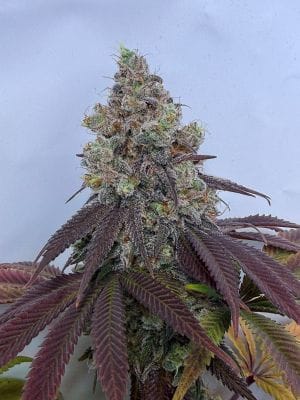
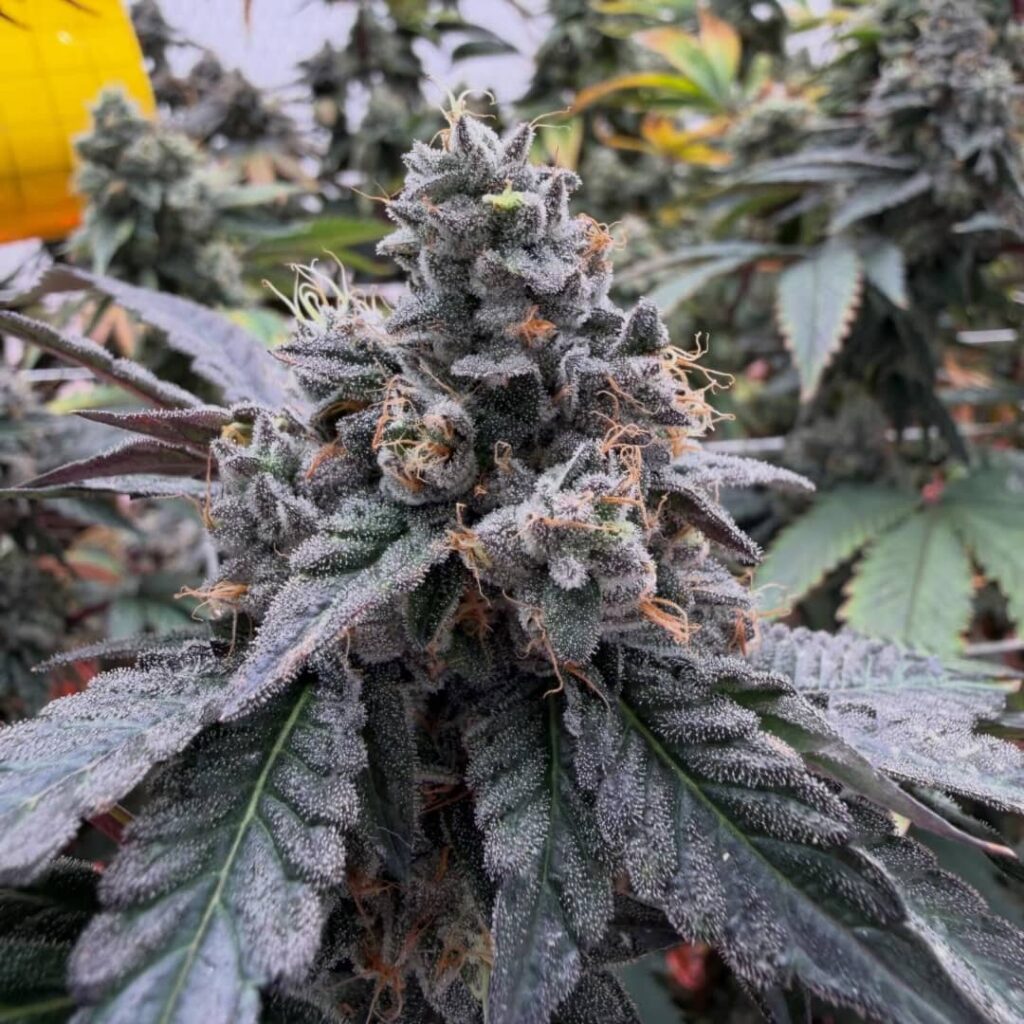
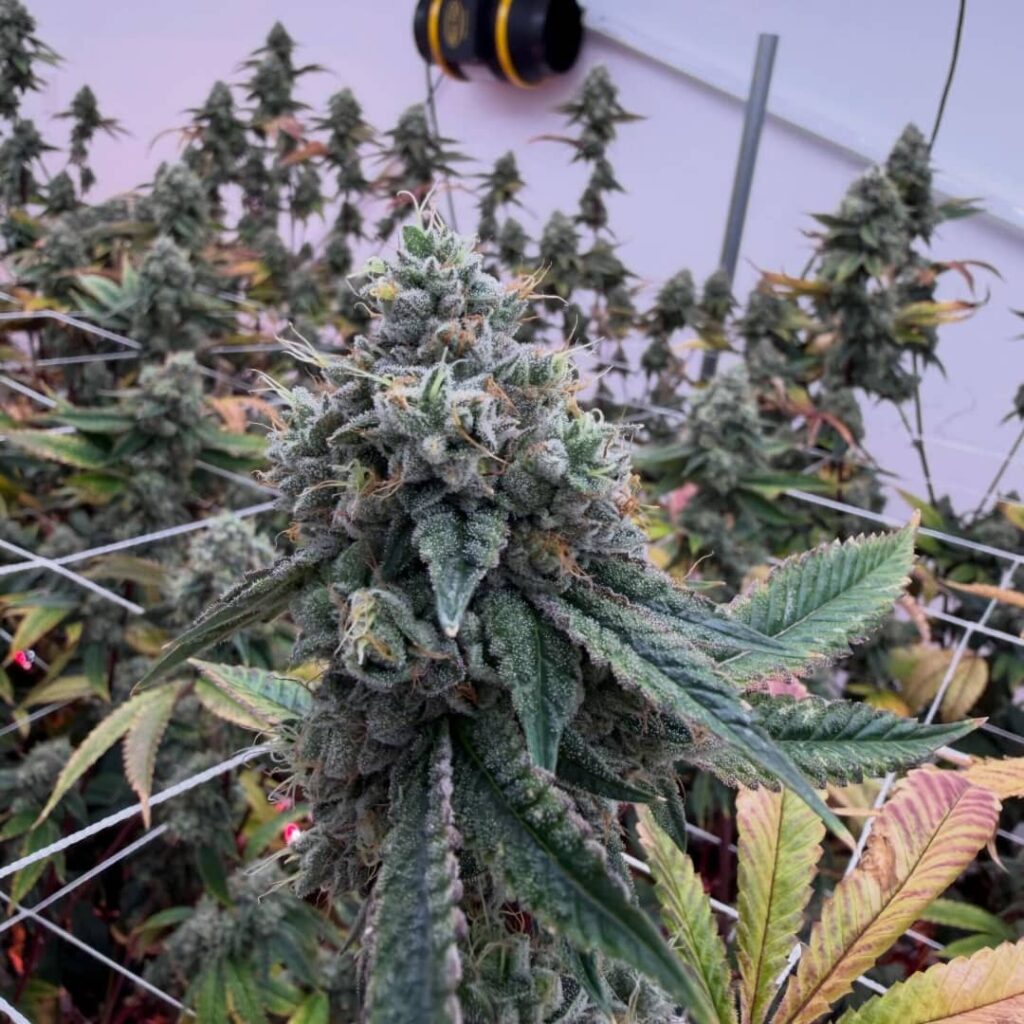
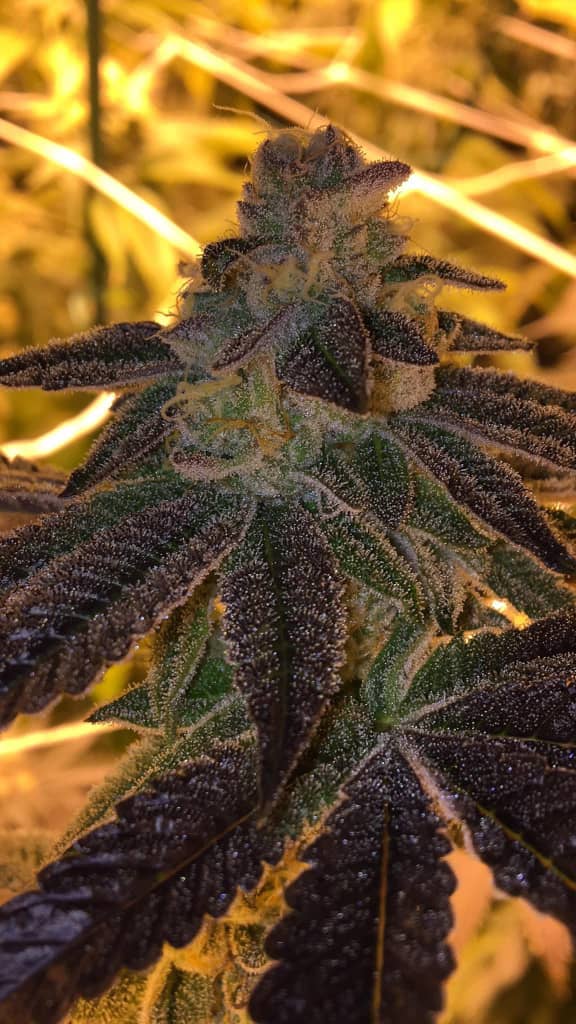
Yellow Lobster Appearance
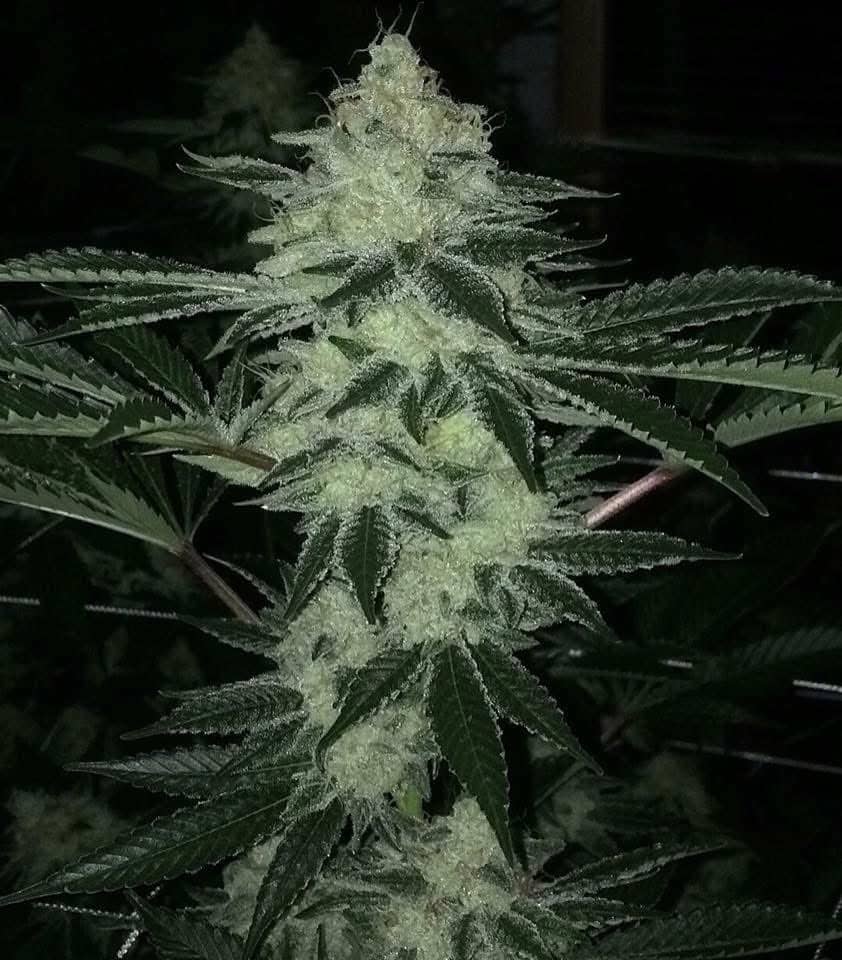
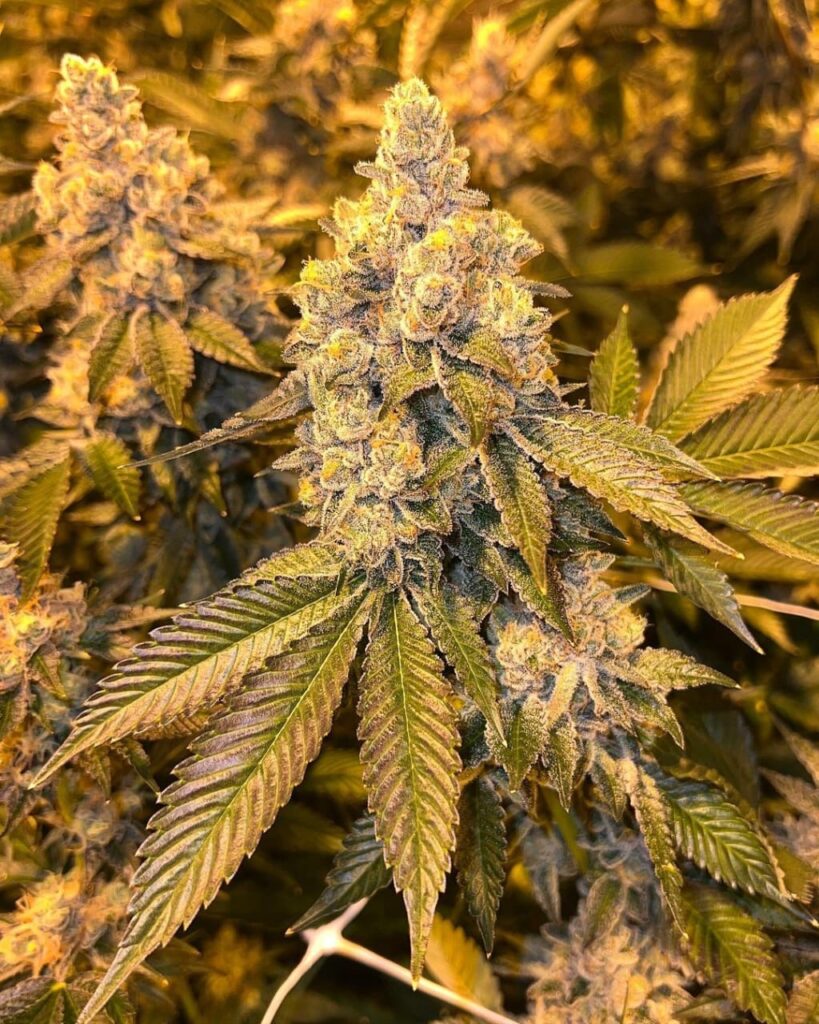
Current Yellow Lobster product descriptions emphasize a colorful, resinous flower presentation consistent with modern hybrid genetics.
The cultivar is associated with:
- Dense flower development
- Strong trichome coverage
- Green flower coloration
- Bright pistils
- Resin-rich surfaces
- Potentially colorful secondary tones depending on phenotype and environment
Appearance can vary substantially between plants.
Genetics establish potential, but environment influences expression.
Temperature, lighting, nutrition, plant maturity, and overall cultivation conditions can all affect the final appearance.
For this reason, visual characteristics should be treated as useful phenotype indicators rather than guarantees.
Yellow Lobster Potency
The current Major-associated Yellow Lobster product tested at approximately:
19.93% THC
The same product source lists:
21.43% THCA
1.13% Δ9-THC
0.47% CBGA
and approximately:
2.29% total terpenes.
Another current Major listing similarly displays Yellow Lobster at approximately 19.9% THC.
These numbers should be understood as product- and batch-specific laboratory results.
They should not be presented as a guaranteed THC level for every Yellow Lobster clone or harvest.
Genetic potential and finished-product potency are not identical concepts.
Actual cannabinoid concentration can vary according to phenotype, cultivation conditions, maturity, processing, and laboratory testing.
Reported Yellow Lobster Effects
Current product descriptions associate Yellow Lobster with a combination of:
- Happy
- Uplifted
- Relaxed
- Calm
- Energetic
The balance is interesting because it suggests a profile that is not defined exclusively by either stimulation or sedation.
However, effects are inherently individual.
Cannabis experiences can differ substantially depending on:
- Individual physiology
- Tolerance
- Cannabinoid concentration
- Terpene composition
- Consumption method
- Amount consumed
- Personal context
For that reason, strain descriptions should be viewed as a summary of reported characteristics rather than a promise of a particular experience.
Growing Yellow Lobster
Public cultivation documentation for the Major-associated Yellow Lobster is considerably more limited than its current retail product information.
That means it would be inappropriate to present unsupported flowering times, guaranteed yields, or fixed plant dimensions as established genetic facts.
Instead, growers should approach Yellow Lobster according to its documented genetic background and observed phenotype.
The Zkittlez × Lavender Lemonade combination suggests a modern hybrid structure with potentially strong aromatic expression and resin production, but the exact growth pattern should be evaluated from the specific plant.
Yellow Lobster Vegetative Growth
When evaluating a Yellow Lobster clone, growers should pay attention to the plant’s actual vegetative characteristics rather than relying exclusively on generic strain descriptions.
Useful observations include:
- Internodal spacing
- Branch strength
- Lateral branching
- Leaf development
- Root establishment
- Vegetative vigor
- Response to environmental changes
A well-developed clone provides a much better indication of its expected growth behavior than a generic online description.
Yellow Lobster Flowering Structure
The Zkittlez influence is associated with modern resin-forward hybrid flower, while Lavender Lemonade contributes additional aromatic complexity.
During flowering, growers should prioritize:
- Consistent airflow
- Appropriate humidity
- Even light distribution
- Adequate plant spacing
- Strong branch support
- Careful environmental management
The objective should be healthy, consistent flower development rather than simply maximizing flower density.
Dense flowers require particular attention to environmental control.
Yellow Lobster Clones Indoor Cultivation
Indoor cultivation provides the ability to manage the environmental factors that influence phenotype expression.
For a cultivar valued partly for its terpene profile, environmental stability is particularly important.
Useful cultivation priorities include:
Canopy Management
Maintaining an even canopy can help distribute light more consistently.
Airflow
Adequate air movement helps maintain a stable environment around the foliage and flowers.
Humidity Management
Humidity should be managed according to the plant’s developmental stage and local cultivation conditions.
Root Health
Healthy roots are fundamental to consistent vegetative development and flowering performance.
Observation
Growers should allow the specific phenotype to dictate adjustments rather than assuming every Yellow Lobster plant will respond identically.
Yellow Lobster Clones Outdoor Cultivation
Outdoor performance depends heavily on local climate.
Important variables include:
- Day length
- Temperature
- Humidity
- Rainfall
- Frost risk
- Sun exposure
- Wind
- Soil conditions
Because reliable breeder-specific outdoor data for the Major-associated Yellow Lobster is limited, precise harvest dates and yield expectations should not be presented as universal characteristics.
The most responsible approach is to evaluate the plant’s actual development and local seasonal conditions.
Why Yellow Lobster Clones Are Interesting
A clone offers something different from a seed population.
A seed population contains genetic variation.
A clone is a vegetative copy of a particular mother plant.
That distinction becomes especially important when working with modern hybrids where the cultivar name may encompass multiple phenotypes or selections.
For a properly identified Yellow Lobster clone, growers can evaluate a known genetic individual rather than starting an entirely new selection process.
Potential advantages of working with an established clone include:
- More predictable plant structure
- Known phenotype characteristics
- Consistent aromatic potential
- Established growth behavior
- Faster transition into a cultivation program
- Better preservation of selected genetics
However, these benefits depend entirely on the identity and health of the clone.
A mislabeled clone is not made authentic by carrying the right name.
Evaluating Yellow Lobster Clone Quality
Premium genetics begin with healthy plant material.
When evaluating a Yellow Lobster clone, growers should consider several factors.
Root Development
The plant should have an established root system appropriate to its stage of propagation.
Strong root development provides the foundation for continued vegetative growth.
Foliage
Healthy leaves should demonstrate appropriate coloration and active growth without obvious signs of stress.
Stem Strength
Strong stems and active branching provide useful information about the plant’s current condition.
Plant Uniformity
A healthy nursery environment should produce clones with relatively consistent developmental characteristics.
Genetic Provenance
Most importantly, the source of the clone should be understood.
With Yellow Lobster, this is especially important because the name has been used for multiple genetics.
Yellow Lobster: Why Provenance Matters More Than the Name
The Yellow Lobster name currently represents a genuine documentation challenge.
One current Major-associated product identifies:
Zkittlez × Lavender Lemonade
while Premier has publicly used the name for another genetic selection.
This means that simply writing “Yellow Lobster” into a nursery inventory system does not provide enough information for serious genetic documentation.
A better record would include:
Cultivar: Yellow Lobster
Genetic source: Major-associated Zkittlez × Lavender Lemonade
Phenotype: Specific mother/cut identification
Propagation source: Documented nursery or mother plant
This level of documentation gives growers substantially more confidence in what they are evaluating.
Why Genetics Matter
The foundation of a successful cultivation program begins with the genetic starting material.
Environmental control, lighting, irrigation, nutrition, and cultivation skill can influence the final result, but genetics establish the plant’s underlying potential.
For Yellow Lobster, genetics can influence:
- Aroma
- Terpene expression
- Flower structure
- Resin production
- Plant architecture
- Growth rate
- Stretch
- Flowering behavior
- Cannabinoid potential
This is why the distinction between a verified genetic and a generic strain name is so important.
Yellow Lobster Clones at Wild Leaf Gardens
At Wild Leaf Gardens, premium genetics are best approached through a genetics-first philosophy.
The emphasis should be on:
Plant Health
Starting with healthy, established nursery material.
Genetic Identity
Clearly understanding what genetic line the plant represents.
Phenotype Awareness
Recognizing that individual selections can express their genetics differently.
Responsible Propagation
Maintaining healthy mother plants and consistent propagation practices.
Transparent Documentation
Separating verified information from third-party observations and cultivar claims.
Yellow Lobster clones is a particularly good example of why these principles matter.
The current Major-associated version has a documented Zkittlez × Lavender Lemonade lineage and a measured terpene profile led by linalool, beta-myrcene, and humulene.
But because another cultivator has used the Yellow Lobster name for a different selection, growers should confirm the provenance of the particular genetic they are evaluating.
For serious growers, that transparency is more valuable than simply attaching a recognizable name to a plant.
Who May Appreciate Yellow Lobster Clones Genetics?
Yellow Lobster may be particularly interesting to growers who appreciate:
- Sweet fruit-forward hybrids
- Floral terpene profiles
- Citrus characteristics
- Candy genetics
- Modern dessert cultivars
- Complex terpene expression
- Balanced hybrid architecture
The Zkittlez × Lavender Lemonade combination gives it a profile that is notably different from heavier diesel or traditional Kush cultivars.
Its reported combination of sweet fruit, floral notes, citrus, earth, and spice makes it an interesting addition to a diverse genetic library.
Yellow Lobster vs. Traditional Zkittlez Profiles
Although Zkittlez is one of the parents of the Major-associated Yellow Lobster, the two should not be treated as interchangeable.
Zkittlez provides the candy-fruit foundation.
Yellow Lobster adds the Lavender Lemonade influence.
That additional genetic contribution can introduce:
- Stronger floral characteristics
- Citrus notes
- Herbal complexity
- Earthier depth
- A different terpene balance
In simplified terms:
Zkittlez: candy + fruit + tropical sweetness
Yellow Lobster: fruit + floral + citrus + earth + spice
The exact balance depends on the phenotype.
Frequently Asked Questions About Yellow Lobster
What is Yellow Lobster?
The Major-associated Yellow Lobster is a hybrid documented as Zkittlez × Lavender Lemonade. Current product information describes it as a sweet, fruity, floral, citrus-forward hybrid.
Who is associated with Yellow Lobster?
The Zkittlez × Lavender Lemonade Yellow Lobster is currently associated with Major. However, the Yellow Lobster name has also been used for other selections, so provenance should be confirmed.
What are the genetics of Yellow Lobster?
For the Major-associated version, the documented lineage is Zkittlez × Lavender Lemonade.
Is Yellow Lobster the same everywhere?
What does Yellow Lobster smell like?
The Major-associated version is described with floral sweetness, ripe fruit, citrus, earthy depth, herbal notes, and spice.
What terpenes are prominent in Yellow Lobster?
The referenced Major product tested at approximately 2.29% total terpenes, led by linalool, beta-myrcene, and humulene.
What is the THC level of Yellow Lobster?
A current Major Yellow Lobster product tested at approximately 19.93% THC. This is a batch-specific result rather than a universal genetic specification.
Is Yellow Lobster an indica or sativa?
The Major-associated Yellow Lobster is currently described as a hybrid.
What effects are reported for Yellow Lobster?
Current product information reports happy, uplifted, relaxed, calm, and energetic characteristics. These are subjective reports and can vary between individuals.
Is Yellow Lobster suitable for experienced growers?
It can be interesting for growers studying modern fruit-and-floral hybrid genetics, although reliable breeder-specific cultivation data for the Major-associated cut remains limited.
Does Yellow Lobster produce strong terpene expression?
The referenced Major product recorded approximately 2.29% total terpenes, with linalool, beta-myrcene, and humulene leading the measured profile.
Why are Yellow Lobster clones different from seeds?
A clone reproduces the genetics of a particular mother plant, while seed populations can produce genetically different individuals. A documented clone can therefore provide a more defined phenotype.
Why is Yellow Lobster provenance important?
Because multiple genetic lines currently use the Yellow Lobster name, provenance helps determine which specific cultivar a grower is actually evaluating.
Can Yellow Lobster potency vary?
Yes. Cannabinoid concentrations can vary substantially between plants and batches. Laboratory testing of the specific finished product is the appropriate reference.
What makes Yellow Lobster distinctive?
The Major-associated version combines Zkittlez-derived fruit and candy characteristics with Lavender Lemonade-derived floral and citrus influences, producing a broader profile of fruit, flowers, citrus, earth, and spice.
Final Perspective
Yellow Lobster is an excellent example of how modern cannabis genetics can combine familiar dessert-fruit genetics with a more floral and citrus-oriented breeding direction.
The Zkittlez × Lavender Lemonade lineage associated with Major provides a clear genetic foundation for understanding one current version of the cultivar. Its reported sensory profile combines sweet fruit, floral sweetness, citrus, earth, herbs, and spice, while current laboratory information shows a terpene profile led by linalool, beta-myrcene, and humulene.
But the most important lesson with Yellow Lobster is provenance.
The same name has been used for other genetic selections, including a separate Premier selection with different reported parentage.
For serious growers, that makes accurate genetic documentation particularly valuable.
A premium clone should not simply have an attractive cultivar name.
It should have:
Known genetics.
Healthy roots.
Strong vegetative development.
Reliable mother-plant provenance.
Responsible propagation.
Clear documentation.
That is ultimately what transforms a named plant into meaningful genetic material.
Reviews
There are no reviews yet.