Description
Toad Venom Clones: Genetics, Lineage, Phenotype, Terpenes & Cultivation Guide
Toad Venom clones has quickly developed a reputation as one of the more distinctive modern cannabis cultivars, combining an unusually loud aromatic profile with dense, resin-forward flower and a complex genetic background. Often associated with the Animal Face × Sin Mintz cross, the cultivar has become particularly interesting to growers because of the phenotype-selection story surrounding the cut commonly known as “Becky.”
Unlike cultivars whose names refer broadly to a large family of related seed lines, Toad Venom is frequently discussed in connection with a particular selected phenotype. That distinction makes provenance especially important when evaluating clones.
Public references generally associate Toad Venom with Ronin Seeds and West Coast Connoisseurs, while Green Dragon is associated with the selection of the keeper phenotype that helped establish the cultivar’s modern identity. Leafly currently lists Animal Face and SinMint Cookies in its Toad Venom genetics spotlight, while other specialist sources describe the broader parentage as Animal Face × Sin Mintz.
For growers interested in elite genetics, that history matters. A name alone does not guarantee that two plants carrying the Toad Venom label represent the same genetic material. Cut provenance, selection history, nursery practices, plant health, and accurate identification all contribute to the value of a clone.
What Is Toad Venom Strains?
Toad Venom is a modern hybrid cultivar most commonly associated with Animal Face × Sin Mintz genetics.
Leafly currently lists Toad Venom as a hybrid and reports approximately 24% THC for its profile, with energetic, aroused, and uplifted among its listed effects. Chemical, cheese, and blue-cheese notes appear among its leading reported flavors.
Specialist cultivar references provide a somewhat broader description, commonly placing Toad Venom in an indica-leaning or balanced-hybrid category and emphasizing its combination of mint, gas, citrus, sour, dough, and earthy characteristics.
That variation is worth emphasizing. Cannabis cultivar descriptions are not standardized scientific classifications, and different phenotypes, batches, environments, testing laboratories, and source plants can produce noticeably different results.
For this reason, the most useful way to understand Toad Venom is not simply through an indica/sativa percentage or a single THC number. Its identity is better described through its genetics, phenotype, aromatic profile, resin expression, structure, and provenance.
Toad Venom Genetics & Lineage
The most consistently reported lineage is:
Animal Face × Sin Mintz
Leafly’s current genetics spotlight specifically identifies Animal Face and SinMint Cookies as parental components. CannaSelection likewise identifies Animal Face × Sin Mintz as the parentage, while specialist nursery sources use the same primary cross.
Sin Mintz itself contributes another layer of genetic history. Current specialist descriptions connect Sin Mintz with Sin Mint Cookies and Zkittlez, creating a broader family tree that combines dessert, mint, candy, and fuel characteristics.
Animal Face brings another substantial genetic influence. CannaSelection traces its background through Animal Mints and Face Off OG, with earlier connections to Animal Cookies, OG Kush, Chemdawg, and Hindu Kush.
The result is a genetic combination capable of producing a remarkably complex sensory profile.
Why the Lineage Matters
Animal Face is associated with:
- Strong fuel and kush characteristics
- Dense resin expression
- Pronounced earthy depth
- Heavy aromatic intensity
- Robust flower structure
The Sin Mintz side contributes:
- Mint
- Sweetness
- Dough and dessert notes
- Sour or citrus accents
- Candy-like aromatic complexity
Together, those influences help explain why Toad Venom is frequently described as a cultivar that combines aggressive gas and chemical funk with sweeter mint, dough, citrus, and candy characteristics.
The “Becky” Phenotype
One of the most important aspects of Toad Venom’s identity is the phenotype-selection story.
Multiple contemporary sources describe a Green Dragon selection commonly referred to as “Becky.” Weedmaps describes the cultivar as emerging from a roughly 30-seed phenotype hunt in which a single standout plant became the keeper associated with the Toad Venom identity.
This selection story is significant because it helps explain why provenance has become such a major part of Toad Venom discussions.
When a cultivar becomes recognized around a particular keeper phenotype, the name can eventually spread beyond the original plant. Seed-derived plants, unrelated selections, mislabeled clones, and subsequent crosses may all appear under similar names.
That does not automatically mean every Toad Venom-labeled plant is illegitimate. It does mean that the name itself should not be treated as sufficient proof of genetic identity.
For growers working with high-value genetics, provenance documentation can therefore be as important as the visual appearance of the plant.
Toad Venom Aroma & Flavor
Toad Venom is particularly notable for its unusual combination of opposing aromatic directions.
Rather than being dominated exclusively by fruit, dessert, gas, or earth, the cultivar is frequently described as moving between several distinct layers.
Commonly reported notes include:
- Sharp lime
- Mint
- Gas
- Chemical funk
- Sour citrus
- Dough
- Earth
- Peppery spice
- Candy-like sweetness
- Kush-like depth
CannaSelection describes a profile centered around sour lime, cool mint, gas, and a chemically sharp character.
Other contemporary sources describe the profile more broadly as mint-cookie sweetness followed by creamy fuel, dough, earth, spice, and lingering gas.
This contrast is one of Toad Venom’s most recognizable qualities.
The first aromatic impression can be sweet or mint-forward before opening into considerably more aggressive fuel, chemical, and earthy notes. That layered progression is part of what separates the cultivar from many modern dessert hybrids built around sweetness alone.
Toad Venom Terpene Profile
Published descriptions commonly identify beta-caryophyllene, limonene, and myrcene among the principal terpenes associated with Toad Venom. Purplefarm lists these three as its major terpenes and describes the overall profile as dough, citrus, and spice.
Beta-Caryophyllene
Caryophyllene is frequently associated with peppery, spicy, woody, and warm aromatic characteristics.
In Toad Venom, this profile can contribute to the cultivar’s sharper spicy and earthy finish.
Limonene
Limonene is commonly associated with citrus aromas.
Its presence helps explain the recurring descriptions of lemon, lime, citrus zest, and brighter aromatic notes associated with the cultivar.
Myrcene
Myrcene appears frequently across cannabis cultivars and is commonly associated with earthy, herbal, and musky aromatic qualities.
Within Toad Venom’s broader profile, myrcene can complement the heavier earthy and kush-like foundation beneath the brighter citrus and mint characteristics.
Terpene Variation
A terpene list should never be treated as a guarantee that every Toad Venom plant will smell exactly the same.
Terpene expression can vary with phenotype, cultivation environment, harvest timing, curing, storage, and analytical testing.
For growers evaluating a clone, the plant’s actual aromatic expression is therefore more meaningful than relying exclusively on a generic strain description.
Toad Venom Appearance
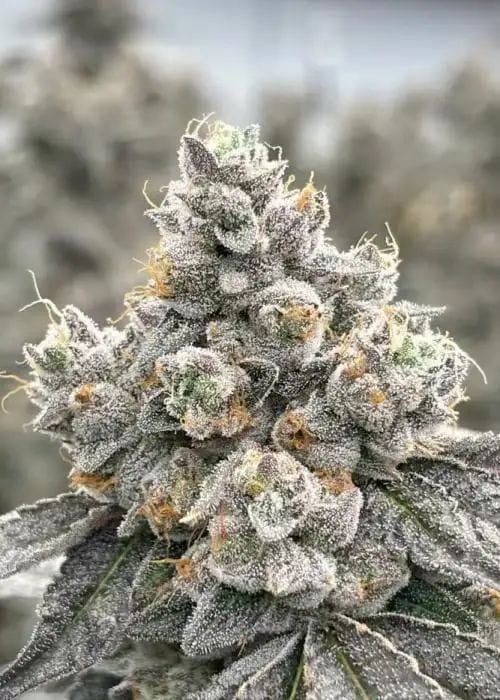
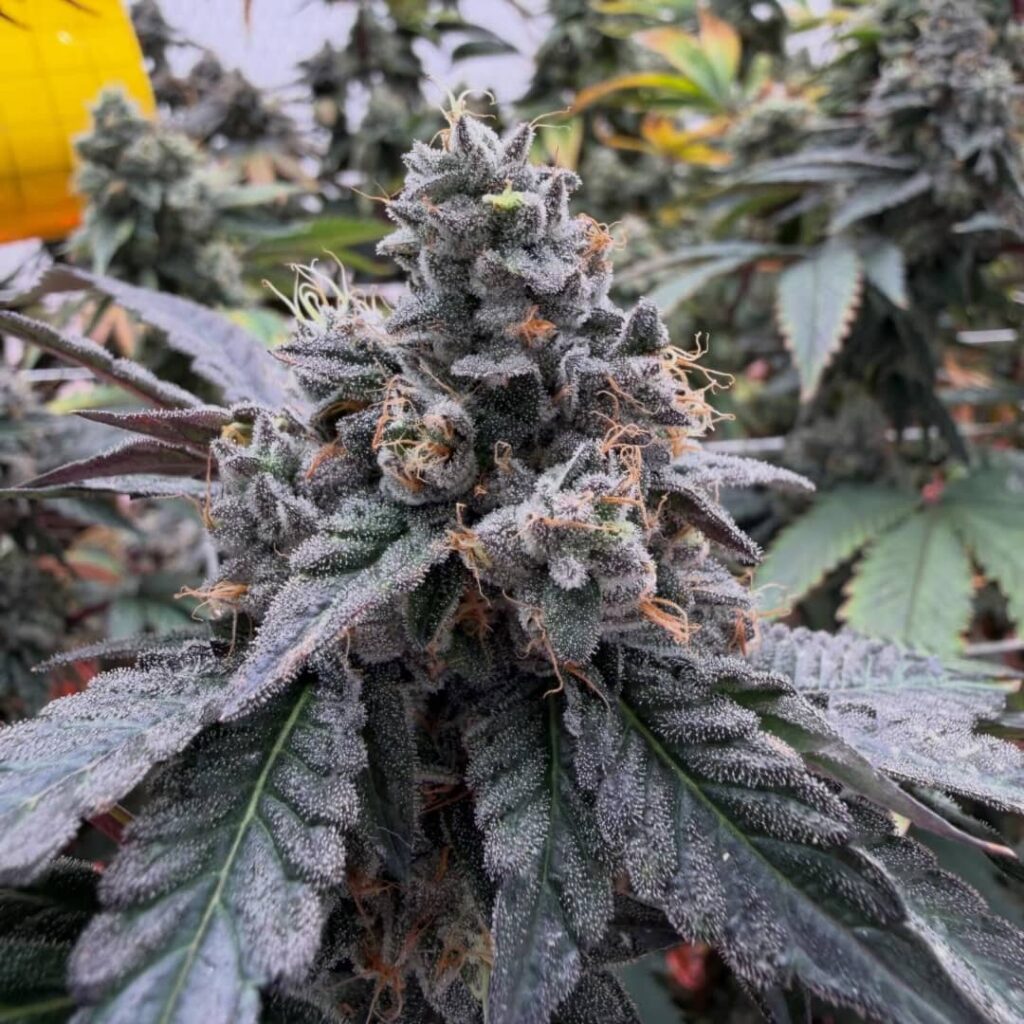
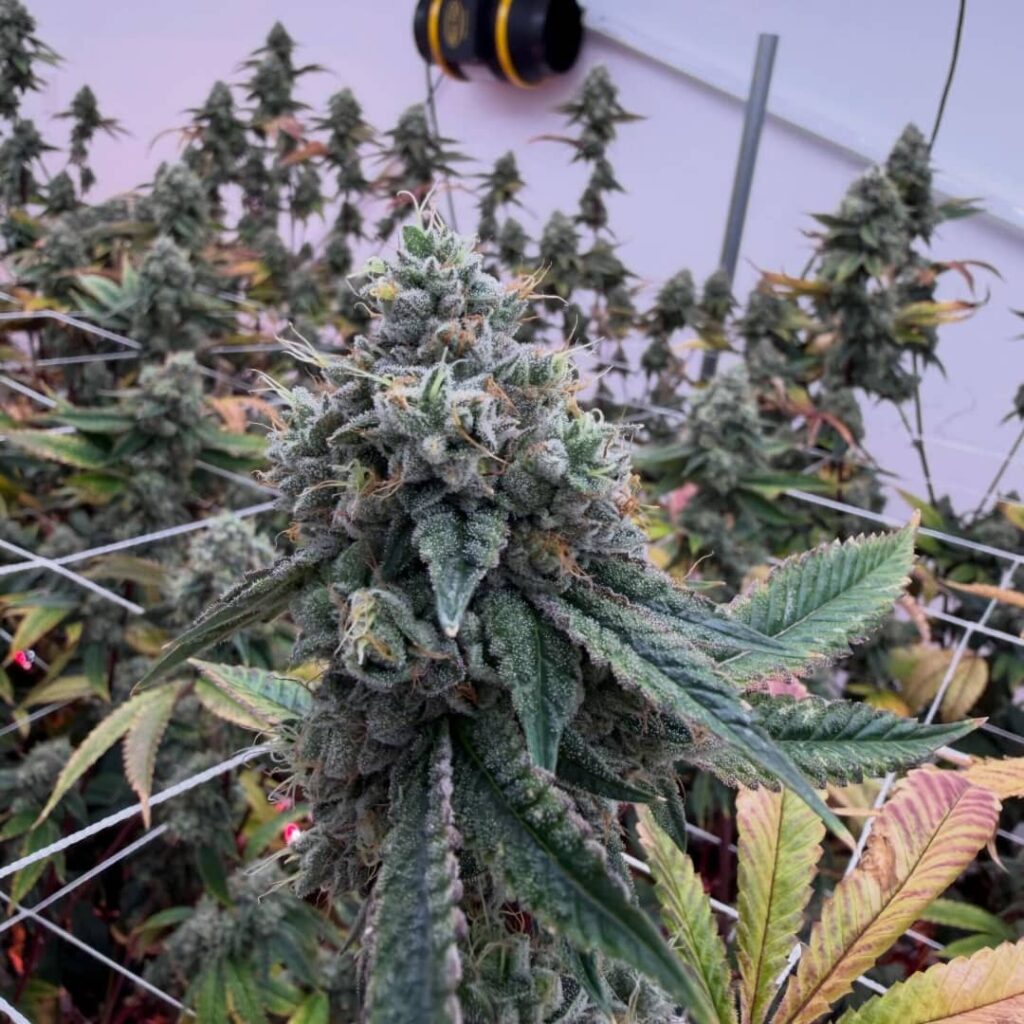
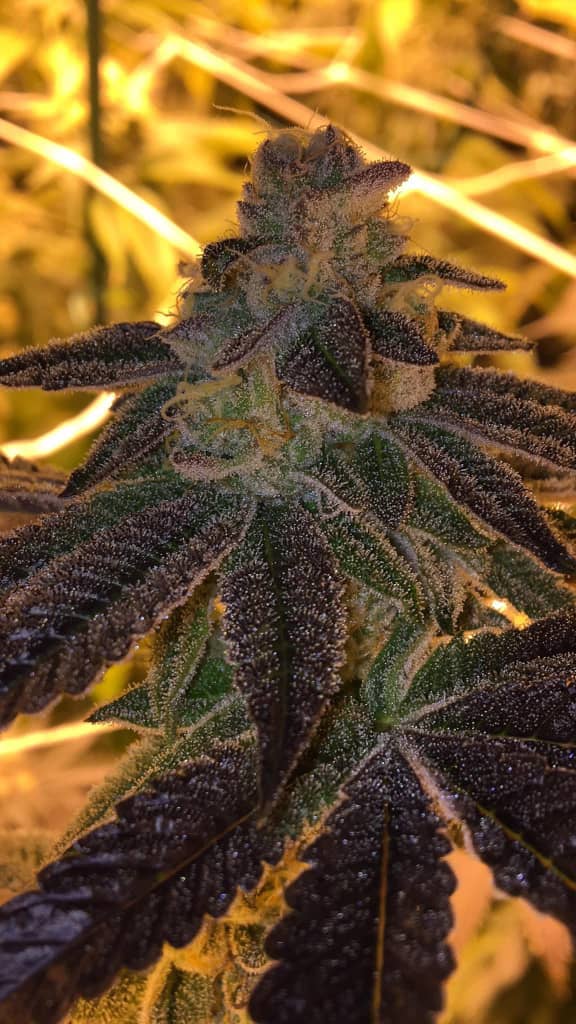
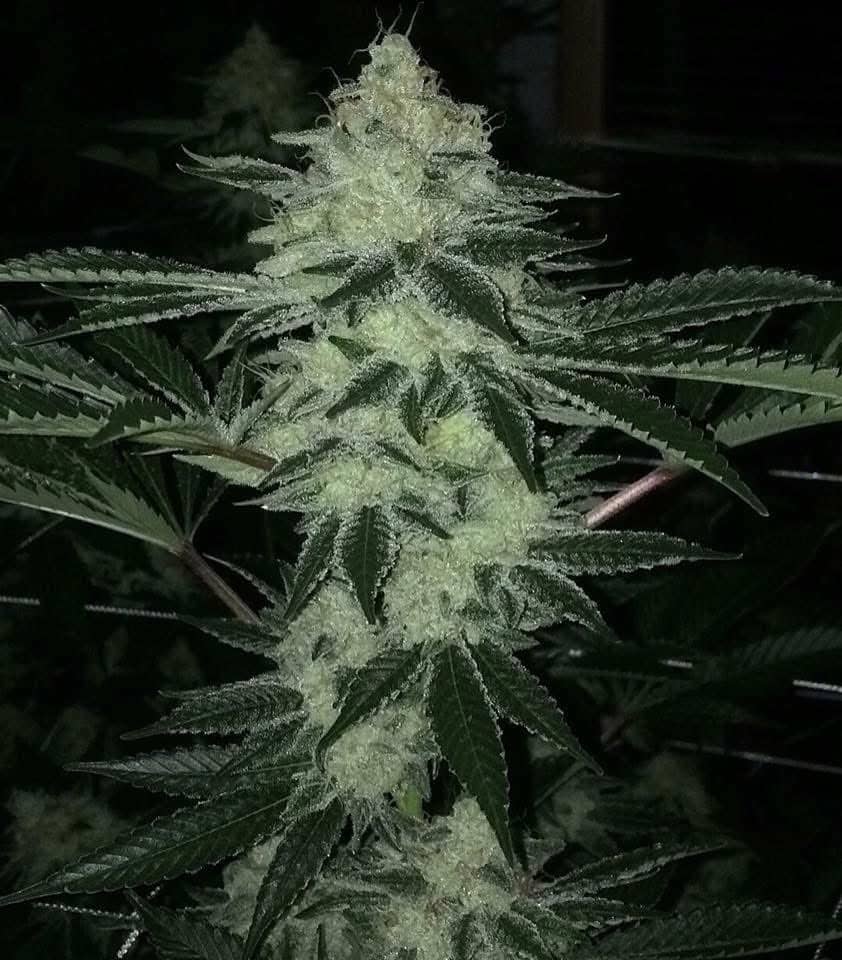
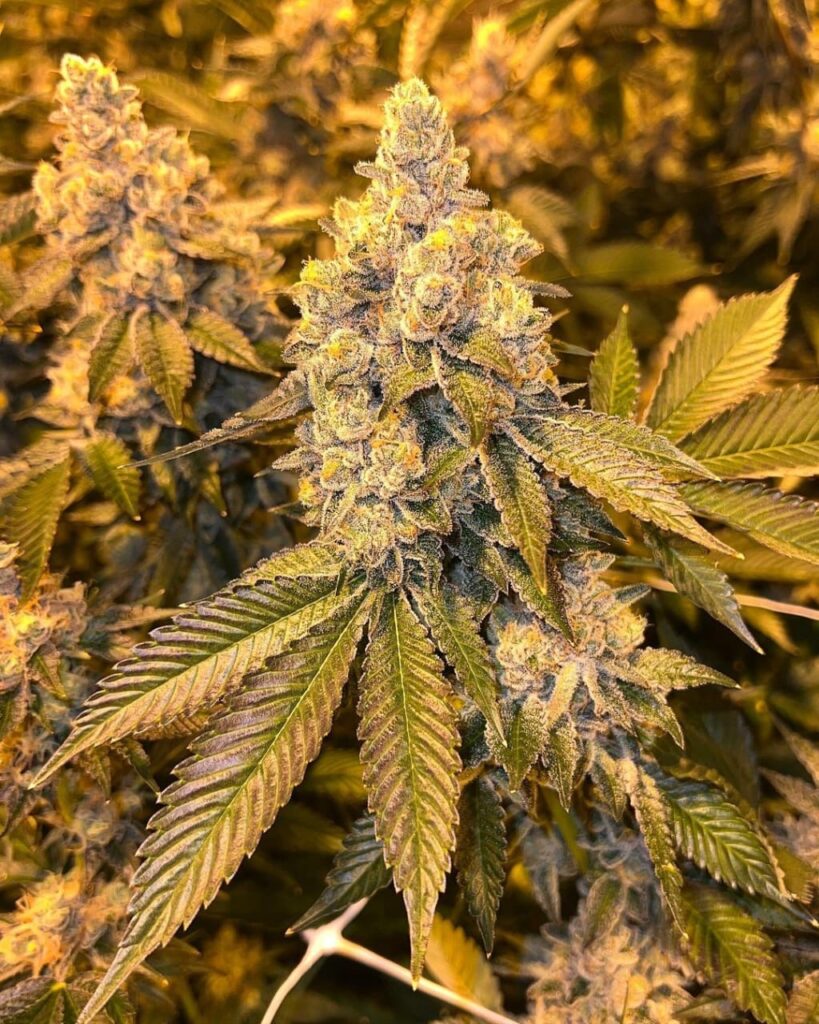
Descriptions of Toad Venom consistently emphasize resin-rich flowers and strong visual appeal.
Reported characteristics include:
- Dense flower formation
- Heavy trichome coverage
- Green coloration
- Orange pistils
- Compact-to-elongated flower structures
- Strong resin production
- Pronounced frost
Highline Nursery describes Toad Venom as an indica hybrid with medium vegetative growth and medium stretch, while specialist descriptions commonly place flowering around the nine-week range.
As with all phenotype-dependent characteristics, actual structure can vary.
Environmental conditions, container size, lighting, training, nutrition, temperature, and the specific clone all influence final morphology.
Toad Venom Effects
Reported effects vary considerably by individual and product, but the overall profile tends to be described as energetic, euphoric, uplifting, focused, and eventually relaxing.
- Energetic
- Aroused
- Uplifted
among its top reported effects.
Recent community reports also include combinations such as euphoric, happy, focused, relaxed, and uplifted.
Other specialist descriptions characterize the cultivar as stimulating or racy while also acknowledging a more comforting physical component.
These descriptions should be understood as subjective consumer reports rather than guaranteed effects or medical claims.
The experience associated with cannabis can vary substantially according to individual physiology, tolerance, cannabinoid concentration, terpene expression, consumption method, and amount consumed.
Toad Venom Potency
Potency figures published for Toad Venom vary significantly by source.
Leafly currently lists a 24% THC figure for its strain profile, while specialist nursery and cultivar databases publish higher ranges, including figures in the upper 20s and low 30s.
These differences illustrate why a generic THC percentage should never be presented as a fixed characteristic of every Toad Venom plant.
Actual cannabinoid concentration depends on:
- Genetics
- Phenotype
- Growing conditions
- Harvest timing
- Curing
- Testing methodology
- Individual batch
For that reason, laboratory results from a specific batch are more meaningful than a generalized internet strain percentage.
Growing Toad Venom
Toad Venom is generally described as a moderately manageable cultivar with strong resin production and medium stretch.
Highline Nursery reports a flowering window of approximately 9–10 weeks, while other specialist descriptions place the cultivar around eight to nine weeks.
Because published figures vary, growers should treat these numbers as reference ranges rather than guarantees.
Vegetative Growth
Reports generally characterize Toad Venom as having medium vegetative vigor and medium stretch.
That makes structural planning important before the flowering period begins.
Growers working with resin-heavy cultivars should pay attention to:
- Canopy spacing
- Air movement
- Branch support
- Light penetration
- Humidity management
- Plant density
Maintaining a balanced canopy can help provide more uniform environmental conditions throughout the plant.
Flowering Structure
The cultivar is frequently described as producing dense, heavily frosted flowers.
Dense flowers can create additional environmental-management considerations, particularly when humidity and air circulation are not well controlled.
Good cultivation practice should therefore emphasize appropriate environmental management rather than attempting to maximize density at the expense of plant health.
Resin Production
Resin expression is one of the characteristics most frequently associated with Toad Venom.
The combination of Animal Face and Sin Mintz genetics is widely described as producing heavy trichome coverage and a pronounced aromatic profile.
This characteristic has also contributed to the cultivar’s reputation among growers interested in resin-forward genetics.
Why Toad Venom Clones Are Interesting to Growers
A clone provides an important advantage over starting from an unselected seed population: the grower is working from an established genetic source.
That matters particularly for a cultivar such as Toad Venom, where phenotype selection and provenance are central parts of the story.
A properly identified clone allows growers to focus on reproducing a known phenotype rather than beginning a new selection process from seed.
For professional cultivation environments, the value of a clone can therefore extend beyond simple convenience.
The important questions become:
- Where did the plant originate?
- Is the clone correctly identified?
- What phenotype does it represent?
- How has the mother plant been maintained?
- Is the plant healthy?
- Has the source documented its propagation practices?
- Does the observed plant actually match the expected Toad Venom characteristics?
Evaluating Toad Venom Clone Quality
A premium-looking label is not enough to establish clone quality.
When evaluating Toad Venom clones, growers should look at the plant itself and the information surrounding it.
Healthy Root Development
A quality rooted clone should demonstrate an established root system appropriate to its container and propagation stage.
Roots should be inspected for overall health rather than simply judging the amount of visible root material.
Strong Vegetative Growth
Healthy foliage, appropriate color, firm stems, and active new growth are useful indicators of a plant that has been maintained properly.
Accurate Identification
Because Toad Venom has developed substantial name recognition, identification and provenance are particularly important.
A healthy plant carrying an attractive label is still not necessarily the same genetic cut described in specialist references.
Consistent Mother-Plant Management
Clone quality ultimately depends on the condition and management of the mother plant.
Consistent sanitation, appropriate nutrition, environmental control, and careful propagation practices help maintain healthy nursery material.
Why Genetics Matter
Cultivation begins with genetics.
Even highly skilled growers cannot completely overcome inconsistent or incorrectly identified starting material.
A strong genetic foundation can provide more predictable expectations around:
- Plant architecture
- Flower development
- Aromatic expression
- Resin production
- Stretch
- Flowering behavior
- Overall phenotype
Toad Venom demonstrates this particularly well because the cultivar’s modern identity is closely connected to phenotype selection.
The difference between a verified keeper-derived plant and an unrelated plant carrying the same name can be significant.
Provenance Matters With Toad Venom
Few contemporary cultivars illustrate the importance of provenance as clearly as Toad Venom clones.
Multiple current sources describe the Animal Face × Sin Mintz lineage, the Green Dragon “Becky” selection, and the association with Ronin Seeds and West Coast Connoisseurs.
At the same time, public databases have not always displayed identical genealogy information.
Prime Cuts explicitly notes conflicting public lineage models and advises treating Toad Venom as a provenance-sensitive cultivar.
For that reason, serious growers should evaluate the source and documented identity of the plant, rather than relying exclusively on the name.
Toad Venom Clones at Wild Leaf Gardens
At Wild Leaf Gardens, the focus when evaluating premium genetics is on the fundamentals that matter to serious growers: plant health, accurate identification, responsible propagation, and consistent nursery practices.
Toad Venom clones is particularly suited to that genetics-first approach because its reputation is closely tied to phenotype selection and provenance.
Rather than treating the name as a guarantee, growers should look for clear information about the genetic source, clone condition, propagation history, and characteristics of the specific plant being evaluated.
That approach helps separate genuine genetic information from the noise that can develop around highly publicized cultivars.
For growers building genetic libraries or evaluating new nursery material, the most valuable starting point is always healthy, accurately identified plant material supported by transparent information.
Who May Appreciate the Toad Venom Genetic Profile?
Toad Venom clones is especially interesting for growers who appreciate complex modern hybrid genetics rather than straightforward single-note profiles.
Its reported combination of:
- Mint
- Citrus
- Gas
- Dough
- Earth
- Pepper
- Chemical funk
- Heavy resin
creates a sensory profile with considerable depth.
It may also appeal to growers interested in studying how Animal Face and Sin Mintz-derived characteristics combine within a selected phenotype.
Frequently Asked Questions About Toad Venom
What is Toad Venom strain?
Toad Venom is a modern cannabis hybrid most commonly reported as an Animal Face × Sin Mintz cross. It is associated with Ronin Seeds, West Coast Connoisseurs, and the Green Dragon-selected phenotype commonly known as “Becky.”
What are the genetics of Toad Venom?
The most consistently reported parentage is Animal Face × Sin Mintz. Leafly and specialist cultivar sources currently support this genetic description.
What is the Becky Toad Venom cut?
“Becky” refers to the keeper phenotype associated with the Green Dragon selection story. Contemporary sources describe it as the standout plant from a larger phenotype hunt.
Is Toad Venom indica or sativa?
Classification varies by source. It is generally described as a hybrid, with some sources calling it indica-leaning and others describing it as balanced.
What does Toad Venom smell like?
Common descriptions include mint, gas, sour citrus or lime, dough, earth, spice, and chemical funk.
What terpenes are associated with Toad Venom?
Beta-caryophyllene, limonene, and myrcene are among the principal terpenes repeatedly associated with the cultivar.
How long does Toad Venom take to flower?
Published grow references generally place flowering around eight to ten weeks, depending on the source and phenotype. Highline Nursery currently lists approximately nine to ten weeks.
Does Toad Venom produce heavy resin?
Heavy resin and strong trichome coverage are recurring characteristics in contemporary descriptions of the cultivar.
What THC percentage does Toad Venom have?
Published figures vary. Leafly currently lists 24%, while other sources report higher ranges. Actual potency is batch- and phenotype-dependent and should be established through laboratory testing.
Why is provenance important with Toad Venom?
Because the cultivar has developed a strong keeper-cut identity and conflicting public descriptions exist, the name alone does not establish that a plant represents the same genetic source.
Is every Toad Venom clone the same?
No. A clone taken from a specific mother can reproduce that mother’s genetics, but plants sold under the same name may come from different sources or selections. Provenance is therefore important.
Is Toad Venom suitable for experienced growers?
Its reported medium stretch and strong resin production make it an interesting cultivar for growers comfortable managing canopy structure, environmental conditions, and dense flowering plants.
What makes Toad Venom different from ordinary dessert hybrids?
Its profile combines dessert-style mint and dough characteristics with aggressive gas, chemical, sour, earthy, and spicy notes. That contrast is one of the cultivar’s defining sensory characteristics.
Final Perspective
Toad Venom represents an interesting chapter in modern cannabis genetics: a cultivar whose reputation is driven not only by potency or appearance, but by phenotype selection, unusual terpene expression, and provenance.
The commonly reported Animal Face × Sin Mintz foundation brings together fuel, kush, mint, candy, dough, citrus, and resin-forward characteristics. The Green Dragon “Becky” selection story adds another layer, making the distinction between a generic plant carrying the Toad Venom name and a documented keeper-derived genetic particularly important.
For growers evaluating Toad Venom clones, the strongest approach is therefore genetics-first: verify the source, examine plant health, understand the phenotype, and treat published THC, flowering, yield, and terpene numbers as reference information rather than guarantees.
That combination of genetic identity, plant health, phenotype consistency, and responsible nursery practices is what ultimately gives a premium clone its value.
Reviews
There are no reviews yet.