
Description
GMO Strain
Iconic Genetics. Unmistakable Funk. Exceptional Resin Expression.
GMO Strain, also known as Garlic Cookies, GMO Cookies, or Chem Cookies, is one of the most recognizable savory cannabis cultivars in modern genetics.
Built from the combination of Chem D and Girl Scout Cookies (GSC), GMO developed a reputation for an unusually intense aromatic profile that moves well beyond the sweet fruit and dessert characteristics common throughout contemporary cannabis. Its signature expression is commonly associated with pungent garlic, mushroom, onion, earth, diesel, fuel, and skunky notes, creating an aroma that is immediately distinctive.
The cultivar’s significance extends beyond its flavor.
GMO has become an influential breeding parent, contributing its distinctive terpene expression, resin-focused characteristics, and recognizable genetic identity to numerous subsequent cultivars. Leafly’s historical coverage notes that more than 155 GMO crosses had been reported on SeedFinder at the time of publication, illustrating how extensively the genetics have influenced subsequent breeding.
For growers, GMO represents a different kind of premium genetic.
It is not defined by fruit-forward sweetness alone.
It is defined by funk, fuel, savory depth, resin, and unmistakable genetic character.
What Is GMO Strain?
GMO is a cannabis cultivar commonly known as Garlic Cookies.
Despite the GMO abbreviation, the name does not indicate that the plant is genetically modified. The name is associated with the cultivar’s unusual savory aroma and has been interpreted as a reference to its garlic, mushroom, and onion characteristics.
The documented genetic foundation is:
Chem D × Girl Scout Cookies (GSC).
The cultivar has become particularly recognizable because its aromatic profile differs dramatically from many modern sweet or fruit-heavy cultivars.
Instead of leading with candy, tropical fruit, or berry, GMO can express:
- Garlic
- Onion
- Mushroom
- Earth
- Diesel
- Fuel
- Skunk
- Pepper
- Savory funk
That distinctive profile has helped make GMO a reference point for growers and breeders interested in intensely pungent genetics.
GMO Strain Genetics & Lineage
Chem D × Girl Scout Cookies
The established GMO lineage is Chem D × Girl Scout Cookies.
This pairing combines two highly influential genetic directions.
Chem D
Chem D contributes the fuel-forward, chemical, earthy, and pungent side of the genetic profile.
The Chem family is historically associated with strong aromas and distinctive resin production, making it an important foundation for many modern cultivars.
Girl Scout Cookies
GSC contributes the sweet, earthy, cookie-like side of the cross along with its broader influence throughout modern cannabis breeding.
Animal Cookies, Zookies, and numerous other contemporary cultivars trace genetic influence back to the Cookies family.
The combination of Chem D and GSC creates something considerably more savory than a conventional dessert cultivar.
That is where GMO establishes its identity.
The History Behind GMO Strain
The historical record around GMO is worth understanding because the cultivar’s origin story is sometimes simplified.
Leafly’s historical coverage explains that seeds were released by Mamiko Seeds as a Chem D × GSC combination. A winning phenotype was then selected by Skunkmasterflex of Skunk House Genetics, who named the resulting cultivar GMO Cookies.
This distinction matters.
The breeding cross and the selection of the famous phenotype are related events, but they are not necessarily the same thing.
In practical cultivation terms, a genetic cross creates a population.
Phenotype selection identifies an individual plant—or group of plants—with characteristics considered particularly desirable.
That selection process is one of the foundations of serious cannabis breeding.
The GMO phenotype became notable because its expression was unusually recognizable.
Rather than blending quietly into the background of its parents, it developed a strong identity of its own.
Why GMO Strain Became So Influential
Some cultivars become popular because of their immediate consumer appeal.
Others become important because breeders repeatedly return to them.
GMO falls into the second category as well as the first.
Its distinctive combination of:
- Pungent aroma
- Savory flavor
- Resin production
- Strong genetic identity
- Recognizable flower expression
has made it valuable as a breeding parent.
Leafly’s GMO history specifically notes the enormous number of reported GMO crosses and describes the genetics as adding significant aromatic intensity to subsequent crosses.
This influence can be seen in cultivars such as GMO Kush and other GMO-derived hybrids.
GMO Kush, for example, is documented by Leafly as a GMO × Topanga Canyon OG cross and is described as resin-heavy with chemical, gassy, and creamy characteristics.
The continued appearance of GMO in breeding projects demonstrates why the cultivar is more than simply another named flower.
It is a recognizable genetic tool.
Why Growers Continue Choosing GMO Genetics
The appeal of GMO begins with its identity.
Modern cannabis contains thousands of cultivars, but relatively few have aromas that can be recognized almost immediately.
GMO is one of those cultivars.
Its pungent savory character creates a clear point of differentiation.
For cultivators, that can be valuable for several reasons.
Distinctive Flower Identity
GMO does not rely on generic sweetness to distinguish itself.
Its garlic, earth, fuel, mushroom, and onion characteristics provide a recognizable aromatic signature.
Resin-Focused Genetics
GMO has developed a strong reputation for substantial resin production. Leafly’s historical GMO coverage specifically highlights the cultivar’s hash-making potential.
Breeding Value
GMO genetics can introduce distinctive pungency and resin-associated characteristics into breeding projects.
Premium Genetic Recognition
Experienced consumers and cultivators often recognize GMO by its aroma alone.
That kind of genetic identity is difficult to create and valuable to preserve.
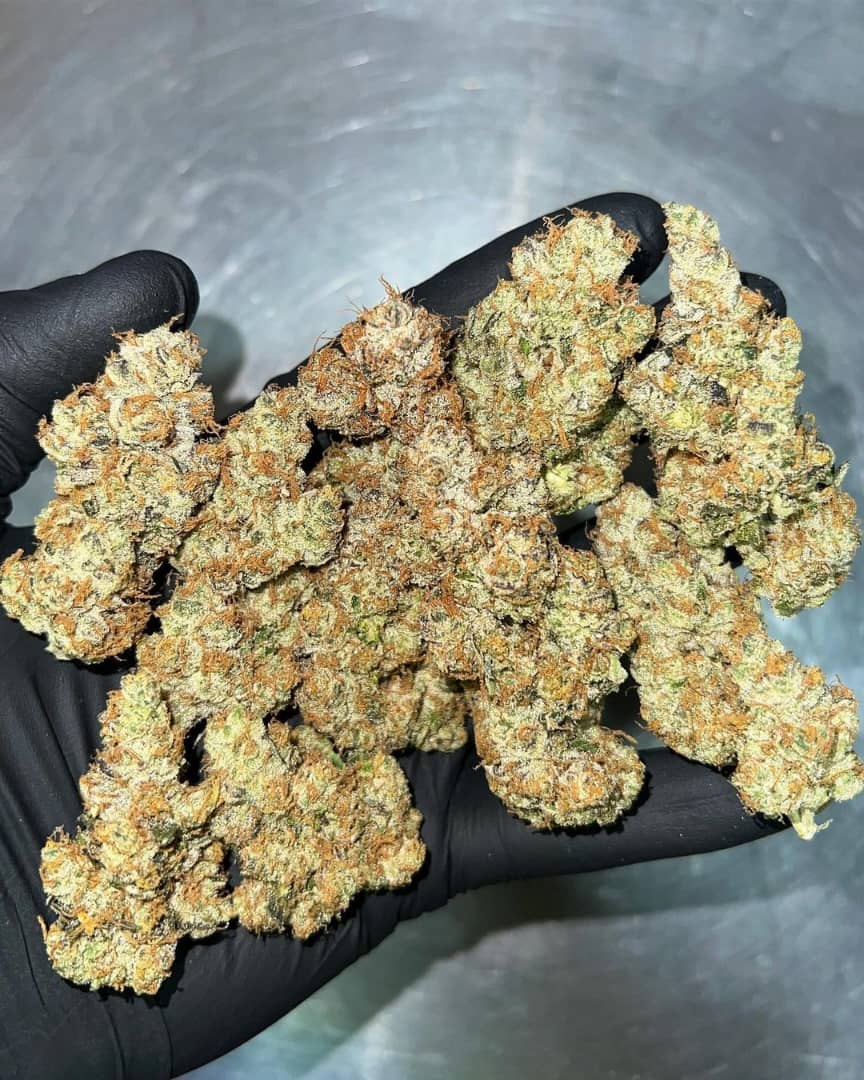
GMO Strain Appearance
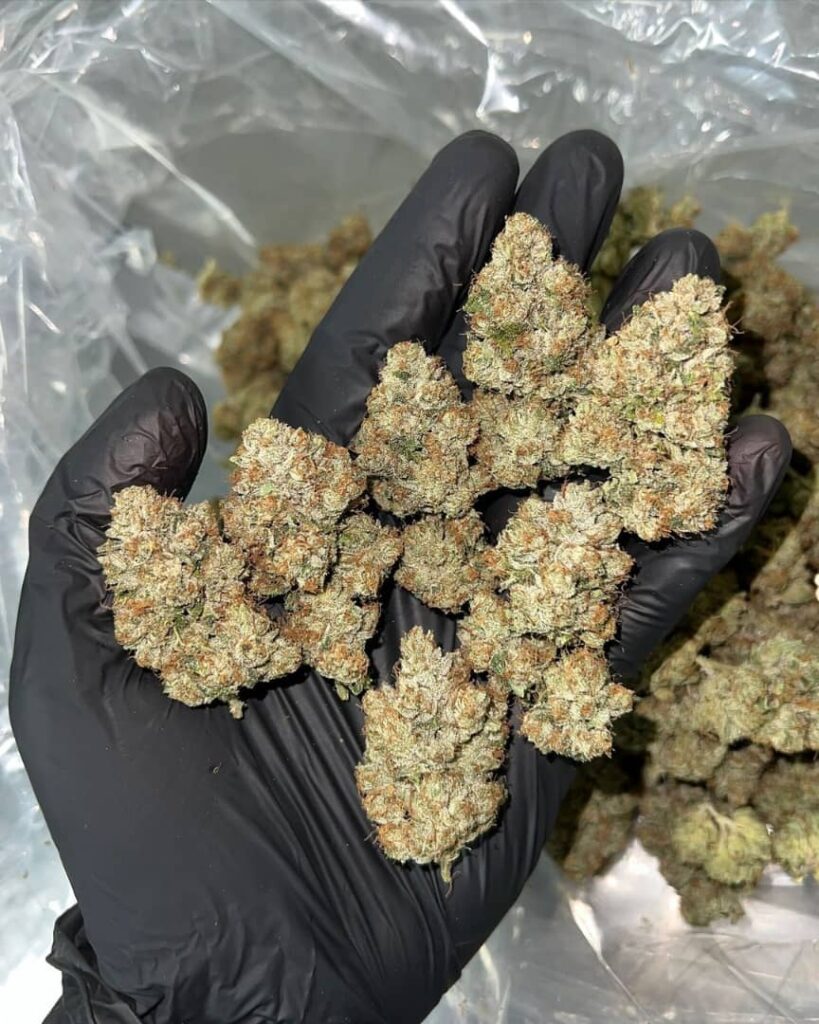
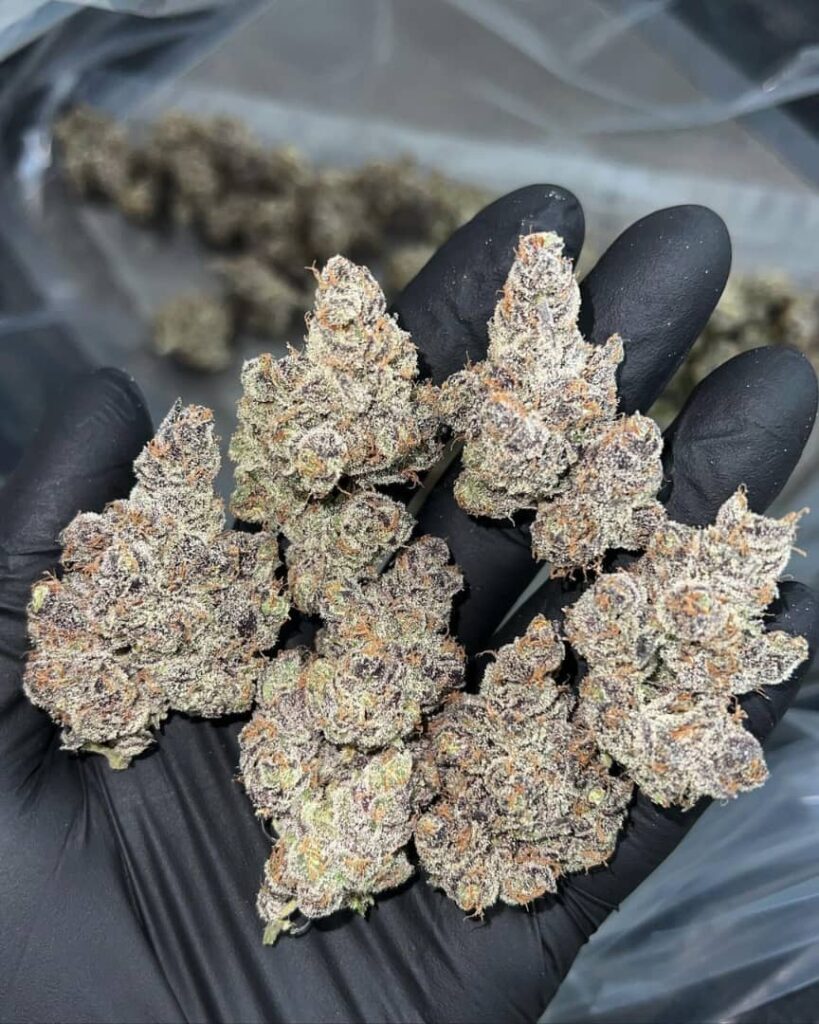
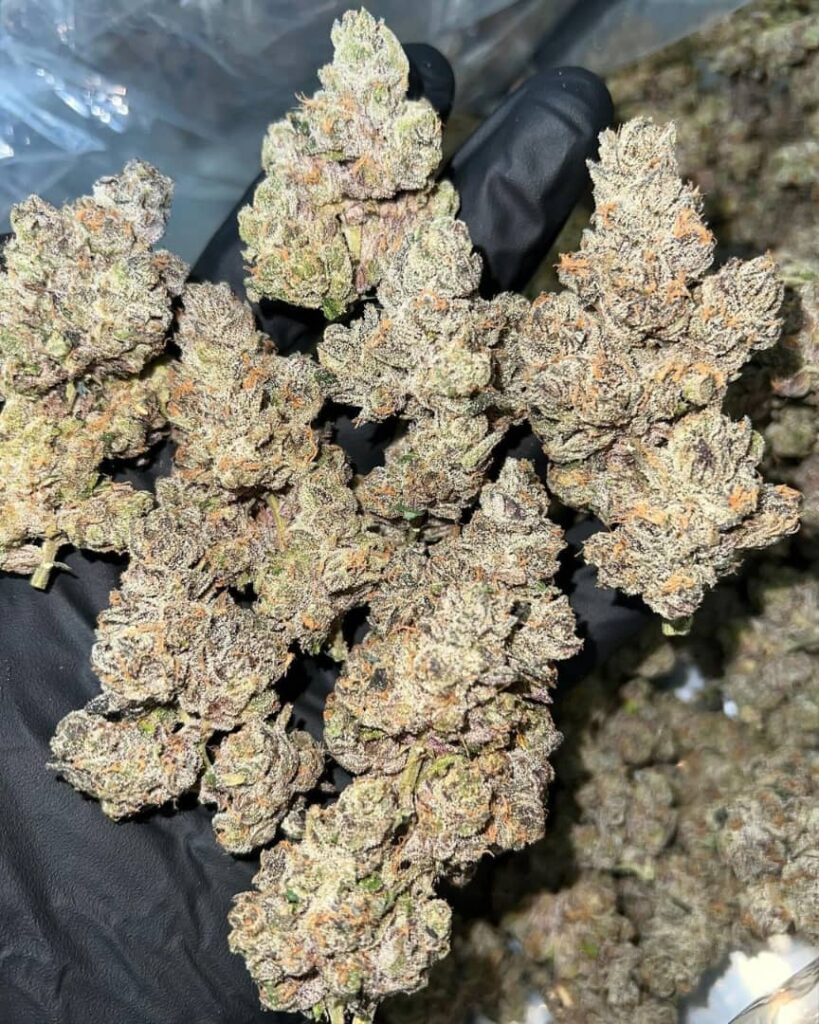
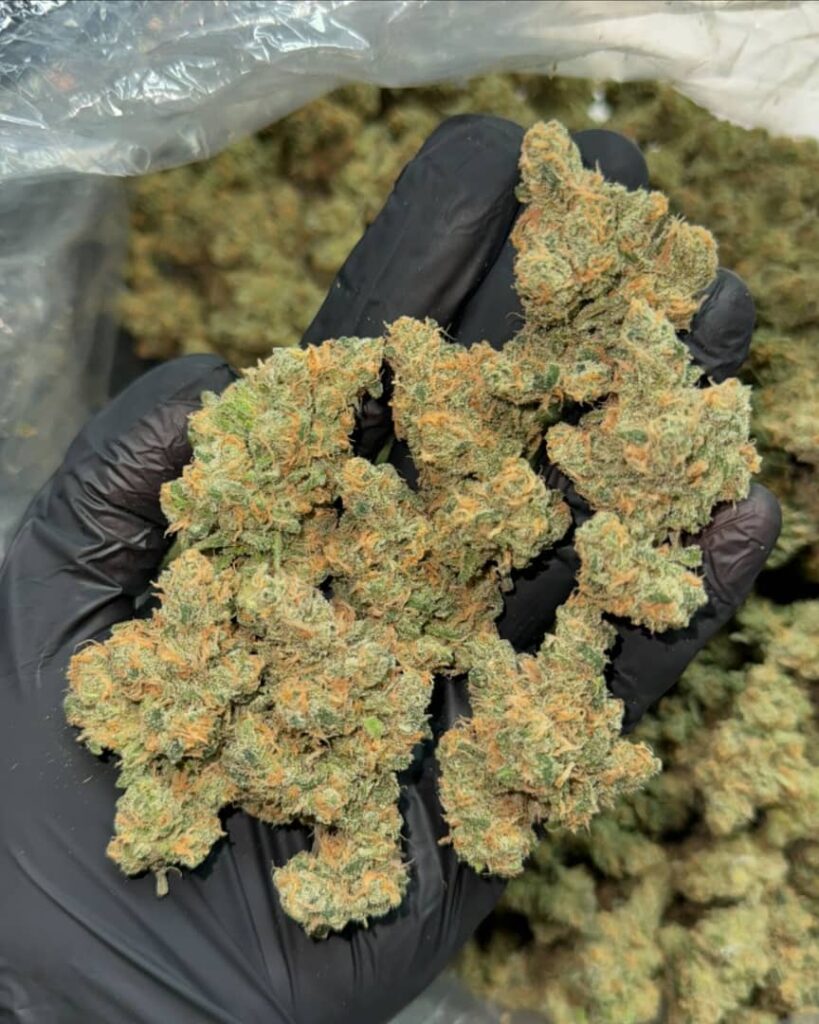
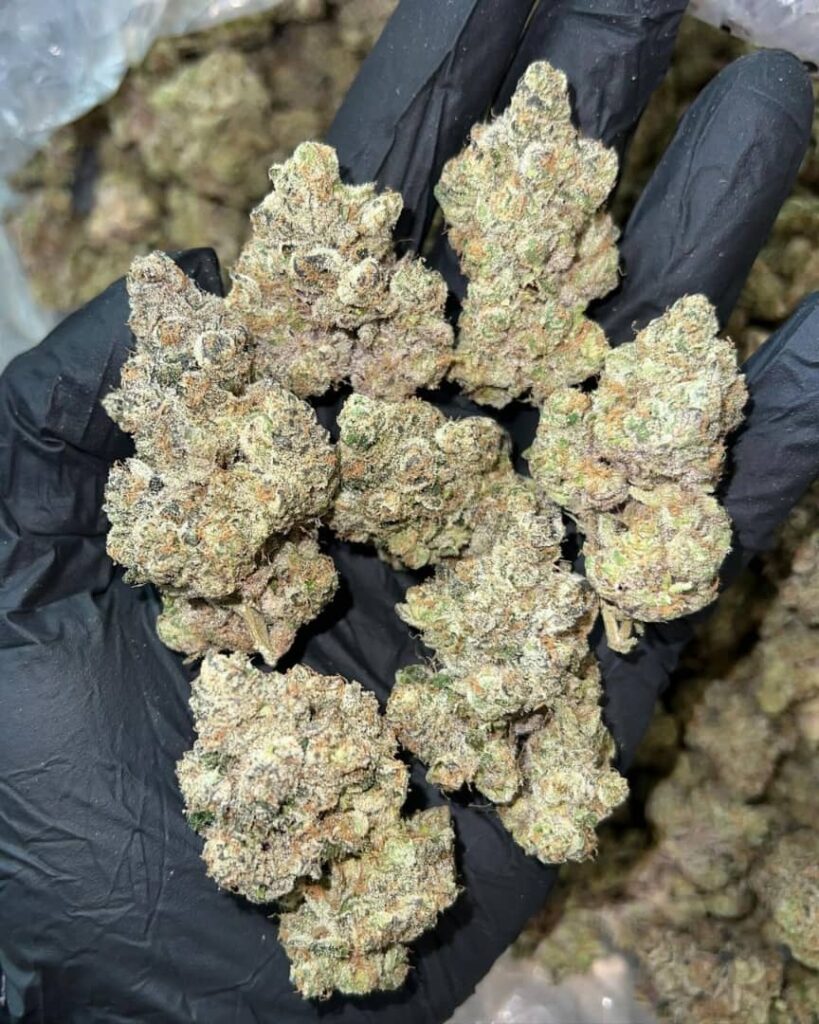
GMO is generally associated with dense, heavily resin-coated flowers.
The visual presentation can include:
- Dense flower structure
- Heavy trichome coverage
- Pronounced resin
- Green flower coloration
- Orange or copper pistils
- Compact sugar leaves
- Strong overall frost
However, phenotype and environment can significantly influence appearance.
A plant grown under one set of conditions may show different coloration, density, or resin expression than another GMO plant.
Environmental factors including:
- Light intensity
- Temperature
- Humidity
- Nutrition
- Root health
- Plant stress
- Harvest timing
can all influence the final flower.
For that reason, visual frost alone should not be used to determine whether plant material is genetically authentic.
Provenance matters.
GMO Aroma Profile
The aroma is arguably GMO’s defining characteristic.
Few cannabis cultivars have developed such a strong association with savory aromas.
Commonly reported notes include:
Garlic
Onion
Mushroom
Diesel
Earth
Skunk
Fuel
Pepper
Leafly currently lists blue cheese, cheese, and earthy notes among GMO’s leading flavor characteristics, while historical and commercial descriptions consistently emphasize the garlic, mushroom, onion, diesel, and skunky dimensions of the aroma.
This combination is what makes GMO so recognizable.
The initial aroma can be intensely pungent.
Underneath that first wave is a deeper earthy and fuel-like character.
As the flower is handled or broken apart, the savory profile can become even more pronounced.
For growers focused on terpene-driven flower, that intensity is one of GMO’s most important characteristics.
GMO Strain Flavor
The flavor profile generally follows the aroma.
Reported characteristics include:
- Garlic
- Earth
- Cheese
- Diesel
- Pepper
- Mushroom
- Onion
- Skunk
- Savory spice
The experience is fundamentally different from cultivars built around fruit and candy.
GMO is savory rather than confectionary.
The Cookies side of the genetics can contribute sweetness and depth, while Chem D contributes the chemical and fuel-oriented character.
The resulting flavor can therefore move between savory funk and deeper earthy sweetness.
This is one reason GMO has maintained a dedicated following even as fruit-heavy genetics have become increasingly popular.
GMO Terpene Profile
Current Leafly information lists GMO’s principal terpene information less explicitly than some other cultivars, but commercial and genetics references commonly associate the cultivar with compounds including:
- Caryophyllene
- Myrcene
- Limonene
- Pinene
Prime Cuts Nursery currently identifies d-limonene, beta-myrcene, and beta-caryophyllene among the dominant terpenes it associates with GMO.
These compounds help provide a framework for understanding the cultivar’s complex aroma.
Caryophyllene
Caryophyllene is strongly associated with peppery and spicy aromatic characteristics.
Myrcene
Myrcene is commonly associated with earthy, herbal, and musky aromatic qualities.
Limonene
Limonene contributes citrus brightness and can help add complexity to heavier aromatic profiles.
Pinene
Pinene is associated with pine-like and fresh aromatic characteristics.
Importantly, terpene percentages should never be treated as universal GMO specifications.
A laboratory report describes a particular sample.
Different GMO phenotypes and cultivation environments can produce different terpene distributions.
Why GMO’s Terpene Expression Matters
GMO demonstrates why terpene expression can be just as important to cultivar identity as cannabinoid content.
Two flowers can contain similar total THC and still smell completely different.
The terpene profile contributes substantially to the sensory identity of the flower.
For GMO, that identity is strongly connected to pungency.
Experienced cultivators therefore pay attention to:
- Genetic provenance
- Mother-stock selection
- Environmental stability
- Harvest timing
- Drying
- Curing
- Storage
A strong GMO phenotype should not simply smell “strong.”
It should demonstrate the distinctive aromatic character that makes the genetics recognizable.
GMO Strain Effects
GMO is commonly described as a calming, relaxing cultivar with a potentially strong physical component.
Leafly currently lists tingly, creative, and relaxed among the leading reported effects.
Commercial and community descriptions often characterize GMO as an intense cultivar that may become increasingly relaxing as the experience develops.
However, effects are subjective.
They can vary according to:
- Individual tolerance
- Product potency
- Consumption method
- Amount consumed
- Individual physiology
- Terpene composition
- Phenotype
- Batch characteristics
Therefore, GMO should be described through reported consumer experiences, rather than guaranteed effects.
The cultivar’s reputation for a strong and relaxing experience is part of its identity, but individual responses can differ significantly.
Growing GMO Strain
A Cultivator’s Perspective
GMO genetics reward attention to plant structure, environmental stability, and flower development.
The objective should not be to force every GMO plant into an identical production model.
Instead, growers should evaluate the individual phenotype.
Important characteristics include:
- Vegetative vigor
- Branch structure
- Internodal spacing
- Stretch
- Flower formation
- Resin development
- Aroma intensity
- Environmental response
- Maturity
These observations help determine how the plant should be managed.
Indoor GMO Cultivation
Indoor cultivation provides the greatest control over environmental variables.
For a resin- and terpene-focused cultivar such as GMO, environmental consistency can be particularly valuable.
Light Management
Consistent light coverage supports uniform canopy development and helps reduce variation between different areas of the grow space.
Temperature
Stable temperatures can support predictable plant development and help minimize unnecessary stress.
Humidity
Dense flowers require appropriate humidity management, particularly during late flowering.
Airflow
Good air movement throughout the canopy is important for maintaining a consistent environment.
Root Health
Strong roots support vegetative vigor and help the plant transition successfully into flowering.
Canopy Structure
Training should reflect the individual phenotype.
Some plants may respond well to structured canopy management, while others may require a more conservative approach.
GMO Strain Flowering Time
Commercial cultivation references commonly place GMO in approximately the nine-to-ten-week flowering range, although exact flowering time varies by phenotype, environment, cultivation method, and harvest criteria. Prime Cuts Nursery currently lists approximately 9–10 weeks.
This should be treated as a cultivation estimate rather than a guarantee.
Growers should evaluate:
- Flower maturity
- Resin development
- Trichome development
- Aroma
- Flower structure
- Overall plant health
Calendar-based estimates are useful for planning, but the plant itself should ultimately determine harvest readiness.
GMO Strain Yield Potential
GMO is often described as productive and resin-rich, but yield figures vary significantly between cultivation systems.
Some commercial nursery sources publish specific yield estimates, while other sources do not.
Those figures should not be interpreted as guaranteed performance.
Actual yield depends on:
- Genetic selection
- Root health
- Light intensity
- Plant size
- Canopy management
- Environment
- Nutrition
- Flowering duration
- Pest and disease management
- Harvest timing
For commercial cultivation, quality-adjusted yield is generally more useful than raw weight.
A cultivar that produces slightly less biomass but delivers exceptional aroma, resin, and flower quality may have greater value within a premium production program than a higher-yielding cultivar with weaker expression.
GMO Strain Resin Production
Resin is one of GMO’s most frequently discussed characteristics.
Leafly’s historical GMO coverage specifically highlights the cultivar’s ability to produce substantial amounts of hash and describes it as attractive to concentrate-oriented consumers and breeders.
For flower growers, heavy resin can contribute to:
- Visual frost
- Trichome density
- Aroma intensity
- Surface texture
- Extraction potential
But resin quantity should not be evaluated independently.
The quality of the resin and its aromatic profile are equally important.
A plant covered in trichomes but lacking distinctive aroma is not necessarily superior to a slightly less frosted phenotype with exceptional terpene expression.
This is another reason phenotype selection matters.
Why Clone Selection Matters With GMO Strain
GMO is a particularly good example of why clone provenance can matter.
The cultivar became famous because of a selected phenotype.
That means the specific plant expression is part of the story.
Starting with a known mother plant can help preserve:
- Genetic identity
- Aroma characteristics
- Resin expression
- Flower structure
- Plant architecture
- Cultivation behavior
Seed populations introduce genetic variation.
That variation can be valuable for breeding and selection.
But when a grower’s objective is to reproduce a known phenotype, properly propagated clones offer a different approach.
What to Look for in a GMO Rooted Clone
A premium GMO clone should be evaluated on both genetics and plant health.
Healthy Roots
The plant should have a properly established root system capable of supporting active growth.
Healthy Foliage
Leaves should show appropriate development without obvious pest pressure, disease, or severe nutritional stress.
Vigorous Growth
The clone should demonstrate healthy vegetative activity.
Accurate Identification
The cultivar name should be accompanied by clear information about the genetic source whenever available.
Mother-Stock Quality
The mother plant is the genetic foundation of the clone.
Professional Propagation
Clean propagation and nursery practices help reduce unnecessary problems during establishment.
For a cultivar as genetically recognizable as GMO, provenance deserves particular attention.
Why Genetics Matter More Than Most Growers Realize
A successful cultivation cycle begins with genetic potential.
Genetics influence:
- Plant vigor
- Structure
- Flower formation
- Resin production
- Terpene expression
- Environmental response
- Flowering behavior
- Harvest characteristics
Cultivation determines how much of that potential is expressed.
It does not create the potential itself.
This is why experienced growers spend considerable time evaluating mother plants and phenotypes.
The objective is to identify genetics that perform consistently within the intended environment.
For GMO Strain, that may mean selecting for the combination of:
Strong growth + exceptional resin + distinctive aroma + desirable structure.
The best phenotype is rarely determined by one trait alone.
GMO for Premium Flower Cultivation
GMO is particularly relevant for growers interested in flower with a recognizable identity.
Its strongest differentiating characteristics include:
Unmistakable Aroma
Garlic, mushroom, onion, earth, diesel, and fuel create a profile unlike typical fruit-forward cultivars.
Recognizable Genetics
Chem D × GSC gives GMO a documented and influential genetic foundation.
Resin Potential
The cultivar has a longstanding reputation for heavy resin production and extraction potential.
Breeding Value
GMO has become an important parent for subsequent genetics.
Experienced Cultivator Appeal
The cultivar’s distinctive expression makes it particularly interesting for growers who evaluate flower beyond cannabinoid numbers.
GMO and Genetic Provenance
The history of GMO demonstrates why cultivar provenance matters.
The genetic cross is documented as Chem D × GSC.
The notable phenotype was then selected and named GMO Cookies.
Those are different stages in the development of the cultivar.
For growers evaluating GMO today, that history provides an important lesson:
A name does not tell the entire story.
The actual plant material matters.
Mother-stock selection matters.
Propagation matters.
Phenotype matters.
Cultivation matters.
For anyone building a long-term cultivation program, these factors should be considered together.
Why Start With Healthy Plant Material?
A strong genetic foundation deserves an equally strong starting plant.
Poorly rooted or stressed clones can introduce unnecessary problems before cultivation has even begun.
Healthy rooted plant material gives growers a more established foundation from which to build their crop.
This allows greater attention to:
- Root establishment
- Vegetative growth
- Canopy development
- Environmental optimization
- Flower production
- Harvest planning
The goal is simple:
Start with a healthy plant so cultivation can focus on maximizing genetic potential.
Wild Leaf Gardens & GMO Genetics
At Wild Leaf Gardens, the philosophy behind premium genetics is straightforward:
Success starts with strong genetics and healthy plant material.
GMO is a cultivar where that philosophy is particularly relevant.
Its identity is closely connected to phenotype selection, making the source and quality of the actual plant material especially important.
For growers evaluating GMO genetics, key considerations include:
- Genetic provenance
- Mother-stock quality
- Plant vigor
- Root development
- Accurate cultivar identification
- Propagation quality
- Phenotype consistency
- Cultivation performance
A premium cultivar should be more than a label.
It should represent plant material with a known genetic foundation and a cultivation history that growers can understand.
Wild Leaf Gardens approaches premium genetics around the fundamentals that matter most to serious cultivators: healthy plant material, careful propagation, genetic identity, and cultivation-focused quality control.
Who Is GMO Strain Suited To?
GMO can be particularly appealing to experienced cultivators who appreciate distinctive genetics.
Premium Flower Cultivators
Growers focused on terpene expression, resin, and recognizable flower characteristics may find GMO especially interesting.
Experienced Home Growers
Cultivators interested in evaluating phenotype and refining environmental conditions can explore the genetic range of GMO.
Genetics Enthusiasts
GMO’s place in modern cannabis breeding makes it a particularly interesting cultivar for genetic collections.
Commercial Cultivators
Commercial growers can evaluate GMO as part of a differentiated genetics program where aroma, resin, and recognizable cultivar identity are important.
Breeders
GMO’s established breeding influence makes it relevant to programs exploring pungent, savory, resin-forward offspring.
As always, suitability depends on the grower’s environment, experience, objectives, and applicable laws and regulations.
Frequently Asked Questions
What is GMO Strain?
GMO, also known as Garlic Cookies or GMO Cookies, is a cannabis hybrid documented as Chem D × Girl Scout Cookies (GSC).
Why is GMO Strain called Garlic Cookies?
The name is associated with the cultivar’s unusual garlic-forward aromatic profile. GMO does not mean the cannabis plant has been genetically modified. Historical accounts also connect the name to the circumstances surrounding the selected phenotype.
What are GMO genetics?
The commonly documented lineage is Chem D × Girl Scout Cookies. The famous phenotype was selected by Skunkmasterflex after the original seed release.
What does GMO Strain taste like?
GMO is associated with savory garlic, mushroom, onion, earthy, diesel, pepper, cheese, and skunky characteristics. Leafly currently lists blue cheese, cheese, and earthy among its leading flavor notes.
What does GMO Strain smell like?
The aroma is typically described as extremely pungent and savory, with garlic, onion, mushroom, diesel, earth, fuel, and skunky notes.
What terpenes are associated with GMO Strain?
Commonly reported terpenes include caryophyllene, myrcene, and limonene, with some sources also identifying pinene. Exact concentrations vary by phenotype and batch.
Is GMO indica or sativa Strain?
Classification varies by source, but GMO is commonly described as an indica-dominant hybrid. Leafly currently identifies it as an indica-dominant hybrid, while some commercial sources use slightly different classifications.
What effects are associated with GMO Strain?
Leafly currently lists tingly, creative, and relaxed among GMO’s leading reported effects. Individual experiences vary.
How long does GMO take to flower?
Some cultivation sources report approximately nine to ten weeks, although actual flowering time varies by phenotype and growing environment.
Is GMO Strain suitable for indoor cultivation?
GMO can be evaluated in controlled indoor environments where growers can manage lighting, temperature, humidity, airflow, irrigation, and canopy development.
Is GMO suitable for outdoor cultivation?
Outdoor performance depends on climate and environmental conditions. Humidity, rainfall, temperature, pests, and seasonal timing should all be considered.
Does GMO Strain produce a lot of resin?
GMO has a longstanding reputation for substantial resin production. Leafly’s historical coverage specifically notes its strong hash-making potential.
Are GMO clones better than seeds?
Neither is universally better. Clones can preserve a known phenotype, while seeds provide genetic variation and opportunities for selection.
Why are rooted GMO clones valuable?
A rooted clone can provide an established starting point while preserving the genetic identity of a selected mother plant.
What should I look for in a GMO clone?
Look for healthy roots, vigorous growth, healthy foliage, accurate identification, professional propagation practices, and clear information about the genetic source.
Why is GMO important in cannabis breeding?
GMO has become a widely used breeding parent because of its distinctive aroma, resin characteristics, and recognizable genetic identity. Leafly’s historical coverage documents a large number of GMO-derived crosses.
Final Thoughts
GMO Strain is more than a popular cultivar.
It is a landmark example of how phenotype selection can transform a genetic cross into a recognizable cannabis identity.
Built from Chem D × Girl Scout Cookies, GMO developed a profile unlike the majority of sweet, fruit-forward modern cultivars.
Its identity is built around:
Garlic.
Mushroom.
Onion.
Earth.
Diesel.
Fuel.
Pepper.
Resin.
That unmistakable combination has helped GMO become one of the most influential savory cultivars in modern cannabis genetics.
For growers, however, the most important lesson is not simply that GMO is famous.
It is that the quality and provenance of the plant material matter.
A desirable phenotype, healthy mother stock, strong rooting, careful propagation, appropriate environmental management, and disciplined cultivation all contribute to the final expression.
GMO Strain provides the genetic foundation.
The grower provides the environment and cultivation skill that allow that foundation to perform.
Strong genetics. Healthy plant material. Distinctive expression.
That is what makes GMO such an important addition to a serious genetics program.
Reviews
There are no reviews yet.