
Description
Apples and Bananas Strain: Complete Guide to Genetics, Effects, Flavor & Growing Information
Introduction
Apples and Bananas Strain is a modern cannabis cultivar recognized for an unusually layered combination of fruit, sweetness, spice, earth, and gas. Rather than relying on a single dominant flavor, the cultivar is known for a profile that can move from apple and banana-like fruit into creamy, peppery, earthy, and fuel-forward notes.
The cultivar is associated with Compound Genetics and the Cookies breeding world. One of the best-documented lineage records traces Apples and Bananas to [(Platinum Cookies × Granddaddy Purple) × Blue Power] × Gelatti. SeedFinder records this complete genealogy, while Weedmaps gives the same expanded family tree.
There is an important wrinkle, however: current commercial sources do not always present the lineage in exactly the same way. Cookies Thailand currently describes its product as Now N Later × Jet Fuel Gelato, while other sources document the expanded four-line pedigree above.
That discrepancy is worth highlighting rather than hiding. It demonstrates why a good Apples and Bananas strain review should distinguish documented pedigree from simplified commercial descriptions.
This guide examines the cultivar’s genetics, aroma, flavor, reported effects, potency, terpene profile, cultivation information, and comparisons with related modern hybrids.
What Is Apples and Bananas Strain?
Apples and Bananas Strain is a modern hybrid cannabis cultivar associated with Compound Genetics, with Cookies involved in its commercialization and collaboration history. Weedmaps currently lists its parents as Platinum Cookies and Blue Power in its simplified parent display, while its detailed description provides the expanded four-stage lineage.
The cultivar is generally described as a hybrid, although classification varies among commercial databases. Segra currently labels it a sativa-dominant hybrid, while other sources classify it as an indica or balanced hybrid.
That variation is a useful reminder that indica/sativa percentages are often less informative than the actual cultivar’s cannabinoid, terpene, and phenotype characteristics.
At a glance
| Characteristic | Available information |
|---|---|
| Cultivar | Apples and Bananas / Apples & Bananas |
| Breeder | Compound Genetics |
| Commercial association | Cookies |
| Expanded lineage | [(Platinum Cookies × Granddaddy Purple) × Blue Power] × Gelatti |
| Type | Hybrid; classification varies by source |
| Common flavors | Apple, banana, sweet, fruity, earthy, gas |
| Common effects | Happy, relaxed, euphoric, uplifted |
| Reported THC | Approximately low-to-high 20% range depending on source/batch |
| Commonly reported terpenes | Myrcene, limonene, caryophyllene; some sources report pinene and ocimene |
The figures above should be treated as cultivar-level or source-specific information rather than guarantees for every Apples and Bananas product.
Apples and Bananas Genetics and Lineage
The most detailed publicly documented Apples and Bananas genetics are:
[(Platinum Cookies × Granddaddy Purple) × Blue Power] × Gelatti
SeedFinder’s genealogy database records this lineage explicitly.
The pedigree contains four major genetic influences.
Platinum Cookies
Platinum Cookies contributes the Cookies-family foundation to the cultivar.
Its influence is commonly associated with dense flower structure, resin production, dessert-like sweetness, and a gassy background.
Granddaddy Purple
Granddaddy Purple adds another layer of classic genetics to the family tree.
Its lineage is associated with grape and berry aromatics, deep coloration, and a more relaxing indica-oriented character.
Not every Apples and Bananas phenotype will display strong purple coloration, however. Environmental conditions and phenotype expression can influence appearance.
Blue Power
Blue Power is the third major component.
Segra identifies Blue Power as part of the Apples N Bananas lineage and describes Apples N Bananas as a Compound Genetics cultivar with the same expanded pedigree.
Blue Power itself has a complex background, contributing another layer of genetic diversity to Apples and Bananas.
Gelatti
Gelatti completes the documented expanded cross.
The Gelatti influence is frequently associated with creamy, sweet, gassy, and dessert-like characteristics, helping explain why Apples and Bananas can have a much deeper aromatic profile than its fruit-forward name suggests.
Why the lineage matters
The genetics help explain the cultivar’s unusual sensory balance.
Instead of simply tasting like fruit, Apples and Bananas can combine:
fruit + candy + cream + earth + spice + gas
That complexity is arguably the defining feature of the cultivar.
Why Is Apples and Bananas Strain So Popular?
Several characteristics have helped establish Apples and Bananas as a recognizable modern cultivar.
1. Distinctive flavor
Apple and banana descriptors are unusual enough to immediately differentiate the cultivar from conventional diesel, Kush, or dessert strains.
Weedmaps’ current community data lists apple as its leading reported flavor, followed by sweet and earthy notes.
2. Complex genetics
The cultivar’s multi-line pedigree gives breeders and enthusiasts a substantial genetic foundation to work with.
SeedFinder currently catalogs numerous descendants and related crosses, demonstrating how Apples and Bananas has been incorporated into subsequent breeding projects.
3. Bag appeal
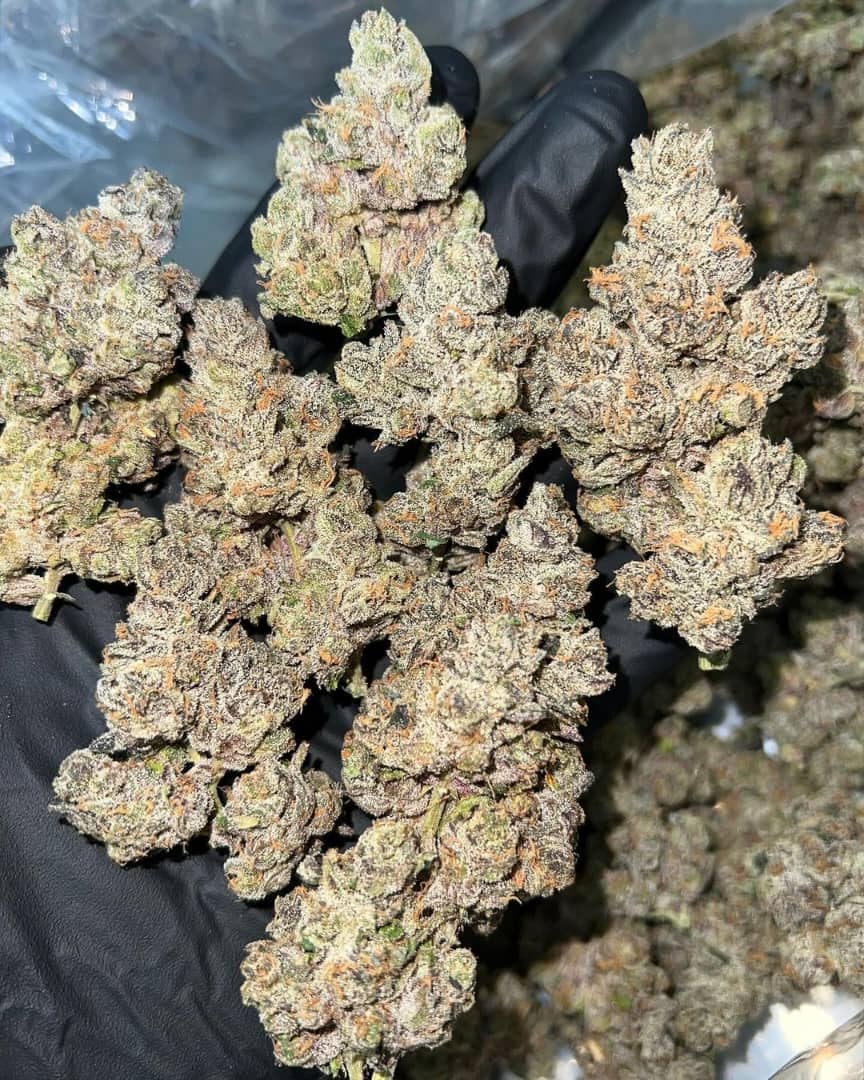
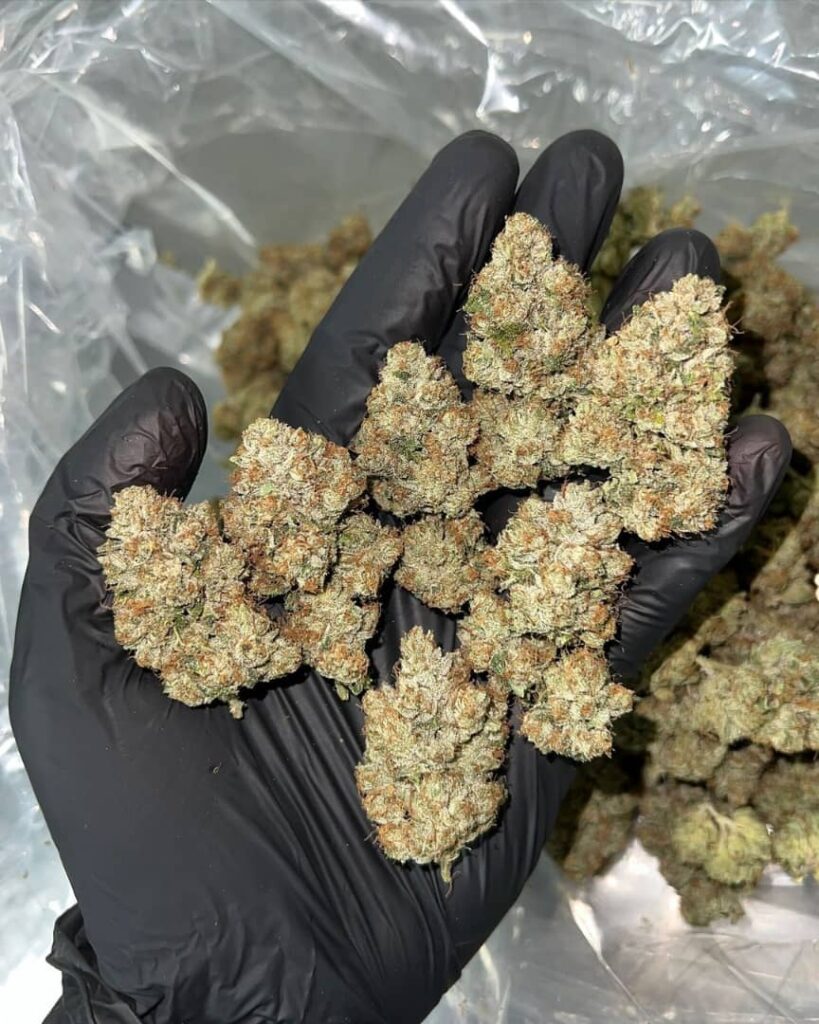
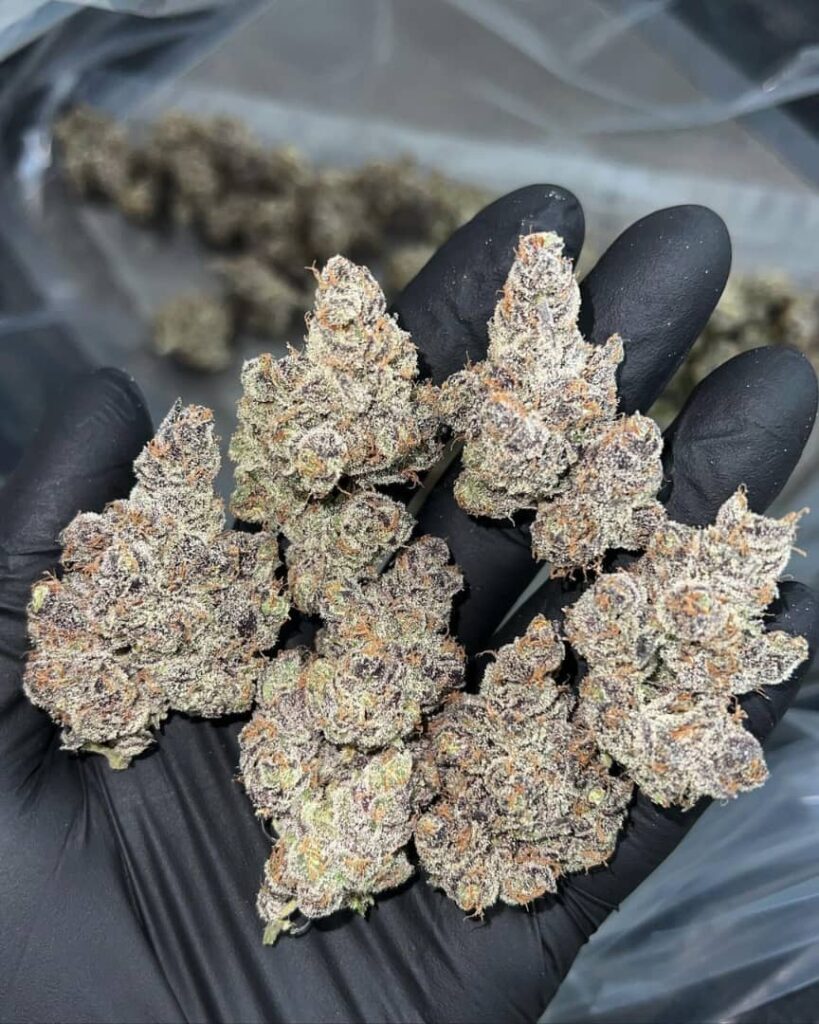
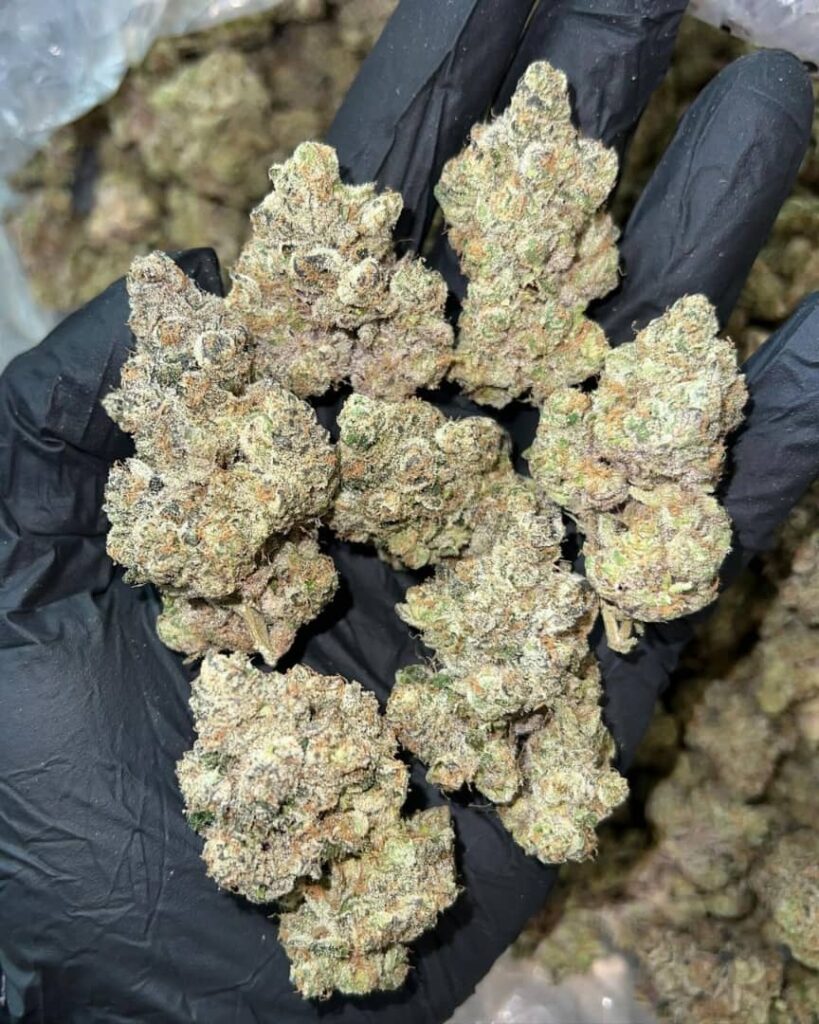
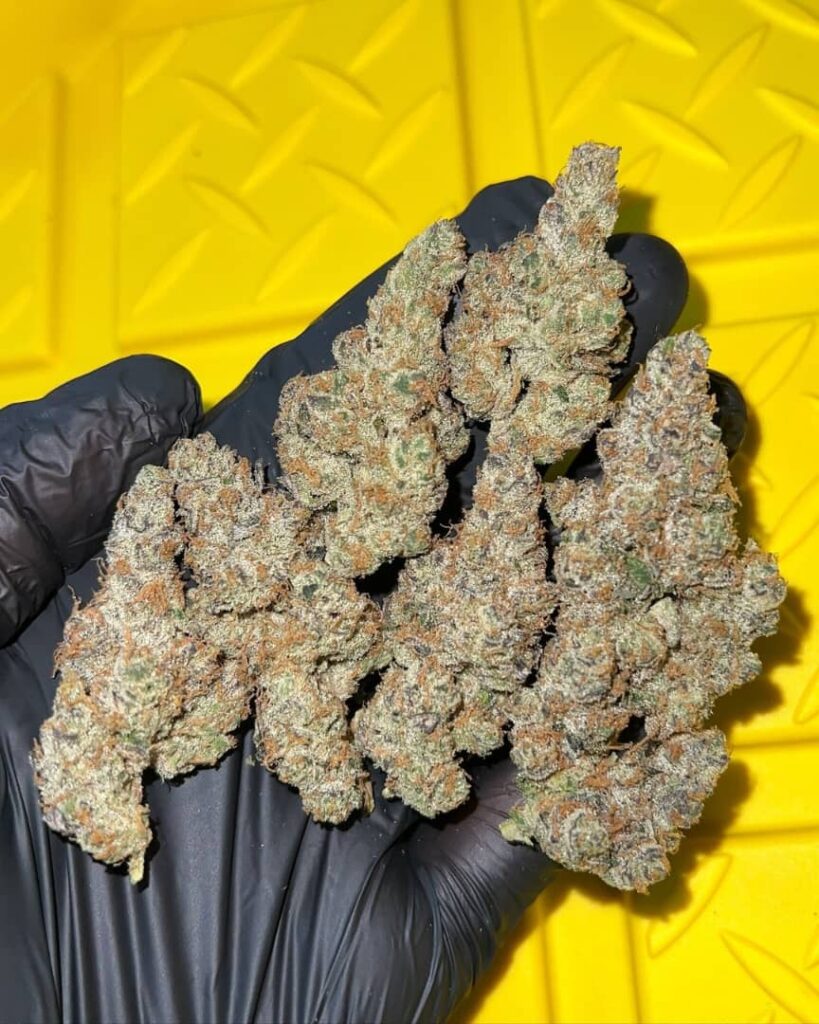
Commercial descriptions frequently emphasize dense, resin-covered flowers and strong coloration.
One commercial description reports conical, dense flowers with deep purple coloration and heavy resin coverage.
4. Potency
Available commercial and laboratory-linked data generally place Apples and Bananas in the relatively high-THC category, although exact results vary substantially between products.
Aroma, Flavor and Terpene Profile
Apples and Bananas Aroma
The Apples and Bananas aroma can be surprisingly complex.
Common descriptions include:
- Sweet apple
- Ripe banana
- Berry
- Citrus
- Cream
- Earth
- Pepper
- Diesel
- Gas
- Spice
Weedmaps describes a fruit-forward profile involving apple and sweetness layered over earth, while other commercial descriptions emphasize banana, creamy dessert notes, diesel, spice, and gas.
The aromatic balance can vary significantly by phenotype and cultivation method.
Some expressions may lean strongly toward sweet fruit, while others emphasize gas and spice.
Apples and Bananas Flavor
The Apples and Bananas flavor is similarly variable.
A representative description would be:
Sweet fruit on the initial taste, followed by creamy dessert character, with earthy, peppery, or gassy notes developing toward the finish.
Commercial descriptions have reported apple, banana, pear, tropical fruit, citrus, spice, cream, and fuel.
That layered progression is one reason the cultivar has developed a strong following among flavor-focused consumers.
Apples and Bananas Terpene Profile
There is no single universal terpene percentage for Apples and Bananas.
Different sources report somewhat different dominant compounds.
Prime Cuts identifies:
- Myrcene
- Caryophyllene
- Limonene
- Linalool
- Pinene
as prominent terpenes.
Segra’s current cultivar information instead highlights:
- Myrcene
- Ocimene
- Pinene
and reports total terpene levels of approximately 3–4% for its cultivar data.
Purplefarm identifies myrcene, alpha-pinene, and beta-caryophyllene as its major terpenes and reports a 3.42–4.92% terpene range for its listed material.
These differences are not necessarily contradictory. They can reflect different phenotypes, growing environments, harvests, curing, testing laboratories, or commercial selections.
The best way to establish the terpene profile of a specific Apples and Bananas product is to examine that product’s current certificate of analysis.
THC Content and Potency
THC/CBD Content: 28% under 1% CBD
The Apples and Bananas THC figure varies considerably among publicly available sources.
Weedmaps currently gives a broad 23–29% THC range.
Segra lists 23–27% THC for its Apples N Bananas cultivar data.
Purplefarm lists a 24–30% THC range.
Individual commercial products can fall outside these ranges, demonstrating why strain-level THC should never be treated as a guaranteed specification.
What does that mean for potency?
Apples and Bananas is reasonably characterized as a potentially high-potency cultivar, particularly in products testing in the upper 20% THC range.
But the cultivar name does not determine the strength of an individual batch.
For consumers, the most useful information is:
- Current THC percentage
- Total cannabinoids
- Terpene content
- Laboratory test date
- Product form and consumption method
Apples and Bananas Effects
Mental Effects
Reported Apples and Bananas effects commonly include:
- Euphoria
- Happiness
- Uplifted mood
- Creativity
- Relaxation
Weedmaps’ current community data lists relaxed, happy, and euphoric among the leading reported effects.
These are consumer experiences rather than guaranteed pharmacological effects.
Physical Effects
The physical experience is commonly described as relaxing.
Some users report a comfortable body sensation after the initial mental uplift, while others describe feeling sleepy at higher doses.
Again, individual response varies.
Overall Experience
The most consistent picture from available community information is a cultivar that can begin with euphoria and mood elevation before settling into relaxation.
That makes Apples and Bananas particularly interesting to consumers looking for something between a purely energetic daytime cultivar and a heavily sedating cultivar.
However, dose and batch potency can substantially change the experience.
Potential Wellness Considerations
Cannabis consumers may choose Apples and Bananas because they associate it with relaxation, mood elevation, or general unwinding.
Community reports should not be confused with clinical evidence.
For example, Leafly reviews include users mentioning happiness, relaxation, appetite, and sleepiness, but these observations do not establish Apples and Bananas as a treatment for any medical condition.
Anyone using cannabis for a medical purpose should consider cannabinoid concentration, medication interactions, individual health circumstances, and professional medical advice.
Growing Apples and Bananas Strain
Reliable breeder-origin cultivation documentation is less consistent than the available lineage information.
Third-party cultivation sources provide useful estimates, but they should not be presented as guaranteed specifications.
Indoor Growing
Indoor cultivation provides the greatest control over:
- Temperature
- Humidity
- Lighting
- Airflow
- Plant size
- Flowering environment
- Harvest timing
One commercial cultivation source describes Apples and Bananas as having medium vigor and good secondary branching, while another reports medium-to-tall plants with significant stretch.
These observations suggest growers should account for vertical development when planning the canopy.
Outdoor Growing
Apples and Bananas can be cultivated outdoors in appropriate climates according to several commercial cultivation sources.
However, outdoor performance is strongly dependent on:
- Local temperatures
- Humidity
- Rainfall
- Sun exposure
- Pest pressure
- Length of the growing season
There is insufficient evidence to guarantee a particular outdoor yield or harvest date across climates.
Flowering Time
Third-party sources commonly place flowering around 8–9 weeks.
Prime Cuts reports 8–9 weeks, while Segra gives approximately 63 days.
Another commercial genetics source reports 56–60 days.
Taken together, an approximate 8–9 week flowering window is a reasonable third-party estimate, but phenotype and environment can shift the actual finishing time.
Yield Expectations
Yield data is less consistent.
Segra describes its material as having a heavy yield, while other sources provide different yield estimates.
Yield depends on genetics, plant architecture, light intensity, environmental management, root development, training, and grower skill.
For that reason, a specific gram-per-plant or gram-per-square-meter number should not be treated as guaranteed.
Climate Preferences
Apples and Bananas appears adaptable to controlled indoor environments and suitable outdoor climates.
One cultivation source reports tolerance of cooler temperatures, but this should be considered a grower’s observation rather than a scientifically established resistance trait.
Growing Difficulty
Available commercial sources generally place the cultivar around moderate/intermediate difficulty.
The biggest consideration is likely phenotype variation rather than an unusual cultivation requirement.
Experienced growers should be able to manage the cultivar effectively with appropriate canopy, environmental, and flowering management.
Apples and Bananas vs. Similar Strains
Apples and Bananas vs. Gelatti
Gelatti is particularly relevant because it appears directly in the expanded Apples and Bananas lineage.
Apples and Bananas generally adds a stronger fruit-forward identity, with apple and banana descriptors layered over the creamy and gassy character associated with Gelatti.
Apples and Bananas vs. Runtz
Runtz is better known for sweet candy and fruit-forward characteristics.
Apples and Bananas can occupy a similar dessert-fruit category but often brings more earth, spice, and gas into the profile.
Apples and Bananas vs. Jealousy
Jealousy shares the modern dessert-hybrid territory but has its own distinctive flavor and genetic background.
Consumers comparing the two should focus on actual batch-specific terpene and cannabinoid results rather than assuming that similarly marketed “exotic” cultivars will produce identical experiences.
Apples and Bananas vs. GMO
GMO is considerably more savory and pungent in many expressions, with garlic, onion, chemical, and fuel characteristics.
Apples and Bananas tends to be fruitier and sweeter while retaining a noticeable gassy and spicy foundation.
Apples and Bananas vs. Gelato-family cultivars
Apples and Bananas shares some of the creamy, sweet, gassy territory common to modern Gelato-family hybrids.
Its distinction is the prominent fruit character particularly apple and banana descriptors—combined with the deeper genetic influence of Platinum Cookies, GDP, Blue Power, and Gelatti.
Who Should Try Apples and Bananas?
Beginners
Beginners should be cautious with high-THC versions.
A product testing in the upper 20% THC range is considerably different from a lower-potency product, regardless of whether the cultivar name is the same.
Experienced Consumers
Experienced consumers who already know how they respond to high-THC cannabis may be more interested in exploring the cultivar’s complex flavor and terpene expression.
Flavor Chasers
This is arguably one of the strongest audiences for Apples and Bananas.
Its combination of fruit, cream, spice, earth, and gas makes it substantially more complex than a simple fruit-forward cultivar.
High-Potency Enthusiasts
Some commercial examples test in the upper-20% THC range, making Apples and Bananas relevant to consumers specifically seeking stronger products.
Social Users
Some community reports describe happiness and euphoria, but the cultivar can also be relaxing. Individual response and dose matter, so it should not automatically be categorized as a purely social or energetic strain.
Evening Consumers
Because relaxation and occasional sleepiness appear in consumer reports, some users prefer Apples and Bananas later in the day.
Frequently Asked Questions
What strain is Apples and Bananas?
Apples and Bananas is a modern hybrid associated with Compound Genetics and Cookies. The expanded lineage is documented as [(Platinum Cookies × Granddaddy Purple) × Blue Power] × Gelatti.
Is Apples and Bananas indica or sativa?
Classification varies. Some sources call it a balanced hybrid, others an indica, and Segra currently lists its material as a sativa-dominant hybrid. The more useful description is a modern hybrid whose actual expression varies by phenotype.
How strong is Apples and Bananas?
It can be quite potent. Public sources currently report THC ranges around 23–30%, depending on the source and material tested.
What does Apples and Bananas taste like?
Common descriptions include apple, banana, sweet fruit, cream, earth, spice, citrus, and gas. Individual phenotypes can emphasize different parts of that profile.
Who bred Apples and Bananas?
The cultivar is associated with Compound Genetics, with the Cookies breeding operation involved in the collaboration and commercialization of the cultivar.
What terpenes are in Apples and Bananas?
Reported dominant terpenes vary by source. Myrcene, caryophyllene, limonene, pinene, and ocimene are among the compounds reported across available cultivar profiles.
Is Apples and Bananas easy to grow?
Available third-party information generally suggests moderate or intermediate difficulty. Cultivation characteristics vary by phenotype, so growers should treat published specifications as estimates rather than guarantees.
How long does Apples and Bananas take to flower?
Third-party sources commonly report approximately 8–9 weeks, with some giving around 56–63 days. Actual finishing time can vary.
How long do the effects last?
There is no scientifically established duration specific to Apples and Bananas. Duration depends on potency, dose, consumption method, tolerance, and individual physiology.
What strains are similar to Apples and Bananas?
Relevant comparisons include Gelatti, Runtz, Jealousy, GMO, and other modern fruit-and-gas hybrids. The closest comparison depends on whether flavor, potency, or effects are the priority.
Why is Apples and Bananas so popular?
Its popularity is largely connected to its distinctive fruit-forward flavor, complex genetics, strong visual appeal, and relatively high potency. Its unusual combination of fruit, dessert, spice, earth, and gas gives it a recognizable identity.
Does Apples and Bananas actually taste like apples and bananas?
The name is not a guarantee of literal fruit flavor, but apple and banana are repeatedly reported as sensory descriptors. Weedmaps currently lists apple as its leading reported flavor.
Does Apples and Bananas have high terpene content?
Some commercial examples report relatively high total terpene levels, including approximately 3–5% in certain cultivar profiles. These figures are not universal and should be confirmed against the COA for a particular batch.
Conclusion
Apples and Bananas has earned its reputation by combining an unusually complex genetic background with a memorable sensory profile.
The most detailed documented lineage traces the cultivar through Platinum Cookies, Granddaddy Purple, Blue Power, and Gelatti, although commercial sources sometimes simplify or represent the pedigree differently.
Its signature profile is built around sweet fruit, apple, banana, cream, earth, spice, and gas, while reported effects commonly include happiness, euphoria, relaxation, and uplift.
Potency is another important part of the cultivar’s identity. Available commercial information commonly places Apples and Bananas in the low-to-high 20% THC range, but batch-specific laboratory results remain the best source for determining actual potency.
For growers, the available evidence supports an approximate 8–9 week flowering period, with moderate cultivation difficulty and potentially strong resin and flower production. However, phenotype and environment can substantially influence the finished plant.
Ultimately, the appeal of the Apples and Bananas cannabis strain is its balance of recognizable fruit character and serious genetic depth. It is not simply a fruit-flavored cultivar: its Cookies, GDP, Blue Power, and Gelatti heritage gives it the potential for a much broader combination of sweetness, cream, spice, earth, and fuel.
Sjones –
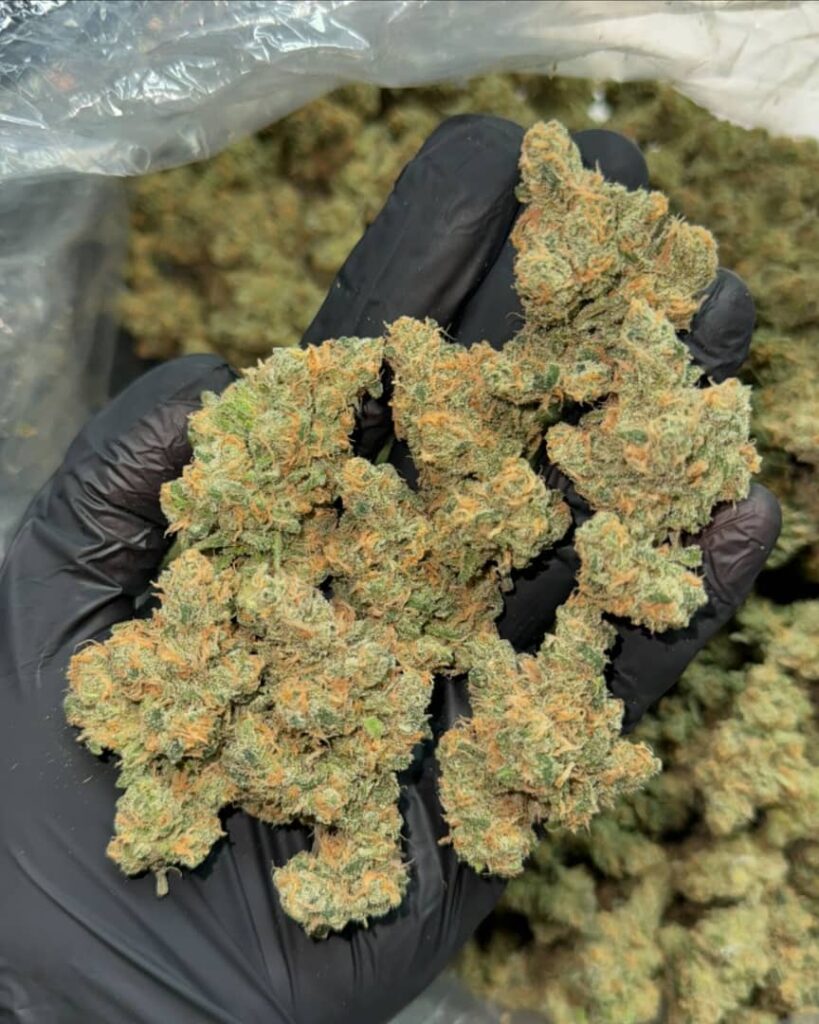
Tried the Apples and Bananas from you guys after being curious about what you all grow, and I’ve got to say, I wasn’t disappointed. The buds looked really nice, had a good smell as soon as I opened the bag, and were fresh and sticky. Overall, it was a really enjoyable smoke and the quality definitely stood out to me.
Only reason I’m giving it 4 stars instead of 5 is that I would’ve liked to see a few more bigger buds in the bag. Other than that, I really liked it and I’d definitely be down to try some of their other strains.