
Description
Heavy D Strain: Genetics, Effects, THC & Growing Information
Introduction
Heavy D is a cannabis cultivar with a particularly interesting pedigree for fans of old-school fuel, Chem-family genetics, and heavy resin production. Unlike heavily commercialized strains with dozens of standardized databases, Heavy D has a comparatively small documentation footprint. That makes source checking especially important: several online pages repeat generic claims, while the breeder’s own listing provides the clearest available information about its actual lineage.
The strongest documented source identifies Heavy D genetics as Chem D × Mandelbrot’s 707 Headband, with Skunktek listed as the seed maker. Skunktek describes the selection as producing sturdy plants, substantial yields, strong Chem D expression, and very potent, pungent flowers.
Commercial flower listings associated with the same Heavy D name describe an indica-leaning hybrid with sour, gassy, pungent aromatics and pronounced physical effects.
That combination makes Heavy D particularly interesting to growers and consumers who prefer loud diesel profiles rather than fruit-forward modern hybrids.
This guide examines the Heavy D strain, including its documented genetics, flavor and aroma, available THC testing, reported effects, cultivation characteristics, comparisons with other fuel-heavy cultivars, and what prospective growers should know before working with it.
What Is Heavy D Strain?
Heavy D is a hybrid cannabis cultivar bred by Skunktek, according to the breeder’s own strain listing. Its documented cross is Chem D × Mandelbrot’s 707 Headband. Skunktek offers Heavy D as feminized seed and describes it as producing numerous keeper-worthy plants, with a strong tendency toward Chem D expression.
The cultivar’s commercial identity is somewhat less standardized than strains such as OG Kush, GMO, or Motorbreath 15. Different retailers may describe Heavy D as an indica-leaning hybrid, while community discussions have sometimes characterized it as leaning more toward the sativa side.
For that reason, the most defensible classification is simply hybrid, with the understanding that individual phenotypes can vary.
What does appear consistent across the available sources is Heavy D’s overall character:
- Chem-forward genetics
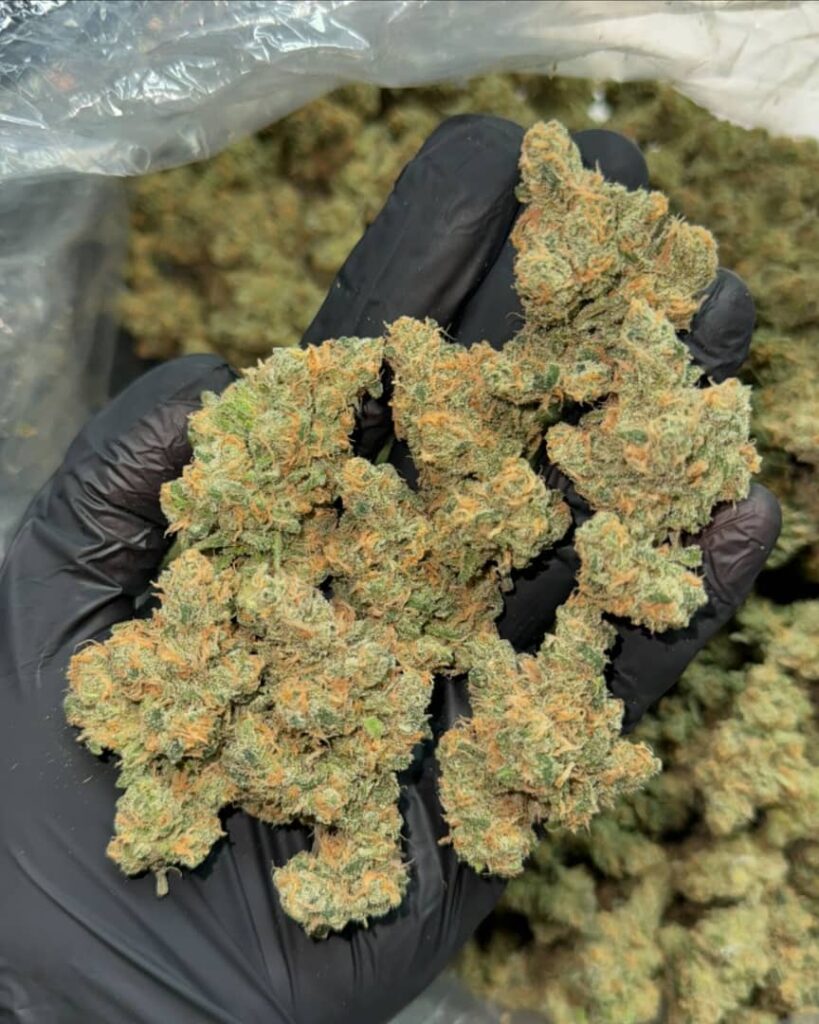
- Strong diesel and sour-gas aromatics
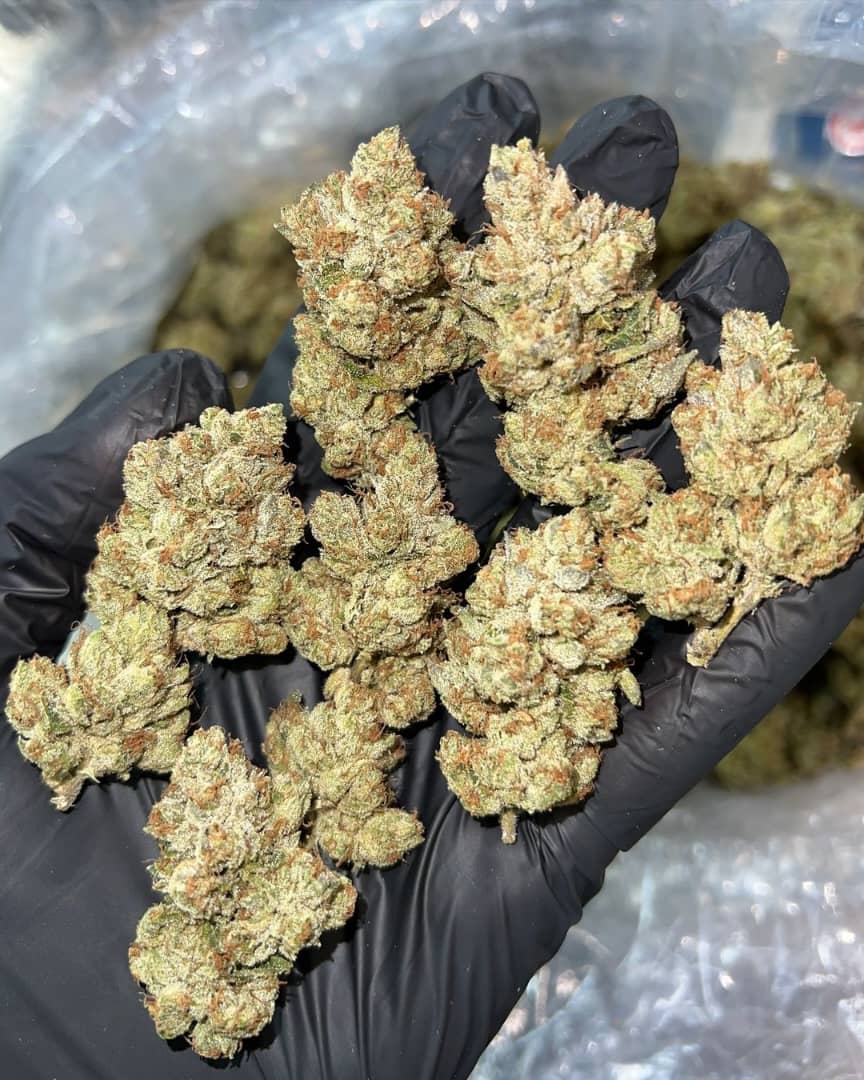
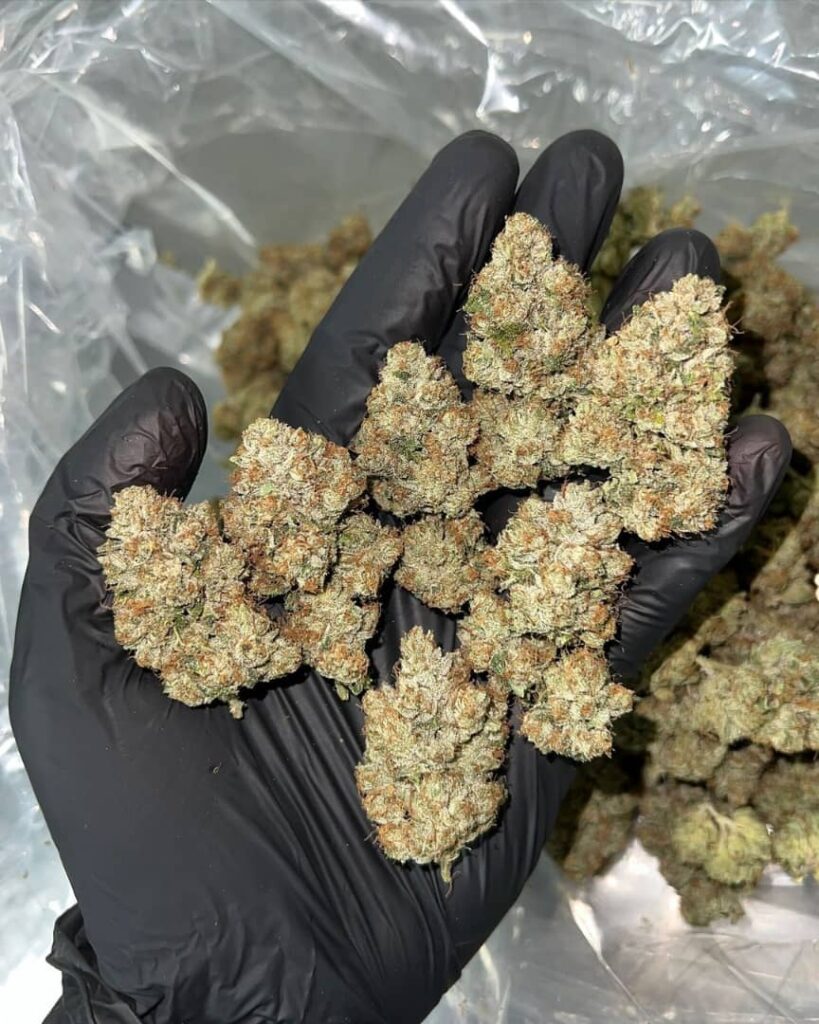
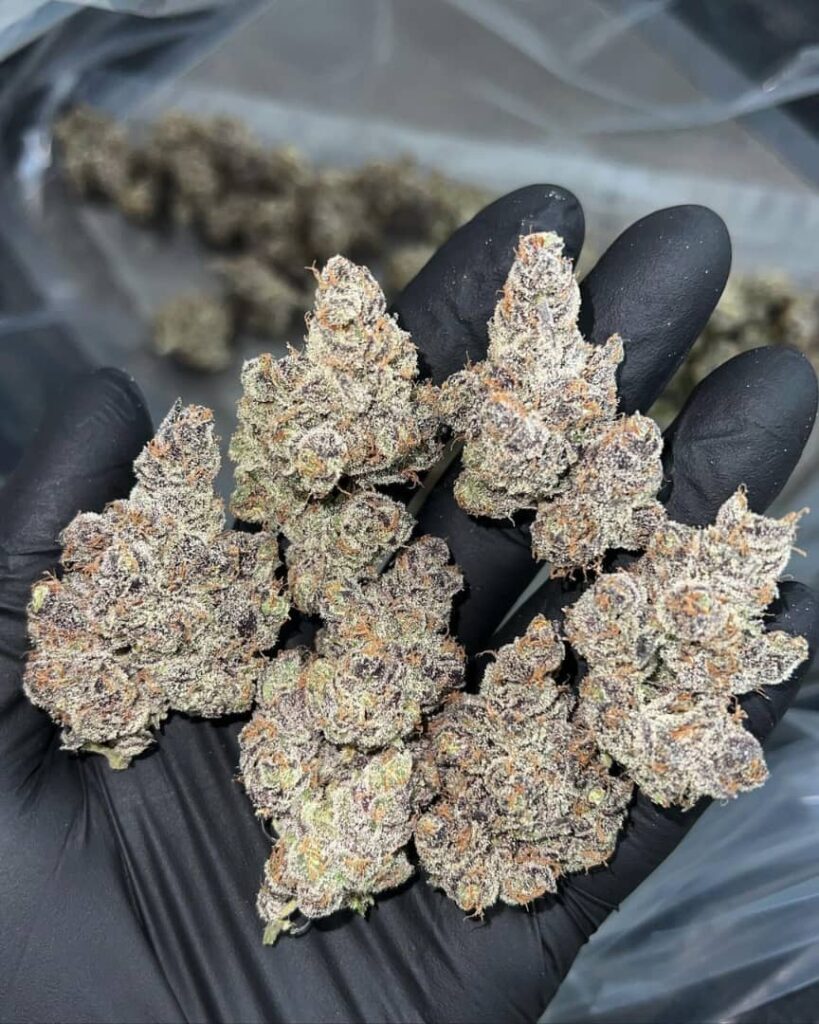
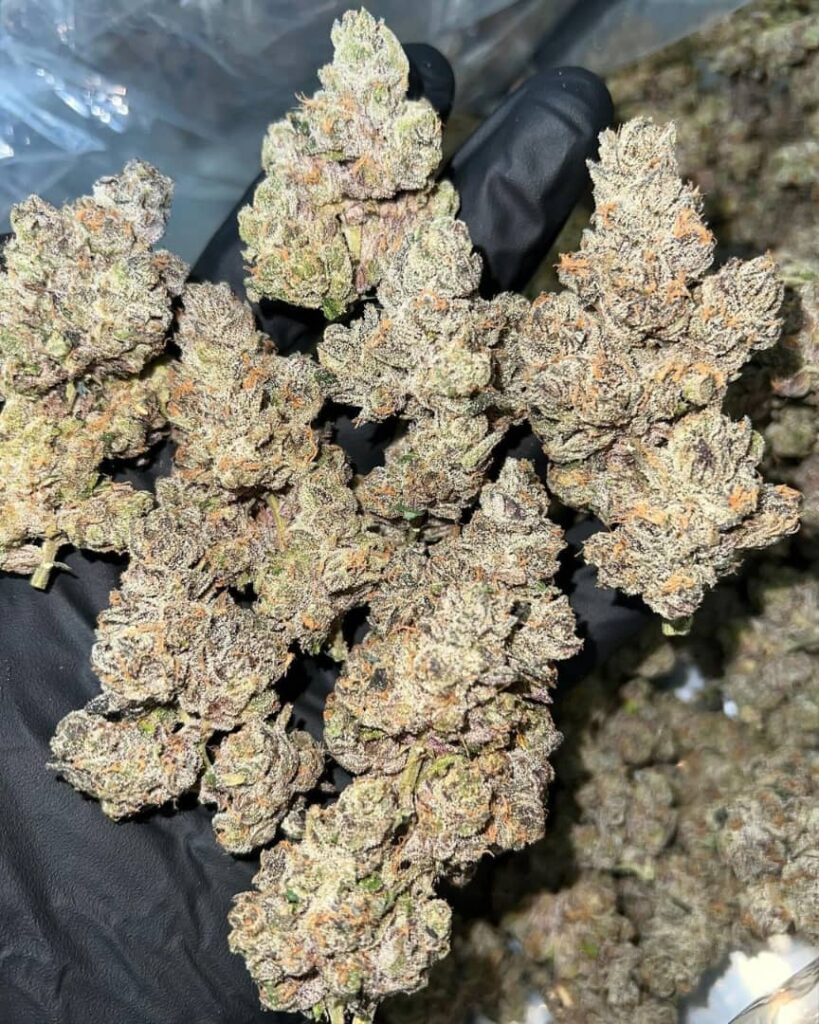
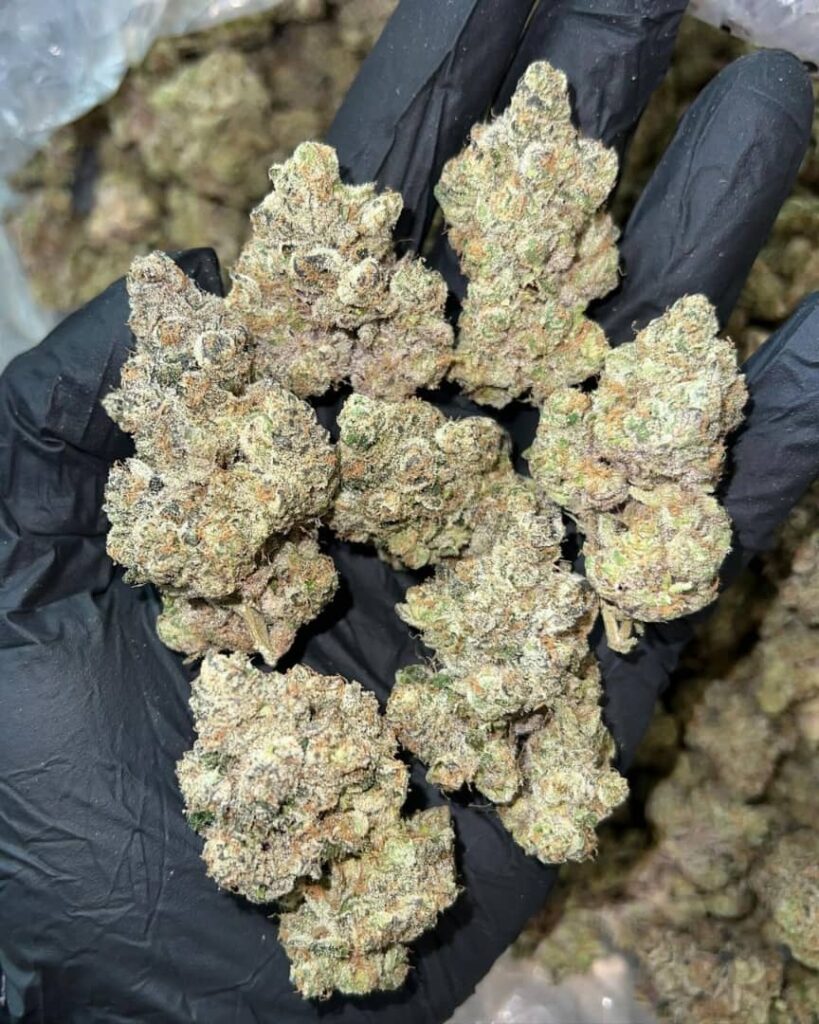
- Dense, resin-rich flowers
- Heavy physical effects reported by consumers
- A pungent, old-school cannabis profile
- Strong interest among growers seeking Chem and Headband-derived genetics
Heavy D is therefore less about novelty candy flavors and more about classic gas, funk, resin, and potency.
Heavy D Genetics and Lineage
The most important fact about Heavy D is its lineage.
Heavy D = Chem D × 707 Headband
Skunktek’s official Heavy D listing identifies the genetics as:
Chem D × Mandelbrot’s 707 Headband
and lists Skunktek as the seed maker.
This is significantly more reliable than strain-directory pages that provide unsupported genetic theories.
The Headband side of the cross is also interesting. 707 Headband is itself generally described as a hybrid associated with Sour Diesel, OG Kush, and Master Kush genetics. Leafly lists 707 as a hybrid with skunky, pungent, earthy characteristics and reports myrcene, terpinolene, and ocimene among its listed terpenes.
That gives Heavy D a genetic foundation combining two recognizable cannabis families:
Chem D → intense chemical, skunky, fuel-forward character
707 Headband → diesel, OG, Kush, and Headband-style complexity
The result makes sense when looking at the sensory descriptions consistently associated with Heavy D.
What the genetics may contribute
The Chem D parent is particularly relevant to Heavy D’s reputation for pungency and potency. The 707 Headband side potentially broadens the aromatic and structural profile with Sour Diesel, OG Kush, and Master Kush influences.
However, it is important not to overstate genotype-to-trait relationships. A pedigree does not guarantee that every Heavy D plant will express exactly the same aroma, structure, cannabinoid concentration, or effects.
Phenotype selection, cultivation environment, harvest timing, curing, and post-harvest handling all influence the finished flower.
The Story Behind Heavy D
Heavy D does not have the extensive public historical record associated with legacy names such as OG Kush or Sour Diesel.
The clearest documented history comes from Skunktek’s own listing, which identifies the breeder and parentage. Skunktek describes Heavy D as producing many potentially valuable selections, including plants that strongly express Chem D characteristics, large yields, and sturdy plant structure.
Community discussion also supports the association between Heavy D and Skunktek. In one grower discussion, Heavy D is specifically described as Chem D × 707 Headband, with another participant identifying it as a Skunktek breeder cut.
Beyond that, claims about an elaborate origin story, awards, exact release dates, or a particular individual responsible for the selection should be treated cautiously unless supported by primary breeder documentation.
That limited history is not necessarily a weakness. In cannabis breeding, many worthwhile cultivars circulate through specialist growers and breeders without accumulating the enormous marketing footprint of commercial strains.
Heavy D appears to belong to that more specialized category.
Heavy D Aroma, Flavor, and Terpene Profile
One of the strongest reasons Heavy D attracts attention is its sensory profile.
Commercial descriptions repeatedly characterize the flower as sour, gassy, pungent, skunky, and earthy. Rugged Roots’ Heavy D listing describes resin-rich flowers with sour-gas aromatics and a matching flavor on the exhale.
Heavy D Aroma
The first impression is generally associated with:
- Sour diesel
- Fuel
- Skunk
- Earth
- Chemical sharpness
- Pungent funk
- Herbal undertones
This is not a subtle cultivar.
The Chem D influence helps explain the sharp, almost industrial quality frequently associated with Heavy D. The 707 Headband side may add additional earthy, kush-like depth to the aroma.
Well-grown examples are therefore likely to appeal to consumers who specifically seek the gas-and-funk category.
Heavy D Flavor
Descriptions of Heavy D flower emphasize a sour and gassy flavor that follows the aroma closely. Rugged Roots specifically describes the taste as matching the sour-gas nose on the exhale.
A useful way to describe the experience is:
Inhale: sharp fuel and sour notes.
Mid-palate: earthy, skunky and chemically pungent characteristics.
Exhale: lingering gas, sourness, and savory herbal funk.
The exact flavor can vary considerably depending on phenotype and curing.
Heavy D Terpene Profile
This is an area where responsible strain writing requires restraint.
There is not enough publicly verified, strain-wide laboratory data to state that Heavy D has one universal dominant terpene profile.
Retail descriptions generally identify sensory categories such as sour, gas, and pungency rather than publishing a complete laboratory terpene panel.
Potentially relevant compounds in Chem- and Headband-family cannabis can include:
- Myrcene
- Caryophyllene
- Limonene
- Humulene
- Terpinolene
- Ocimene
But these should not automatically be presented as the confirmed Heavy D terpene profile without a batch-specific COA.
That distinction matters. A terpene aroma description is not the same thing as laboratory terpene identification.
Heavy D THC and Potency
Heavy D has a reputation for being strong, but the available laboratory evidence is more useful than generalized descriptions.
A publicly available Onward Analytics certificate of analysis for a Heavy D flower sample provides a particularly useful reference point. The sample was identified as Heavy D flower, lot INTG1-06-HEVD-241113, received December 17, 2024 and tested December 23, 2024. The laboratory reported:
- Total THC: 24.489%
- Total CBD: 0.222%
- Total cannabinoids: 29.298%
- THCA: 27.2645%
- Δ9-THC: 0.5781%
- CBG: 0.2878%
- CBGA: 0.6175%
This is useful evidence, but it should not be interpreted as the universal Heavy D THC level.
Cannabis potency varies between cultivators, phenotypes, harvests, and batches. A different Heavy D flower product has been listed at 25.9% THC and 30.4% total active cannabinoids, further demonstrating that high-20s THC figures can occur in commercial Heavy D flower, although that listing represents a specific product rather than a strain-wide average.
So, how strong is Heavy D?
The available evidence supports describing Heavy D as a potentially high-potency cultivar, rather than assigning it a single permanent THC percentage.
For consumers, the laboratory result on the actual package is much more meaningful than a strain database number.
Concentrates should also be kept separate from flower potency. A Heavy D shatter listing reports 74.7% THC, but that is an extracted product and cannot be used as the THC percentage of Heavy D flower.
Heavy D Strain Effects
Heavy D’s effects are primarily reported through consumer and retailer descriptions rather than controlled clinical studies.
Rugged Roots describes the flower as producing a full-body, sedated, calm experience, while another listing characterizes the effect as strongly sedating.
Mental Effects
Reported mental effects may include:
- Euphoria
- Calmness
- Mental heaviness
- Mood elevation
- A strong head sensation
- Reduced stimulation at higher amounts
The Headband heritage may contribute to the recognizable combination of cerebral sensation and physical relaxation described by retailers.
Physical Effects
The physical side is where Heavy D appears to distinguish itself most strongly.
Reported characteristics include:
- Deep relaxation
- Sedation
- Body heaviness
- Calmness
- Sleepiness at higher amounts
That reputation explains why Heavy D is often positioned as a later-day or evening cultivar.
Overall Heavy D Experience
The experience can be summarized as gas-forward, potent, physically relaxing, and potentially sedating.
However, effects are highly individual. The CDC notes that cannabis effects depend on factors including THC concentration, frequency of use, method of consumption, previous experience, individual biology, and whether other substances are used.
There is therefore no scientifically reliable way to guarantee that every consumer will experience Heavy D in exactly the same way.
Potential Wellness Considerations
Heavy D should be discussed as a cannabis cultivar, not as a medical treatment.
Some consumers may select strongly relaxing cultivars because they prefer a calmer or more physically heavy experience. Those are consumer-reported preferences, not proof that Heavy D treats a medical condition.
THC can impair attention, memory, coordination, judgment, and reaction time. Cannabis can also produce unwanted effects such as anxiety or paranoia in some people.
Anyone using cannabis should avoid driving or operating machinery while impaired.
This information is educational and should not be interpreted as medical advice.
Growing Heavy D Strain
Heavy D is particularly interesting from a cultivation perspective because its breeder provides more useful structural information than many strain pages do.
Skunktek describes Heavy D plants as sturdy, capable of producing large yields, and frequently showing strong Chem D characteristics.
That makes the cultivar appealing to growers interested in Chem-family plants rather than purely ornamental or novelty genetics.
Indoor Growing
For indoor cultivation, the available breeder information suggests that Heavy D can be approached as a vigorous hybrid requiring normal canopy management.
Practical considerations include:
- Provide strong air circulation around dense flowering sites.
- Maintain adequate distance between dense colas and surrounding foliage.
- Use structural support if branches become heavily loaded.
- Monitor humidity carefully during late flowering.
- Train early if the selected phenotype develops substantial lateral branching.
- Pay close attention to resin production when handling mature flowers.
Because Heavy D has no reliably published universal flowering schedule, it would be inaccurate to promise a specific number of weeks.
Instead, growers should evaluate the individual plant’s maturity through flower development, resin maturity, pistil development, and the cultivar’s observed finish behavior.
Outdoor Growing
Outdoor cultivation can be attractive for growers in suitable climates because the breeder describes Heavy D as sturdy and capable of large yields.
However, no authoritative source located for this review establishes a universal outdoor harvest date or climate specification.
That means growers should avoid treating generic Heavy D harvest calendars as fixed rules.
Climate, latitude, phenotype, planting date, and weather all influence the finishing window.
Flowering Time
No reliable breeder-published flowering time was located for Heavy D.
This is an important accuracy point.
Some generic strain websites may provide estimated flowering periods, but without a primary source or multiple credible grow reports, assigning an exact 8-, 9-, or 10-week flowering period would create false precision.
Yield Potential
Yield is one area where the breeder does make a clear qualitative statement.
Skunktek describes Heavy D as having big yields and sturdy plants.
There is not enough reliable evidence to assign a universal grams-per-square-meter figure.
Actual production depends on:
- Phenotype
- Vegetative duration
- Light intensity
- Root-zone management
- Training
- Canopy size
- Environment
- Nutrition
- Harvest timing
For a serious grower, those variables are more useful than an unsupported headline yield number.
Climate Preferences
No verified Heavy D-specific climate prescription was found.
As with other dense-flowering cannabis hybrids, growers should prioritize:
- Stable temperature
- Appropriate humidity
- Strong air movement
- Adequate root-zone oxygenation
- Consistent lighting
- Good sanitation
- Careful late-flower moisture management
The goal is not to force Heavy D into a generic “indica” or “sativa” cultivation category, but to observe the individual phenotype and respond to its structure.
Training Techniques
The breeder’s description of sturdy plants and large yields makes Heavy D a reasonable candidate for structured canopy management.
Potential approaches include:
- Topping during vegetative growth
- Low-stress training
- Branch positioning
- Selective defoliation
- Trellising or support during flower
The best method depends on plant architecture.
If a particular Heavy D phenotype naturally branches well, aggressive training may be unnecessary. Conversely, a highly vigorous plant can benefit from early canopy shaping to distribute light more evenly.
Growing Difficulty
Intermediate is the most reasonable practical classification, although there is not enough standardized cultivation data to call Heavy D objectively easy or difficult.
Its reported vigor and sturdy structure are positives. The greater challenge is the lack of a highly standardized cultivation profile.
A beginner can potentially grow it successfully, but a first-time cultivator should not rely on generic Heavy D grow charts as if they were breeder-certified specifications.
Heavy D vs Similar Strains
Heavy D belongs to a recognizable family of fuel-heavy cultivars, but its specific Chem D × 707 Headband pedigree gives it a distinct position.
| Cultivar | Genetic background | Typical profile |
|---|---|---|
| Heavy D | Chem D × 707 Headband | Sour gas, pungent, heavy relaxation |
| OG Kush | Complex legacy Kush genetics | Earth, pine, fuel, balanced physical/cerebral effects |
| Motorbreath 15 | Chemdog × SFV OG Kush | Diesel, chemical, pepper, relaxing |
| GMO | GSC × Chemdawg | Garlic, onion, earth, diesel, heavy effects |
| Chemdawg | Legacy Chem family | Chemical, diesel, pungent, cerebral/physical |
Heavy D vs OG Kush
OG Kush generally brings a recognizable combination of earth, pine, fuel, and Kush character.
Heavy D is more explicitly connected to the Chem/Headband side of the family and tends to be described with stronger sour-gas and pungent characteristics.
Heavy D vs Motorbreath 15
Motorbreath 15 is perhaps one of the closest comparisons.
Leafly identifies Motorbreath 15 as an indica-dominant hybrid from Chemdog × SFV OG Kush, with reported flavors of chemical, pepper, and diesel and listed terpenes including myrcene, limonene, and caryophyllene.
Heavy D instead combines Chem D with 707 Headband.
Both therefore occupy a gas-heavy genetic neighborhood, but their second parents differ significantly.
Heavy D vs GMO
GMO is also Chem-related, but its profile is much more savory.
Leafly describes GMO as GSC × Chemdawg, with prominent cheese, earthy, and pungent characteristics.
Heavy D is more likely to appeal to someone looking for sour fuel and Headband-style gas, while GMO is better known for its distinctive garlic, onion, mushroom, and savory funk profile.
Heavy D vs Chemdawg
Chemdawg is the closest conceptual comparison because Heavy D directly contains Chem D genetics.
Heavy D can be thought of as a way of extending Chem D’s aggressive aromatic identity into a broader hybrid through the 707 Headband parent.
Who Should Try Heavy D?
Heavy D is most likely to appeal to:
Experienced consumers
Its reported potency and sedating character make it more naturally suited to people familiar with high-THC cannabis.
Gas and diesel enthusiasts
If sour fuel, skunk, chemical funk, and earthy cannabis are your preferred flavors, Heavy D belongs on the shortlist.
Flavor-focused consumers
Heavy D’s appeal is less about candy sweetness and more about the complexity of classic Chem-family aromatics.
Evening users
Consumer and retailer descriptions frequently emphasize calmness, physical heaviness, and sedation.
Cultivation enthusiasts
Growers interested in Chem D, Headband, sturdy plants, resin production, and old-school hybrid breeding may find Heavy D particularly interesting.
Beginners
Beginners should approach Heavy D cautiously if the available flower is testing in the mid-20% THC range. The CDC notes that higher THC concentrations can produce stronger intoxicating effects and increase the risk of overconsumption.
Frequently Asked Questions About Heavy D
1. What strain is Heavy D?
Heavy D is a hybrid cannabis cultivar bred by Skunktek. The breeder identifies its genetics as Chem D × Mandelbrot’s 707 Headband.
2. Is Heavy D indica or sativa?
Heavy D is best described as a hybrid. Some commercial listings call it indica-leaning, while community reports have differed on its directional lean. There is no strong reason to assign it a precise indica/sativa percentage.
3. How strong is Heavy D?
Available testing demonstrates that Heavy D can be highly potent. One laboratory-tested flower sample recorded 24.489% total THC.
That is a batch result, not a universal strain percentage.
4. What does Heavy D taste like?
Heavy D is generally described as sour, gassy, pungent, earthy, and skunky, with the flavor following the strong diesel character of the aroma.
5. What are Heavy D genetics?
The breeder’s documented lineage is Chem D × Mandelbrot’s 707 Headband.
6. Who bred Heavy D?
Heavy D is listed by Skunktek, which identifies itself as the seed maker.
7. What terpenes are found in Heavy D?
There is not enough publicly available standardized laboratory data to establish a universal Heavy D terpene profile. Sensory descriptions consistently emphasize sour gas and pungency, but a batch-specific COA is needed to identify actual dominant terpenes.
8. Is Heavy D easy to grow?
Heavy D appears reasonably approachable for an experienced home grower. Skunktek describes the plants as sturdy and capable of large yields, but detailed breeder-specific flowering and environmental data are limited.
9. How long do Heavy D effects last?
There is no scientifically established Heavy D-specific duration. Effects vary according to THC concentration, dose, consumption method, tolerance, individual biology, and other factors.
10. What strains are similar to Heavy D?
Motorbreath 15, GMO, Chemdawg, OG Kush, and 707 Headband are logical comparisons because they occupy overlapping Chem, diesel, OG, or Headband genetic and sensory territory.
11. Is Heavy D suitable for beginners?
It may not be the best first choice for inexperienced consumers when the available flower is highly potent. Starting with a lower-THC product and understanding individual sensitivity is more conservative than relying on the strain name alone.
12. Why is Heavy D popular?
Its appeal comes from the combination of Chem D genetics, strong diesel aromatics, resin-rich flowers, sturdy growth characteristics, and reports of heavy physical effects.
13. What makes Heavy D different from other diesel strains?
Its distinguishing feature is the documented Chem D × 707 Headband combination. That gives it a different genetic foundation from cultivars built around Sour Diesel, SFV OG, or Chemdawg alone.
14. Does Heavy D have high THC?
It can. A documented flower COA measured 24.489% total THC, while another commercial flower listing reports 25.9% THC. These demonstrate high-potency examples but should not be treated as a fixed strain-wide range.
15. Does Heavy D have strong diesel flavor?
Yes, sour gas and pungent diesel characteristics are among the most consistent sensory descriptions across available Heavy D listings.
Conclusion
Heavy D is a compelling example of a modern specialist cultivar built around classic cannabis genetics rather than broad commercial branding.
The most reliable information identifies its lineage as Chem D × Mandelbrot’s 707 Headband, with Skunktek as the seed maker. The breeder describes Heavy D as producing sturdy plants, substantial yields, and strong Chem D expression.
Its sensory identity is equally distinctive: sour gas, diesel, skunk, earth, chemical sharpness, and pungent funk dominate the available descriptions.
Potency can be significant. A publicly available laboratory report measured one Heavy D flower sample at 24.489% total THC, while commercial flower from another producer has been listed at 25.9% THC.
The most important caveat is consistency of information. Heavy D does not have the extensive standardized documentation available for major commercial cultivars. Flowering time, universal terpene percentages, exact yield numbers, and precise indica/sativa ratios should therefore not be presented as established facts.
For consumers, Heavy D makes the most sense as a Chem-forward, diesel-heavy hybrid with potentially high potency and pronounced relaxing effects. For growers, its documented sturdy structure and yield potential make it interesting, particularly for those already comfortable working with vigorous hybrid cannabis plants.
Ultimately, the best way to evaluate a Heavy D flower is to look beyond the strain name: check the actual batch COA, examine cannabinoid and terpene results, evaluate the cure, and remember that phenotype and cultivation can significantly influence the finished product.
Reviews
There are no reviews yet.